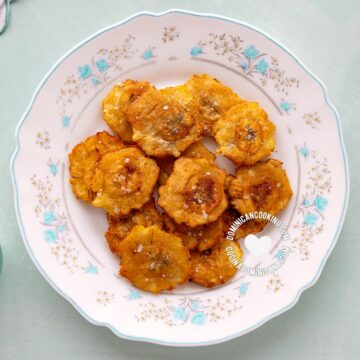

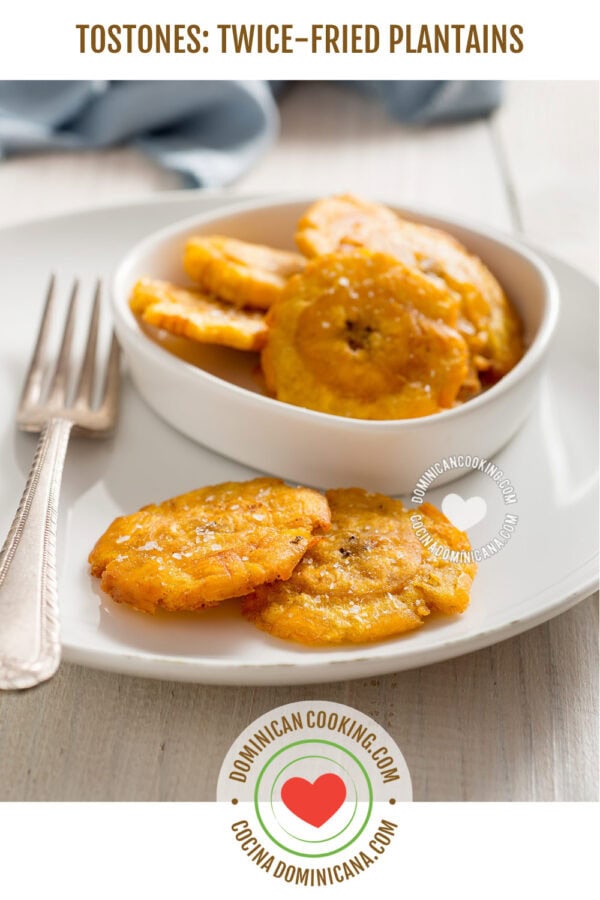

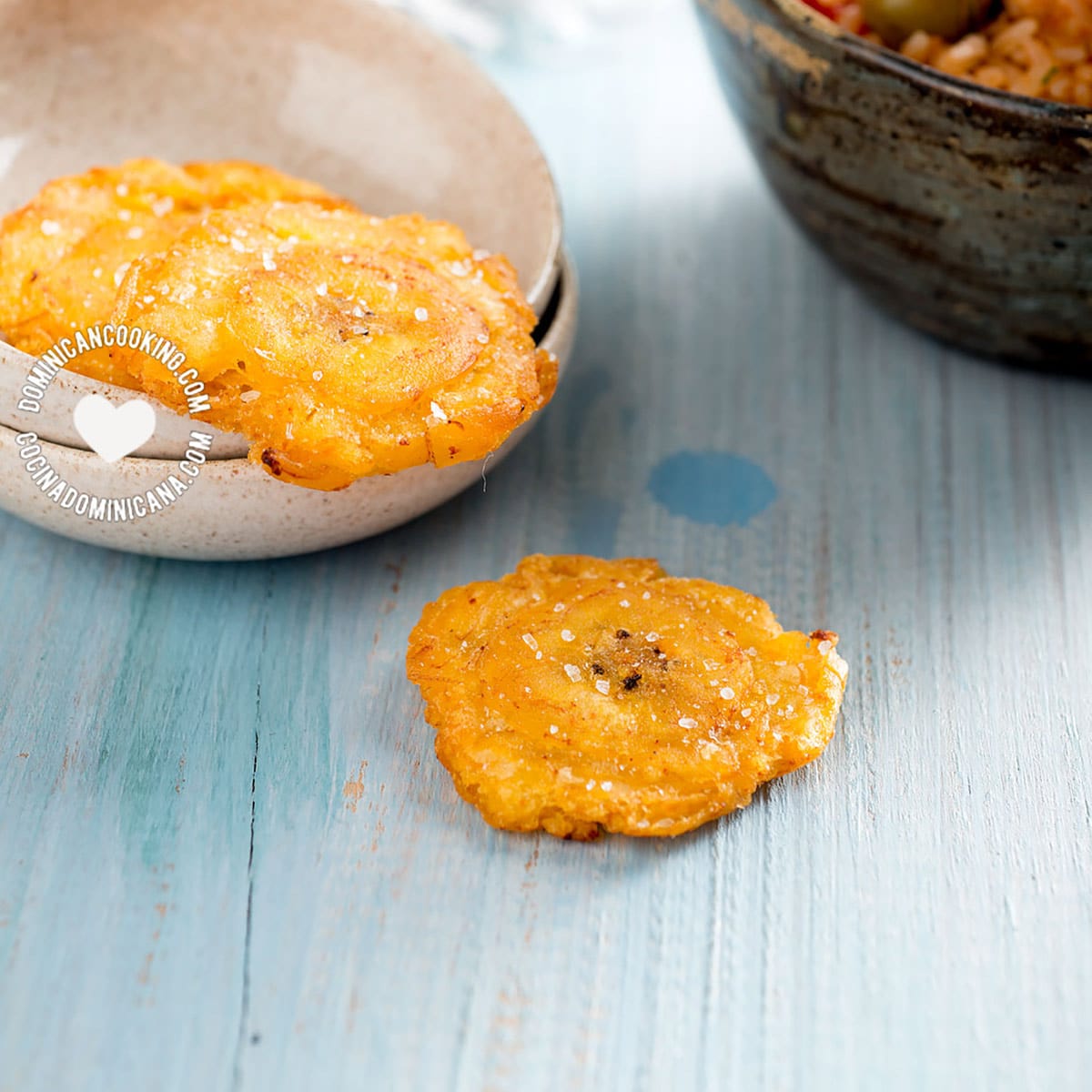
Tostones -also called fritos verdes (fried green plantain)- are our most popular side dish. Make the crispiest twice-fried plantains with our easy-to-follow tostones recipe with video.
By - Reviewed: . Original: Dec 21, 2001
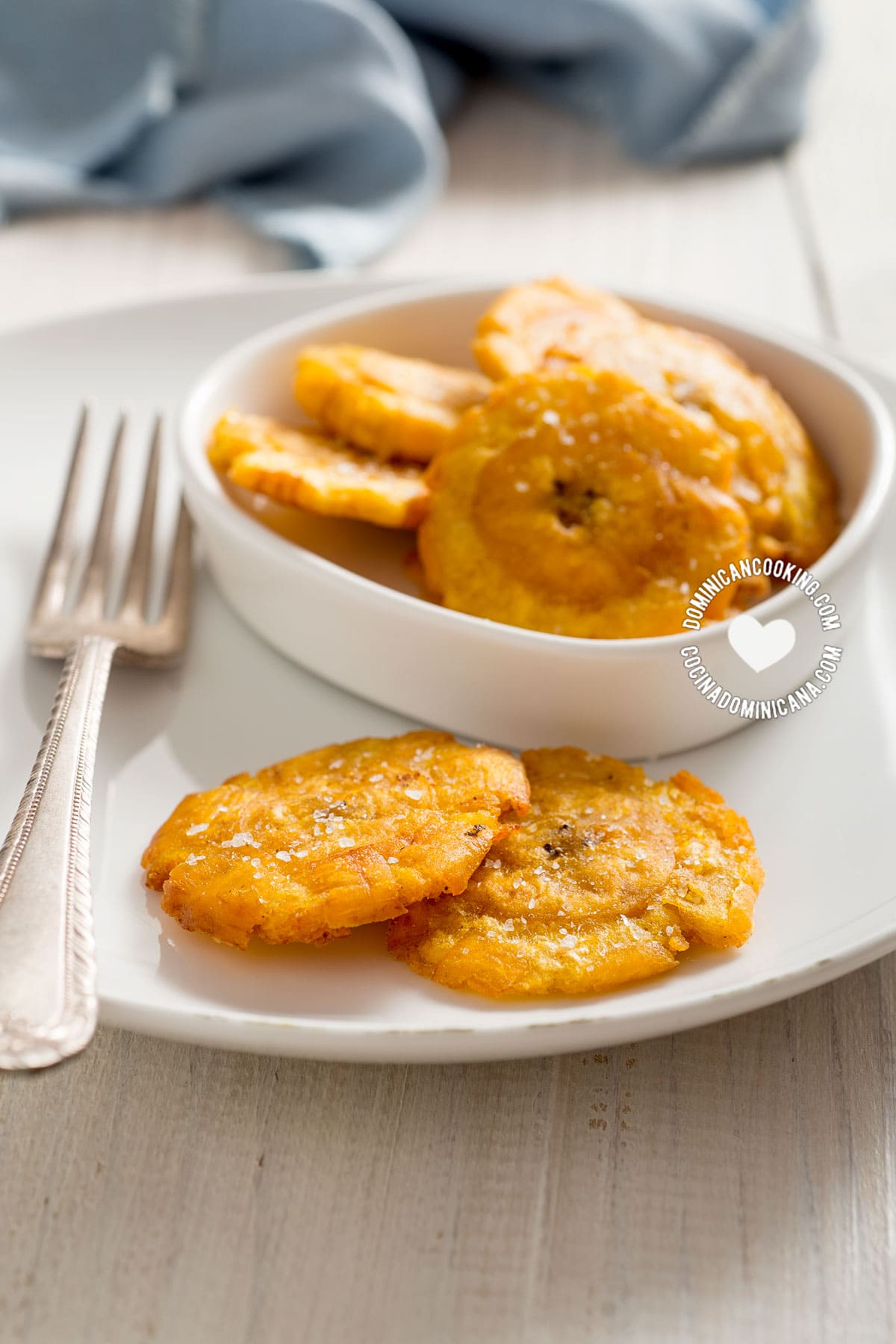
❝ Delicious. I make them like this but I used the back of a glass to flatten mine. ❞
Why we ❤️ it
There are many dishes that several Latin American countries share, but few that get our heart pumping like a plateful of crispy, thinly-flattened, salt-sprinkled, freshly-fried Tostones.
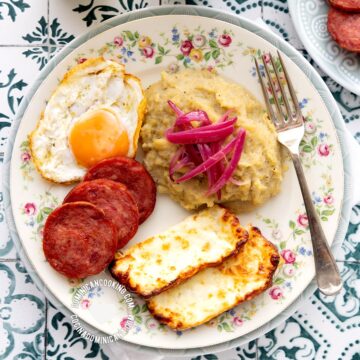
They are so popular amongst Dominicans that tostones with Salami frito (fried Dominican salami) are one of the first things the fledging Dominican home cook will learn how to make.
You can read more about its history and name.
What are tostones?
Tostones are slices of twice-fried smashed plantains. The result is very crispy, very flavorful golden brown chips that are our side dish of choice. They are a staple of many Latin American countries and Dominicans' favorite side dish.
Tostones is a vegan dish, so anyone can partake.
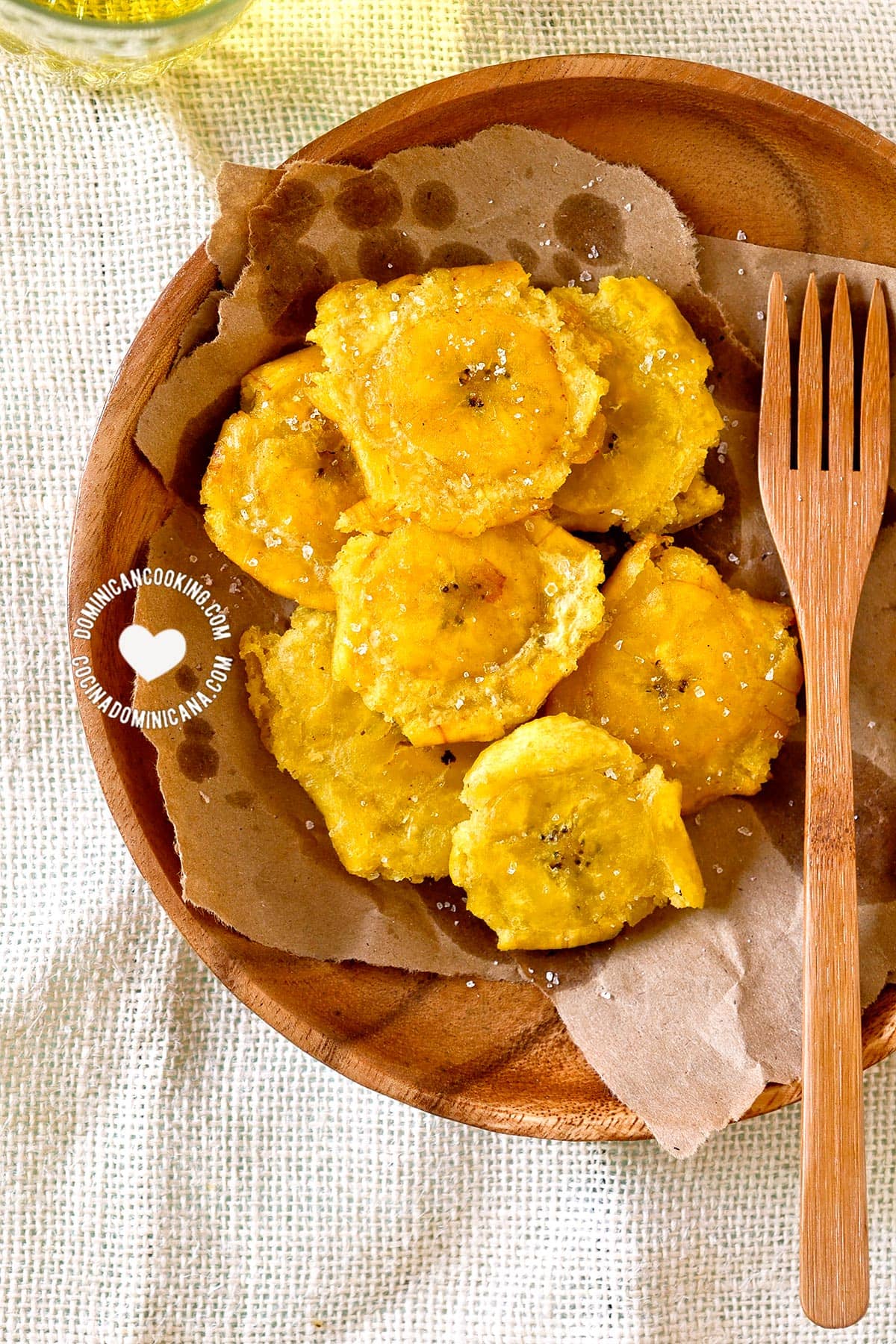
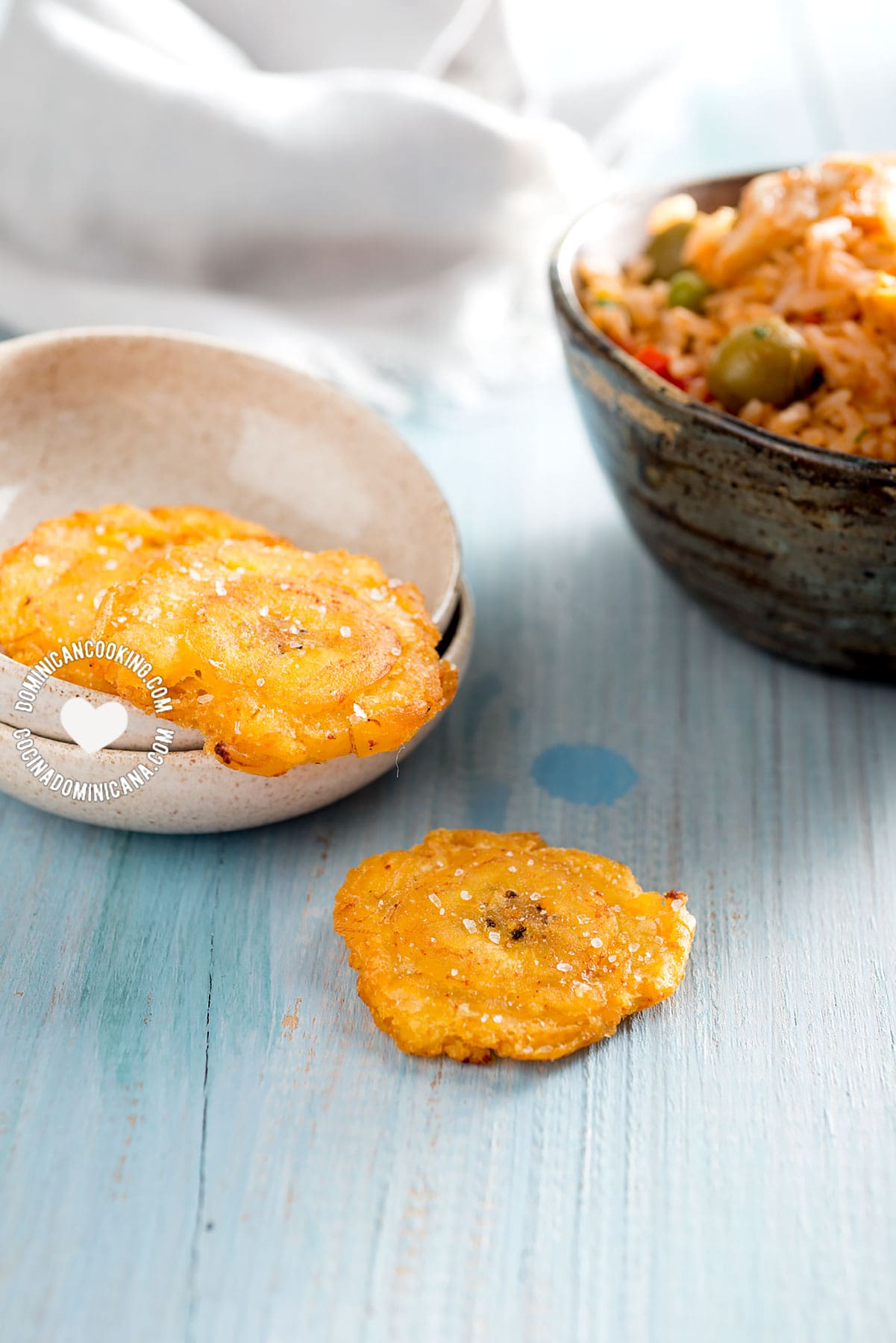
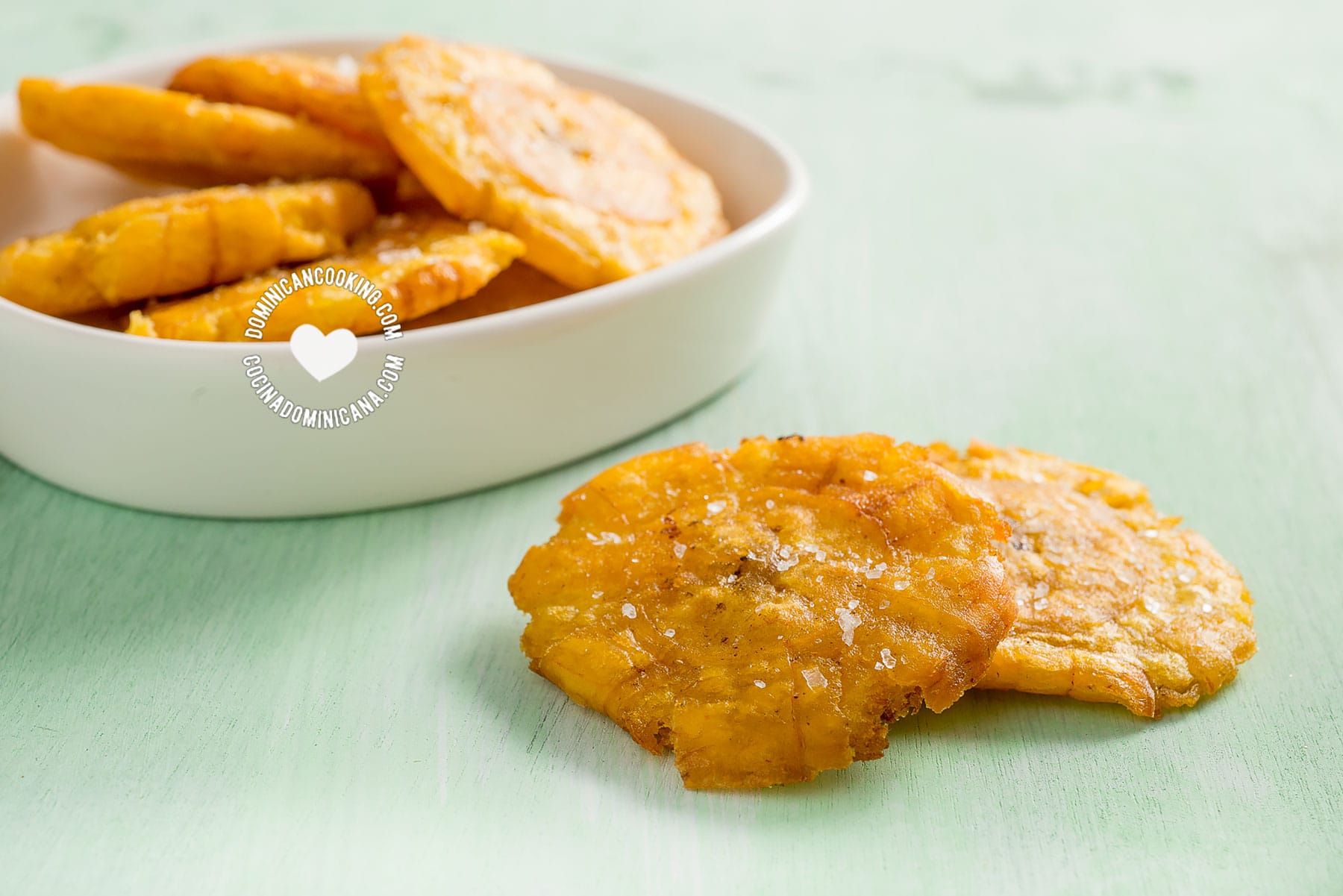
Tostones (fried smashed plantains).
Serving suggestions
Tostones are typically served as a side dish, and we love them as an extra with La Bandera Dominicana, our national lunch meal of rice, beans, meat, and salad). They are also served with many dinner meals.
You can also serve them as finger food or snack with a dipping sauce, though this is not typically how we eat them. You can try our Dominican mayo-ketchup sauce, wasakaka sauce, avocado dip, or cream cheese and chicken dip.
Top tips
- Flattening tostones: My favorite tip to make crispy tostones is to flatten them as thinly as possible before frying them the second time, this will keep them crispy longer too.
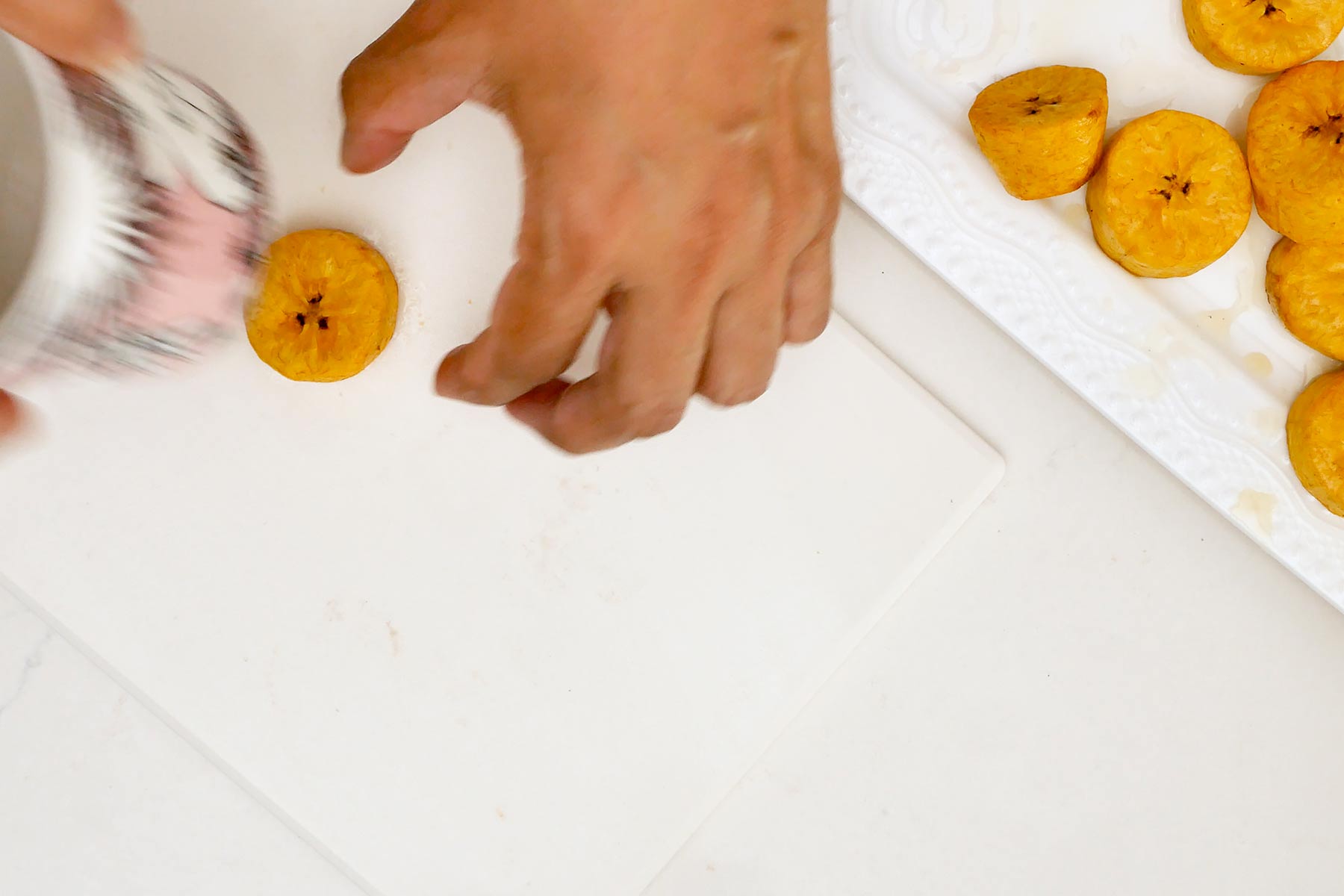
You can use a tostonera (tostones press) if you have one, but I typically just use the bottom of a coffee mug and it works great.
You may notice that they stick a bit to whatever you use to mash it, so you can gently separate it with a knife, or sandwich the plantain between pieces of parchment paper when pressing it. - Freezing: Yes, tostones can be frozen: Do it after frying once and flattened. Separate them with a piece of waxed paper to prevent them from sticking to each other and freeze tightly wrapped in wax paper in an airtight container.
To serve them, thaw them and continue frying a second time. Be mindful that the texture and flavor suffer from freezing in my experience. They are always better freshly fried.
About this recipe
There isn't much you need to learn to make these golden, crispy smashed plantain delights, and there isn't any variation of importance amongst cooks and homes.
The process is always basically the same: To make tostones unripe plantains are peeled and sliced; the slices are then deep-fried, flattened, and fried again. They are then left to drain on a paper towel, sprinkled with salt, and served piping hot.
But if you have any tricks to make yours even more awesome, we'd love to hear them. Comment down below.
Also, check our Baked or air fryer tostones, if you want to try something lighter.

Video
Recipe
This awesome free recipe contains Amazon affiliate links, we receive a small commission from any purchase you make at no extra cost to you. Thanks for your support!
Tostones [Video+Recipe] Flattened Fried Plantains
Ingredients
- 2 plantain (green, unripe)
- ½ cup vegetable oil, with a high smoke point, like peanut, corn or canola oil
- 1 tablespoon salt, (or more, to taste)
Instructions
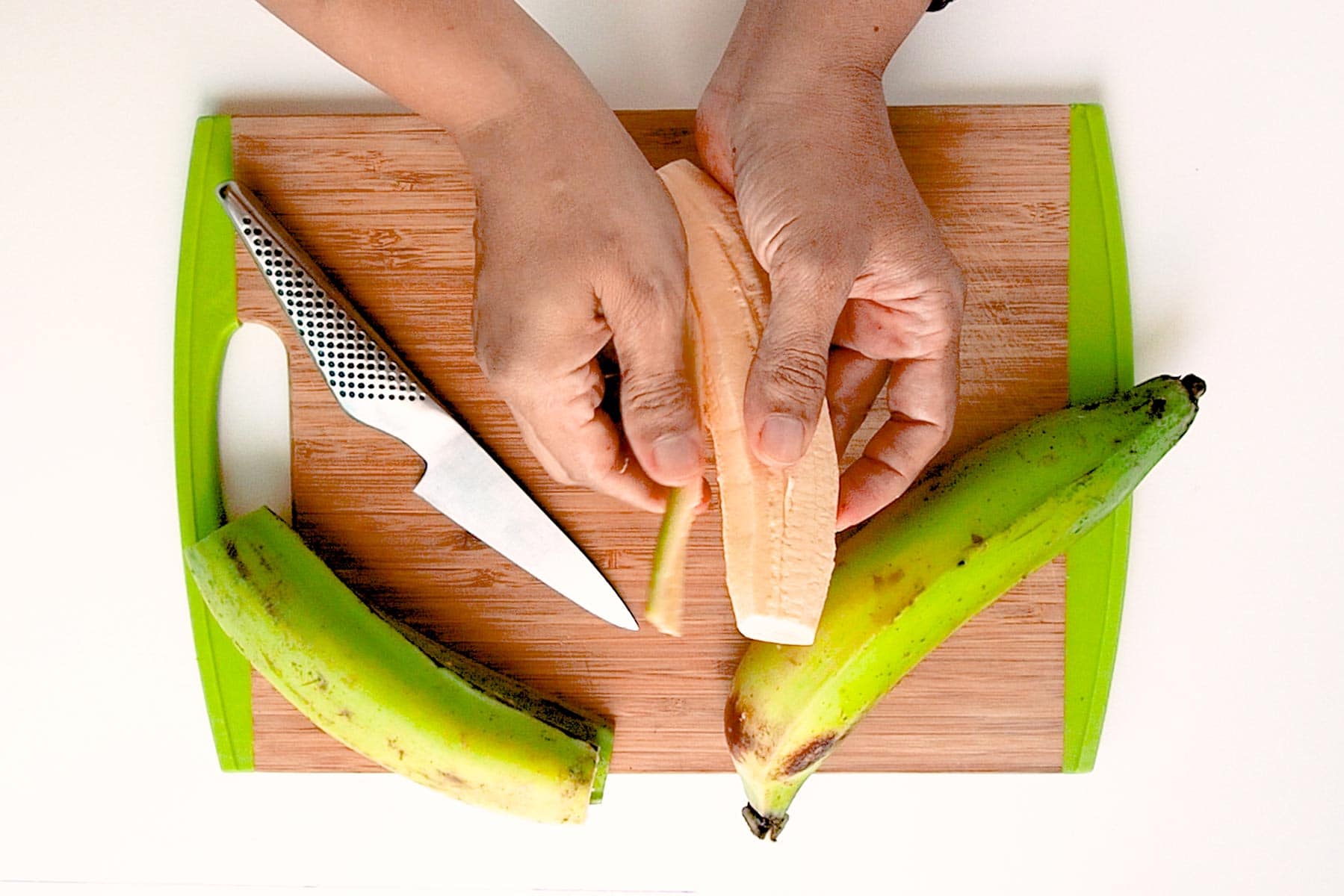
1. Peel the plantains
 Peel the plantains (see how to), discard the ends of the plantain and cut the flesh into 1 inch [2.5 cm] thick slices.
2. Fry the plantains
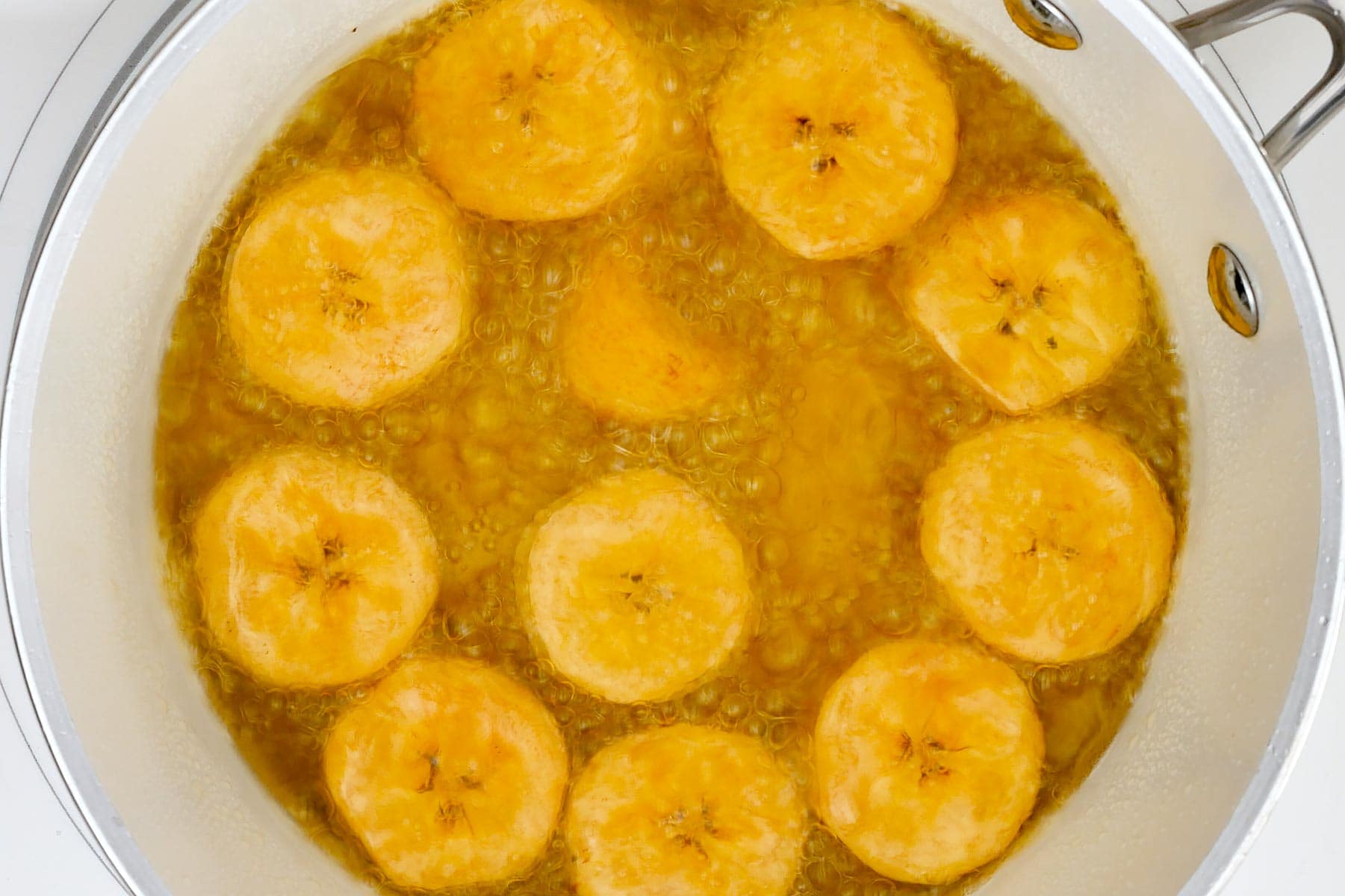
- Heat the oil over medium heat in a small saucepan, and lower the plantain slices into the oil with a slotted spoon.Fry the plantains till light golden (about 5 mins).
3 Aplastar tostones
- Flatten the plantains using a tostonera (Amazon affiliate link) to about ¼" [0.5 cm] (I prefer thin tostones as they are crispier and stay so longer).You can also use the bottom of a big jar or a mug and press on a cutting table if you don't have a tostonera.
4. Freír de nuevo
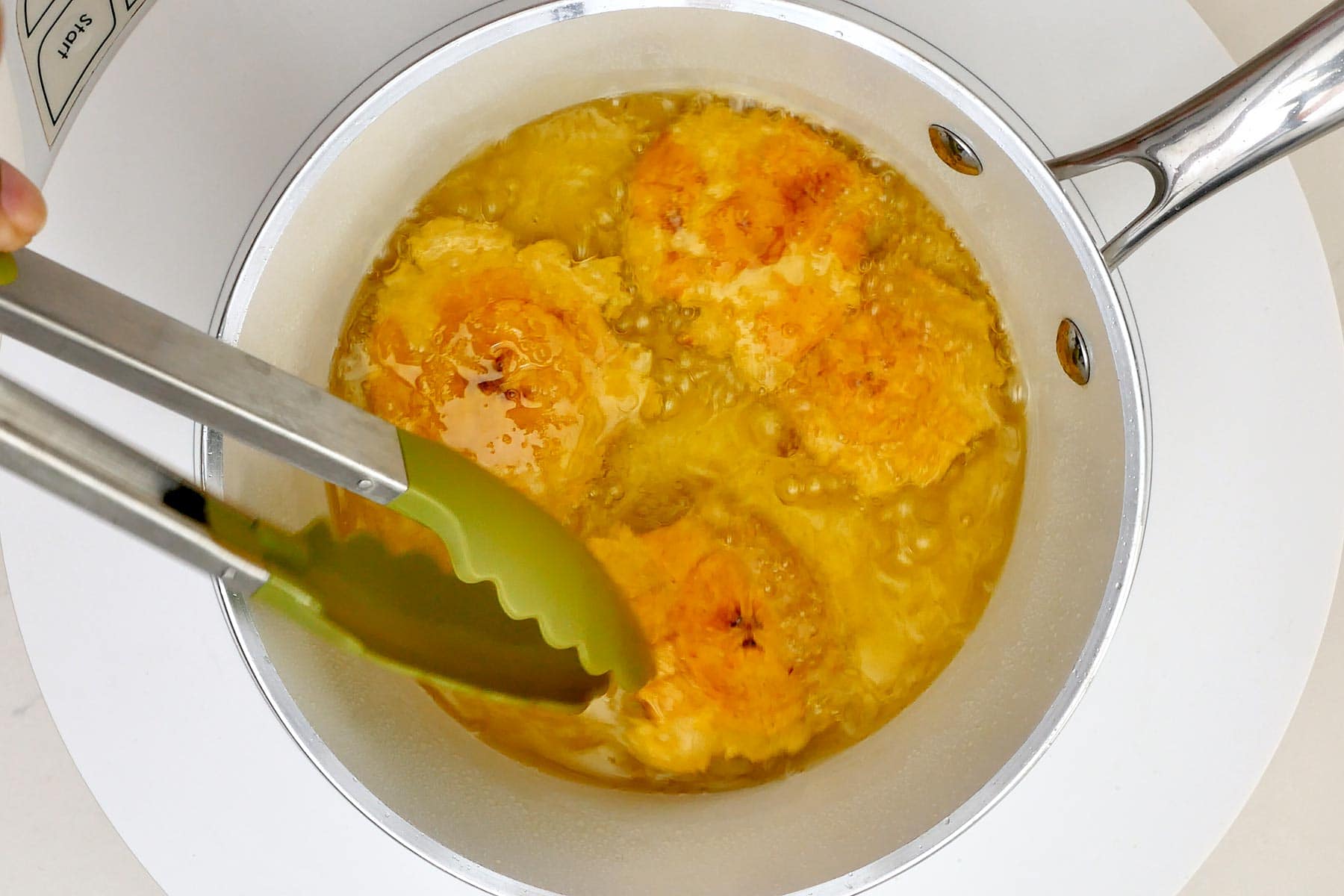
- Fry the plantains again until they turn golden yellow on both sides (about 5 minutes).
5. Serving
- Sprinkle with salt to taste and serve immediately.Best served freshly fried.
Nutrition
Nutritional information is calculated automatically based on ingredients listed. Please consult your doctor if you need precise nutrition information.
Want to save this recipe?
Enter your email & I'll send it to your inbox. ❤️ Plus, get great weekly recipes from me!
More plantain recipes
Plantain is one of our favorite ingredients, so -naturally- we have quite a few recipes with plantains, some of our favorite recipes with green plantain are Mofongo, Tostones rellenos, and, of course, the beloved Mangu plantain mash.
History
Did you ever want to know why tostones are called that way? This is where our investigation led us:
Tostones is the plural of tostón, which is what we still call a single one. Tostón was a Spanish coin [1] used during the colonial period, and later in post-colonial Mexico. The name itself [2] comes from teston [3] (or testoni [4] [heads]), another coin used earlier in France and Italy.
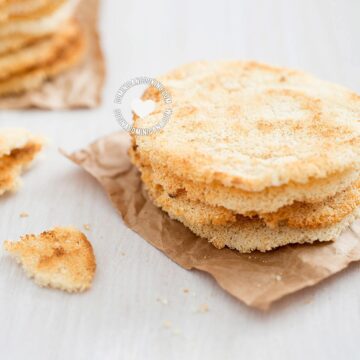
The word tostón is used in Spain as slang for money and in the culinary sense to describe other types of fried or toasted foods (like bread tostones [5]).
Which one (the word tostar [to toast], or the coin) gave us the word for the fried plantain? I am not sure. Maybe both? A tostón does, after all, look like a giant ancient coin.
Tostones are not just Dominican; they are served in many countries throughout Latin America and are especially popular in the Spanish Caribbean, possibly due to the large population of descendants of enslaved Africans, with which came the fruit and know-how to cook plantains.
In Puerto Rico and Cuba they are known by tostones too, and are equally popular. In Haiti, they may be fried in large slices known as Fri Bannann or Banann peze [6]. In South America, they're also known as tostones in some parts and patacones [7] (plural of patacón) in others. They are also known as fritos verdes (fried green plantains) in the Dominican Republic.
There is no specific English term for tostones. Different authors refer to them by various names. Some common translations include "twice-fried plantains" and "smashed plantains"
References
- L. Weckmann, The Medieval History of Mexico. NY: Fordham Univ Press, 1992. P 421
- Rae: Testón
- Coin Facts: Teston
- Diccionario gastronómico de Alicante: Tostón.
- Banco de México: Numismática
- A taste of Haiti - Bannann peze
- Laylitas Recipes - Patacones

- Learn more about me and the humans behind this blog.
- Share your questions and comments about this post.
- Subscribe to receive our recipes and articles by email.
- Please stay in touch! Follow us on: