
For 25 years we've documented Dominican recipes and Dominican food. This is the most complete collection of recipes and articles to guide you through our cuisine and culture.
By - Reviewed: . Original: Sept 06, 2001
❝ I am doing a heritage project and this is totally useful! ❞
Must-try Dominican foods
Looking to learn about Dominican Rebublic's food? I hope this introduction to our gastronomy satisfies your curiosity and stirs your appetite.
Dominican food is the product of merging Taino, Spanish and African cultures, sprinkled with influences from other cultures like Chinese, Middle Eastern and West Indian, among others.
And if you want to learn more, or are doing this for school work, dig in, there are hundreds of recipes and articles on our blog.
Here are some dishes every Dominican knows:
1. La Bandera Dominicana
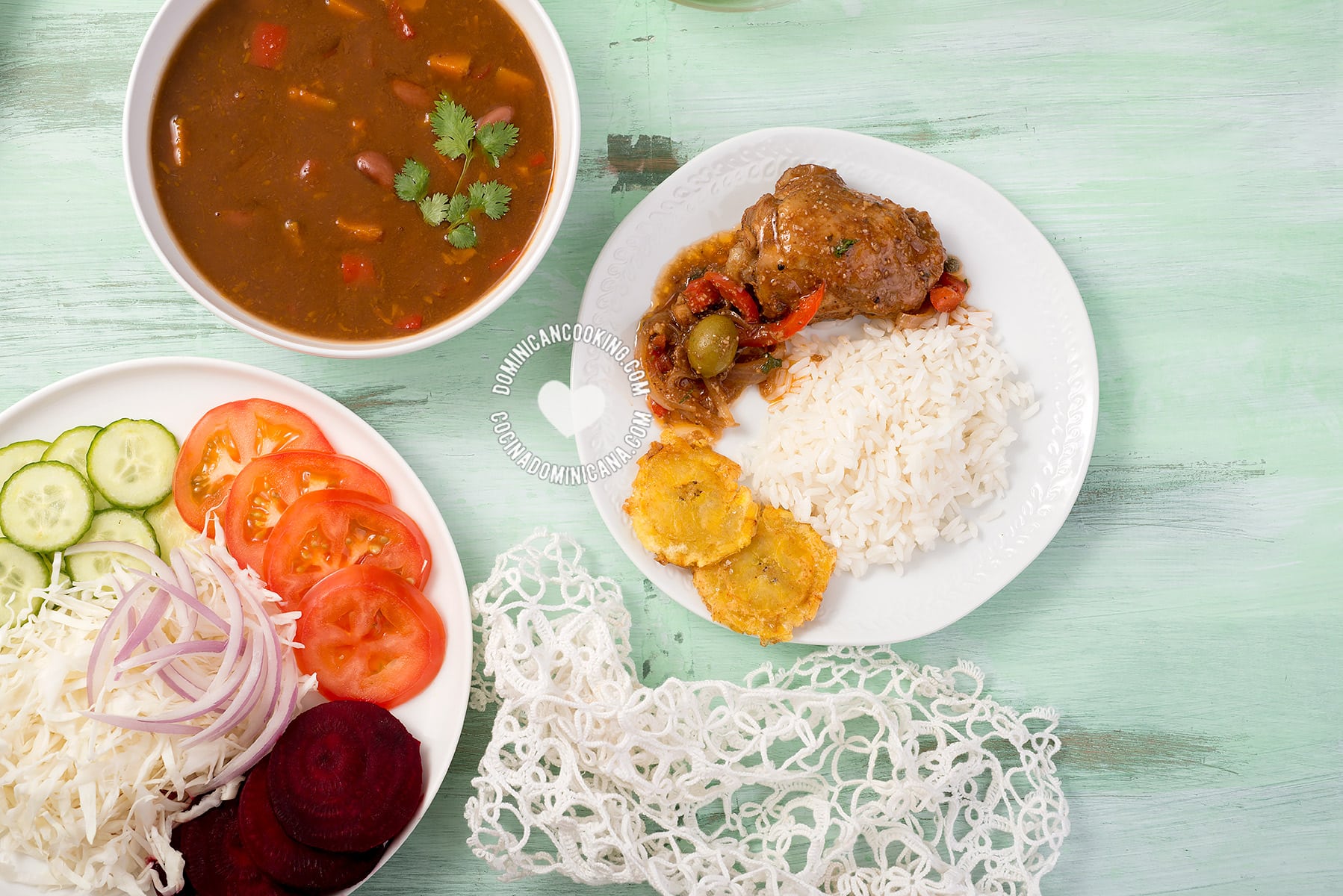
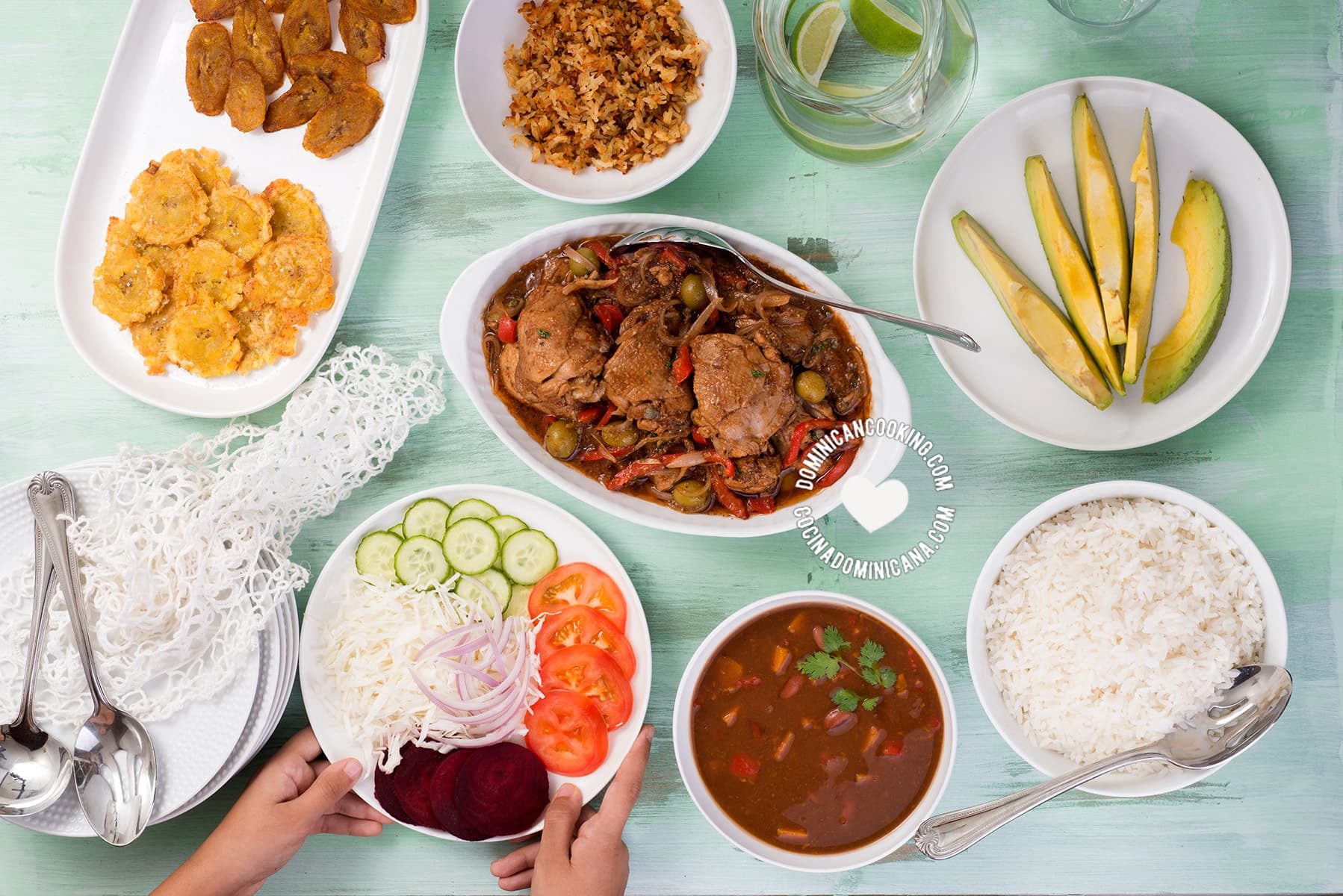
La bandera dominicana means the Dominican flag. La Bandera is famous for being the standard lunch that is eaten in millions of Dominican homes and comedores around the country and all over the world.
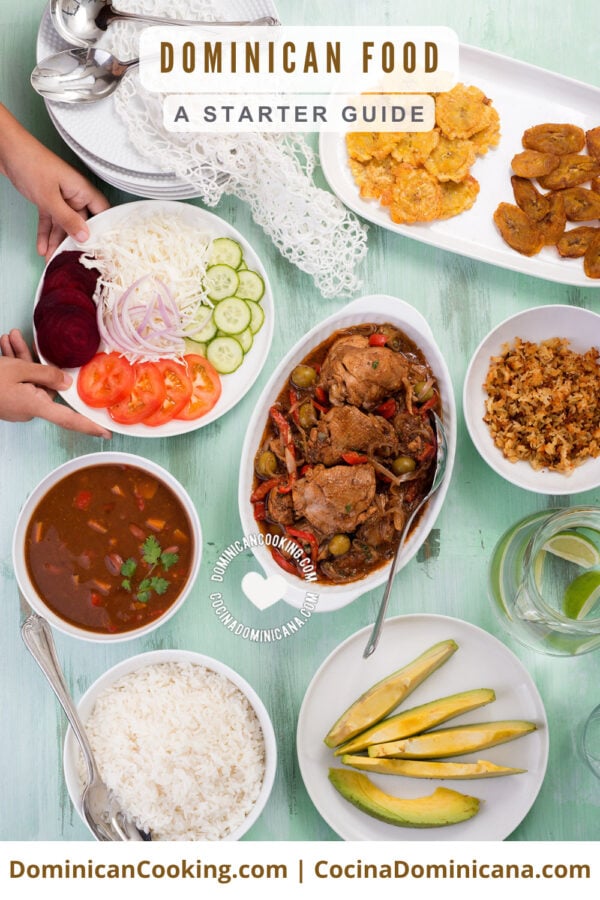
It is a lunch dish that consists of Arroz blanco (Dominican white rice), Habichuelas guisadas (Dominican stewed beans), and stewed meat like beef, pork, or chicken, each representing one color of the flag. It is as close as we can get to having a national dish.
The ingredients, as well as the traditional seasonings, are practically universal, so wherever you live it will be easy to reproduce this emblematic Dominican dish.
It is often served with a Dominican salad of shredded cabbage and other vegetables, and drizzled with olive oil and vinegar. We love some avocado slices on the side, and sometimes Tostones (twice-fried plantains), Fritos maduros (fried ripe plantains), or even a ripe banana are served as extras.
Did you know?
Good Dominican rice produces a layer of crispy, golden rice we call Concón, and we love it!
2. Mangu and Los Tres Golpes
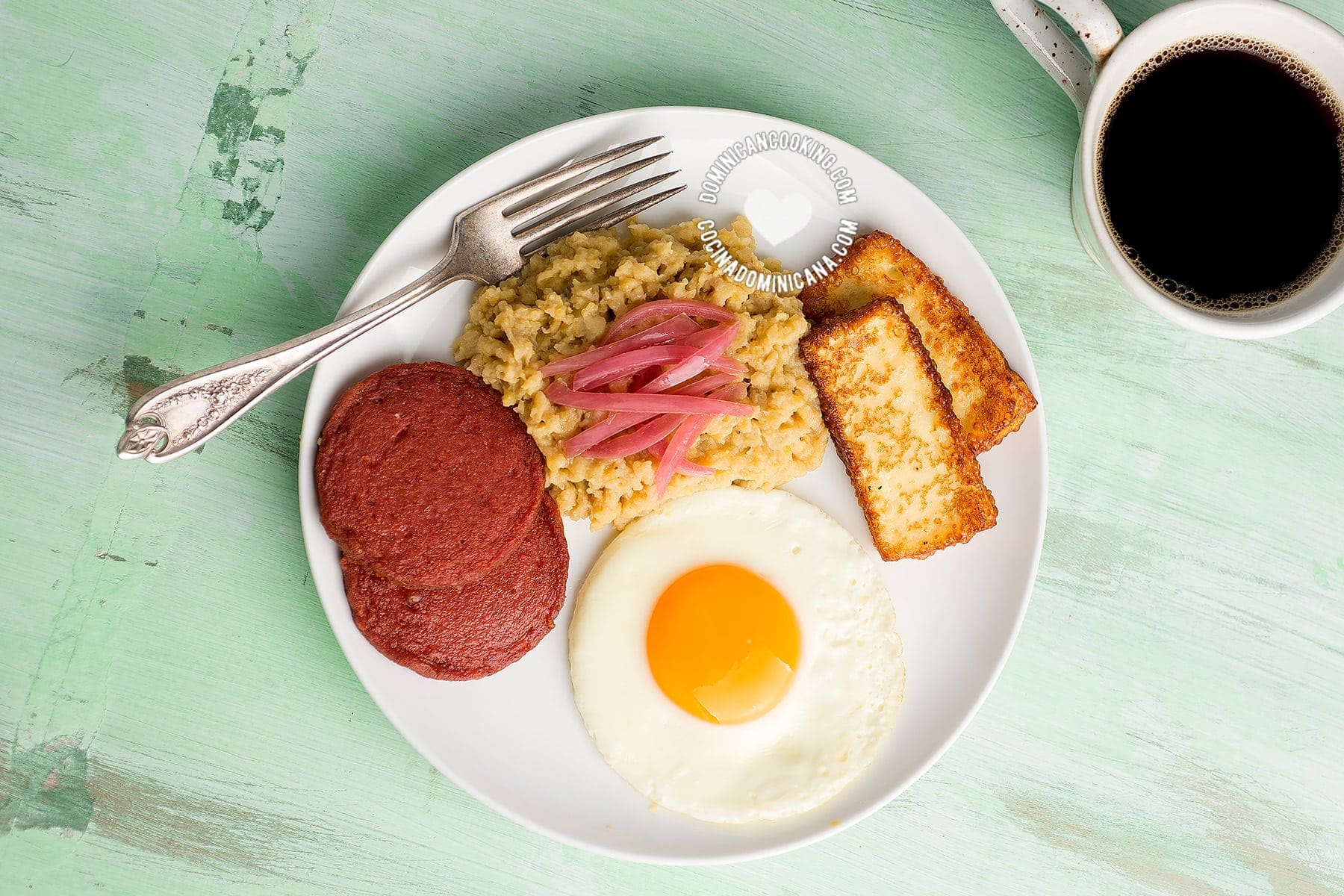
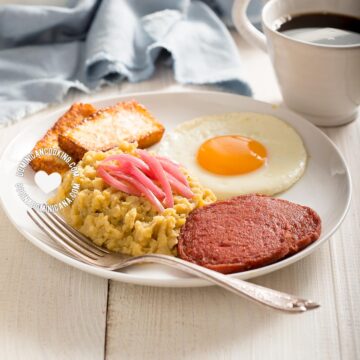
Unlike many of our top dishes, mangú is a uniquely Dominican food; it is a very popular dish consisting of mashed green plantains, usually served with Dominican sauteed red onions with vinegar.
It is often served with fried eggs, fried Dominican salami, and Queso Frito (fried cheese). Served together, they are known as Los Tres Golpes (The Three Strikes).
It is mainly served as a breakfast dish, and sometimes it appears on the dinner table.
This would also be a good candidate for national dish of the Dominican Republic.
Did you know?
We also sometimes use the word mangú to refer to any puréed vegetable (like Mangú de yautía).
3. Sancocho (7-meat stew)
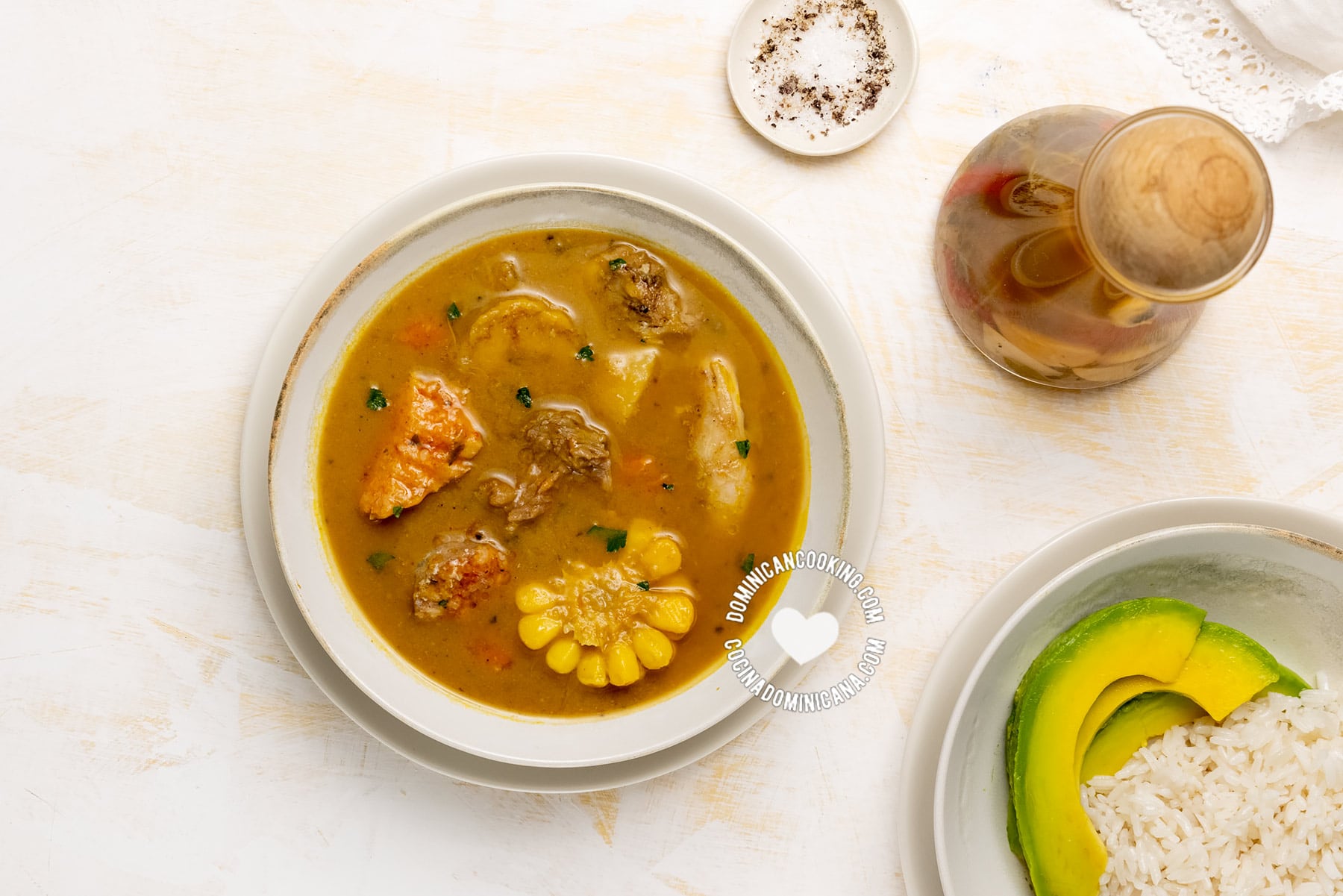
For some, this is the King of Dominican dishes. More on that thought later. In the meantime, the word "sancocho" (never "salcocho", please!) used to refer to a meaty stew is not only found in the Dominican Republic. Several Latin American countries have sancochos, but each of these countries has its own version.
Dominican Sancocho may come in a deluxe version: Sancocho de Siete Carnes, in which seven different types of meat from four types of animals (pork, beef, chicken, and goat meat) are mixed with root vegetables, corn on the cob, herbs, spices, and plantain to produce a very rich, thick, meaty stew, unlike anything you've tried before.
The simplified version might contain just beef and sometimes also chicken.
Sancocho is typically served alongside Arroz blanco, some slices of avocado, and a local hot sauce called Agrio de naranja. It's perfect for celebrations, and comforting on rainy days.
Did you know?
Ingredients vary from home to home and from cook to cook, but there should never be noodles or tomato sauce in Sancocho.
4. Picadera (appetizers)
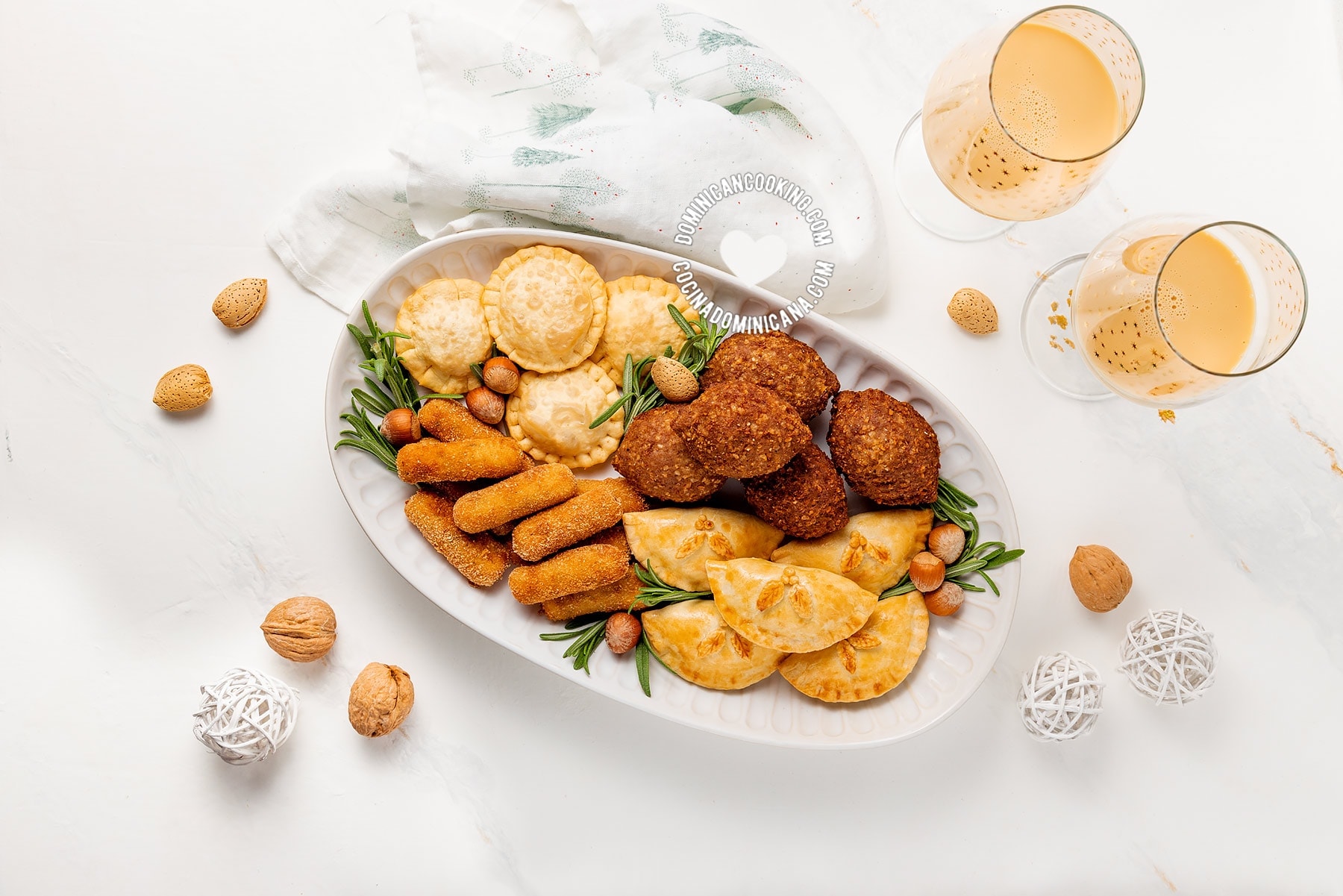
Our picaderas (appetizers) are legendary. Some of our favorite are stuffed pastries like empanadas and pastelitos. The Dominicanized kibbeh, a bulgur wheat meat roll, which we call Quipe or Kipe is great as street food, or as finger food.
Croquettes, or Croquetas are not just popular in Spain and Latin America, they're a must-have for parties.
Did you know?
The word picaderas, which for us Dominicans mean appetizers or snacks come from the Spanish word for pecking. And our favorite picaderas certainly makes us peckish.
5. Habichuelas con Dulce (sweet cream of beans)
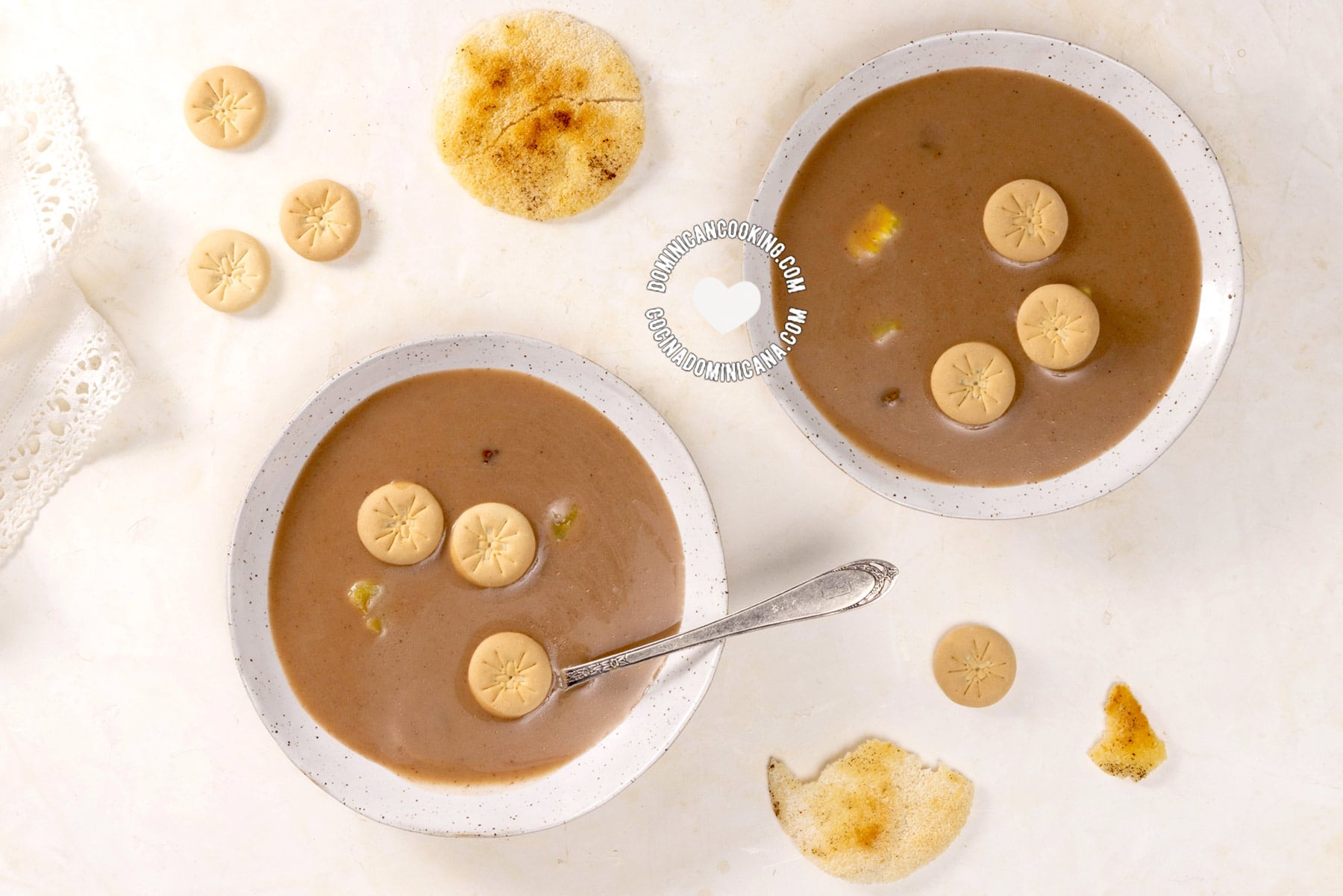
This uniquely Dominican dish is an important tradition in the Dominican Republic, and it's one of the most popular Dominican desserts. It is served each year during the Lenten and Easter period, made in large quantities, and shared with family, neighbors and friends.
Habichuelas con Dulce is one of those dishes with a different recipe for each family, each swearing theirs is the best, and the choices of spice combinations are dizzying: cinnamon, cloves, nutmeg, and many others, depending on the cook and home.
Our recipe gives you several options to adapt it to your own taste. And if you've never tried it, and think a bean-based dessert is strange, open your mind - you're likely to love it.
Did you know?
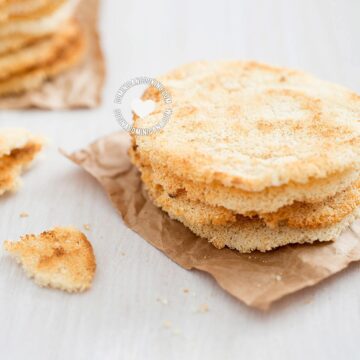
In some parts of the country (including my home region) Habichuelas con dulce is served alongside toasted Casabe (a Taino cassava bread).
6. Bizcocho Dominicano (Dominican Cake)
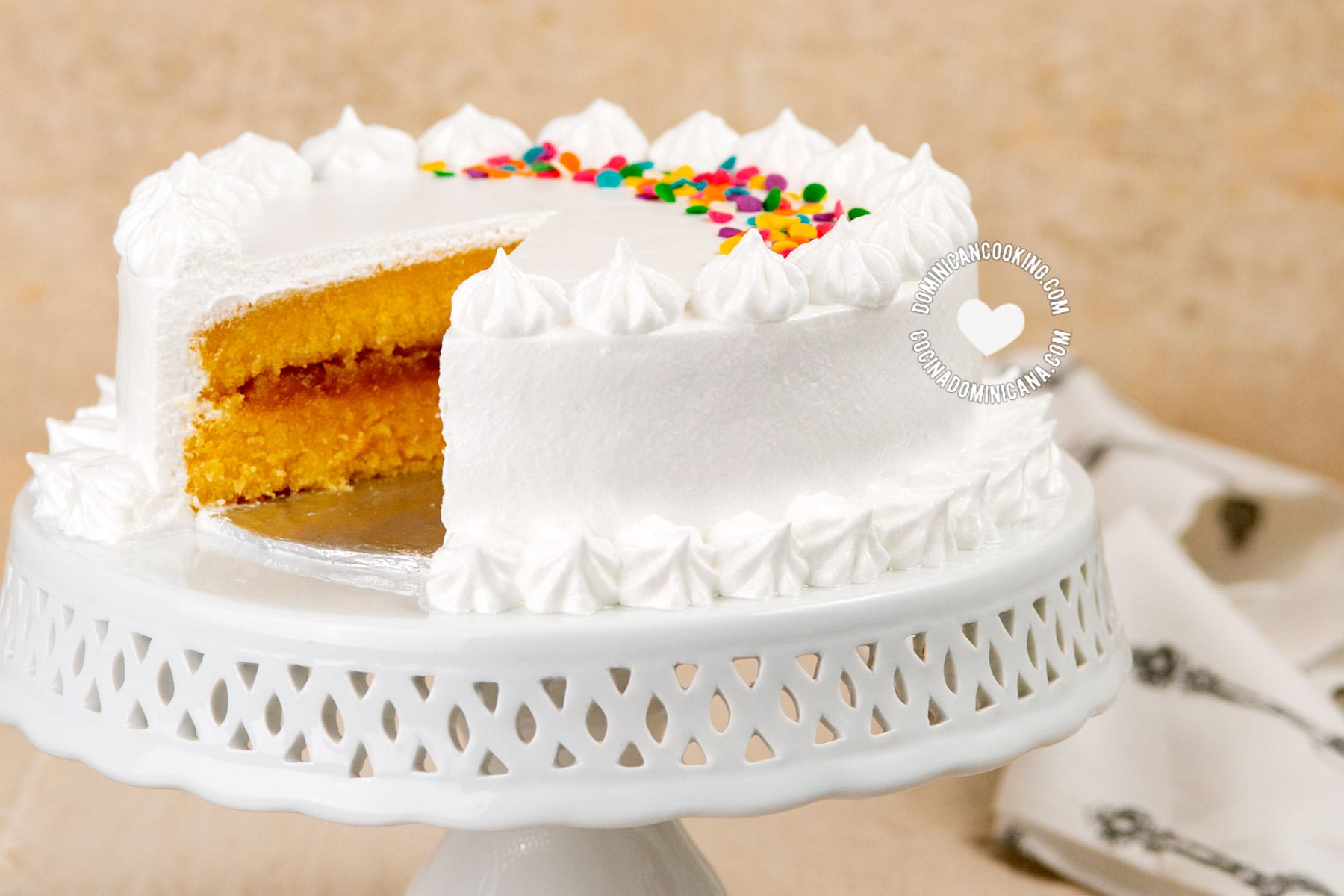
Bizcocho Dominicano, or Dominican Cake is possibly one of our most popular dishes. It is the center of many Dominican celebrations, from weddings to birthdays.
This is just not any cake, its buttery, airy texture, combined with the traditional pineapple filling and flavored with vanilla and orange juice will test your baking skills. But if you get it right, you'll ask yourself how you lived without it this far.
Each town has one or more "maestros pasteleros" (master bakers), and each will have fans who prefer their particular cake style.
Did you know?
The traditional meringue icing - not to be confused with merengue, our national music -that is used in Dominican cake is called Suspiro, which means "sigh" in Spanish.
7. Morir Soñando (Milk and Orange Drink)
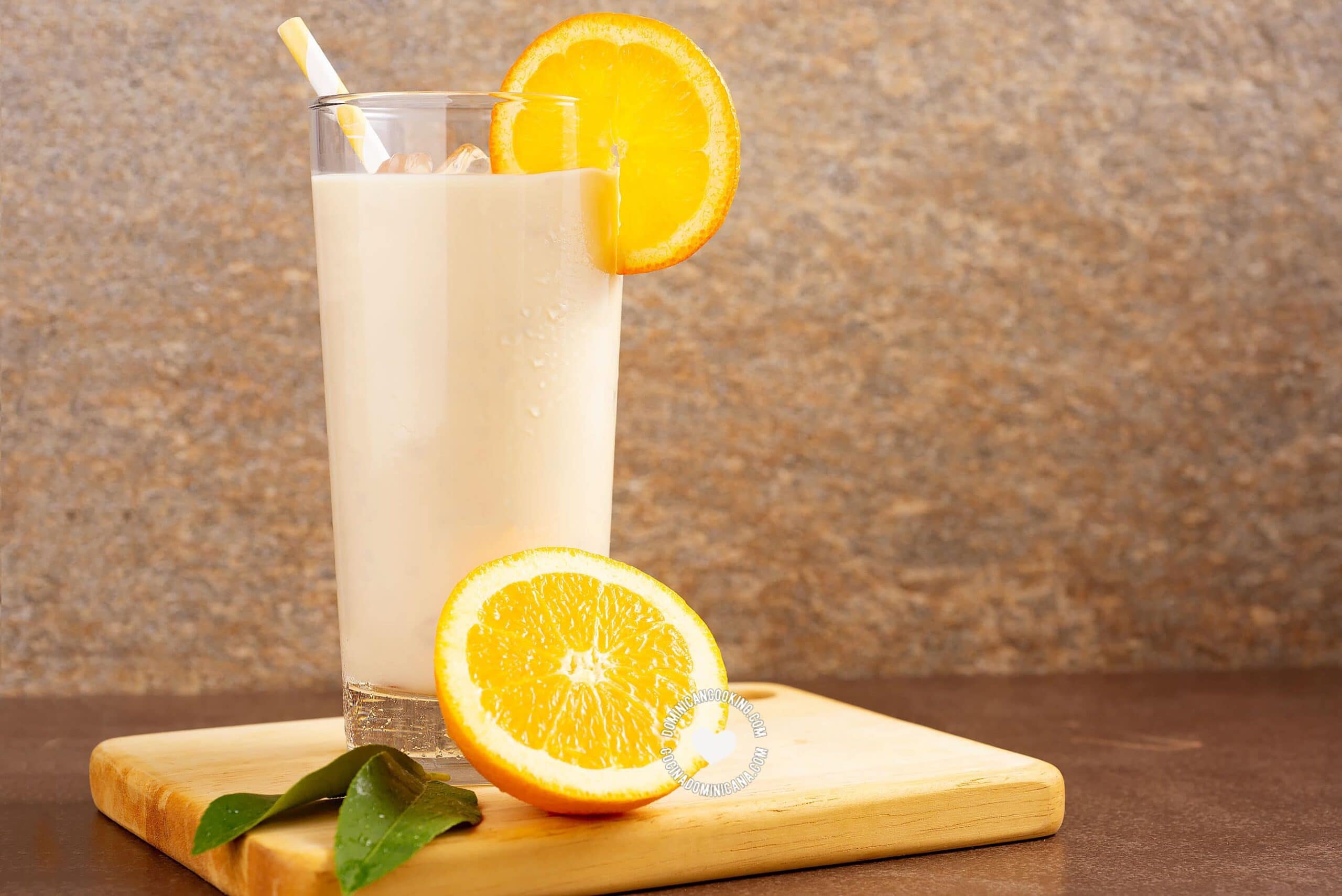
Orange (or china, as we also call it) and milk are not ingredients that are usually combined in drinks. We didn't get that memo.
This delicious and nutritious beverage that combines evaporated milk and orange juice has a very poetic name. Morir soñando can be translated as "to die dreaming", and it is uniquely Dominican and by far our most popular drink. It is served as a refreshment, a snack, or to accompany sandwiches for a light meal.
There are other citrus juices that can be used instead of orange juice; lime juice, and bitter orange juice are also very popular options.
Did you know?
The trick to stopping the milk from curdling when mixed with any citrus juice is to keep it ice-cold.
If you're doing homework
You'll find that we've introduced almost every recipe with additional information about its history and the cultural context around it. Usually, we include citations and references when necessary.
More Dominican foods
This is not even a comprehensive list of Dominican dishes, but it's a start if you want to learn a little bit about our cuisine, or want to know what to order at a Dominican restaurant.
If you think we should mention another dish, I'd love to hear it. Please share it in the comments.
Do you want to see more staples of the Dominican cuisine? As a bonus, see some more popular dishes to check:
- Chivo guisado (oregano-rich stewed goat meat, and flagship of my region's cuisine).
- Pasteles en hoja (similar to tamales, and a must for Christmas)
- Arroz con leche (the wonderful Dominican rice pudding)
- Dominican arepa (our cornmeal, raisins, and coconut milk cake)
- Mofongo (the garlic-flavored fried plantain mash)
- Quipes or kipes (the Dominicanized version of kibbeh)
- Pescado frito (the beach day seafood of choice)
- Yaroa (Dominican loaded fries with mayonnaise and ketchup)
- Chimi or chimichurri, the authentic Dominican burger
- Pescado con coco, a wonderful dish of fish in coconut sauce
- Locrios, and Moro rice dishes are some of our favorite dishes
- Pica pollo, our favorite fried chicken dish.
Read more
FAQs
Traditional Dominican food is a very extensive subject, but if you've never tried it, I suggest you start with some basics, like Mangú con Los Tres Golpes, our favorite breakfast meal, La Bandera Dominicana, our typical Dominican lunch meal, and - on the simpler side - Morir soñando, our favorite refreshing drink.
A typical Dominican dinner may consist of a hot drink, some Pan de agua (Dominican bread buns), or perhaps some víveres (tubers) with eggs or salami.
It is impossible to pick just one "most popular food in the Dominican Republic." Dominican cuisine is vast and rich, but you can start with this list of popular Dominican foods to learn more about our food
We do not have an official Dominican national dish. Unofficially, we'd have to choose between Sancocho (roots, meats, and vegetable stew), La Bandera (our most popular lunch), and Mangú with Los Tres Golpes (our favorite breakfast meal).

- Learn more about me and the humans behind this blog.
- Share your questions and comments about this post.
- Subscribe to receive our recipes and articles by email.
- Please stay in touch! Follow us on: