
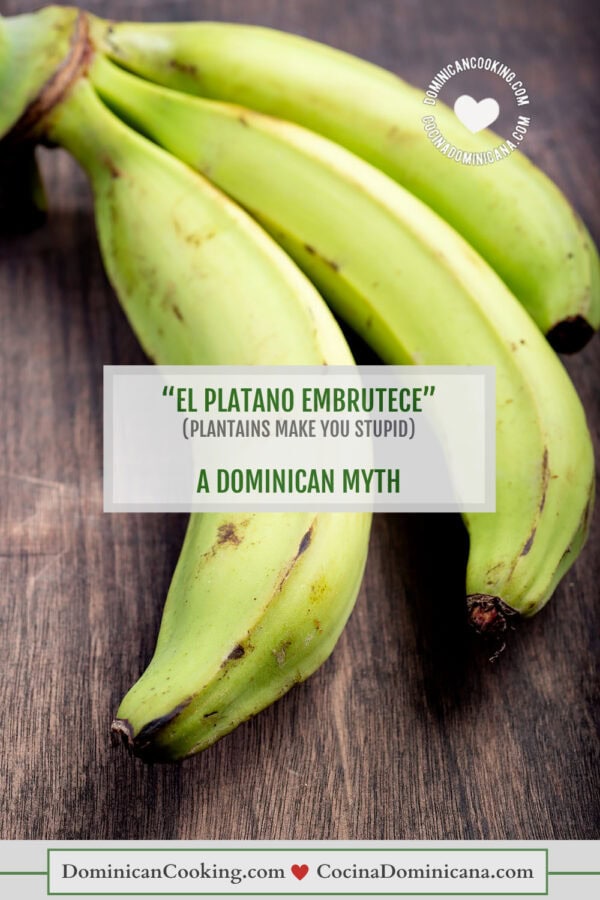
"El platano embrutece", I recently heard this for the nth time, but it's a common saying in the Dominican Republic. It means that eating plantains is associated with intellectual inferiority. Is there any truth to that? Why do we still say it, and does anyone believe that?
By - Reviewed: . Original: Sep 06, 2003

The myth
That plantain make us stupid is indeed a common saying amongst Dominican:
"Apart from politicians, in this country, there is nothing that is more maligned than the plantain.
Plantains are accused, no less, of being partly responsible for our island's rampant underdevelopment. According to some, it blocks the brain and stops intelligence from flowing; others say overindulgence leads to a dazed stupor [...]
Myths, dear readers, pure myths!"
Himilce Tejada, Diario Libre
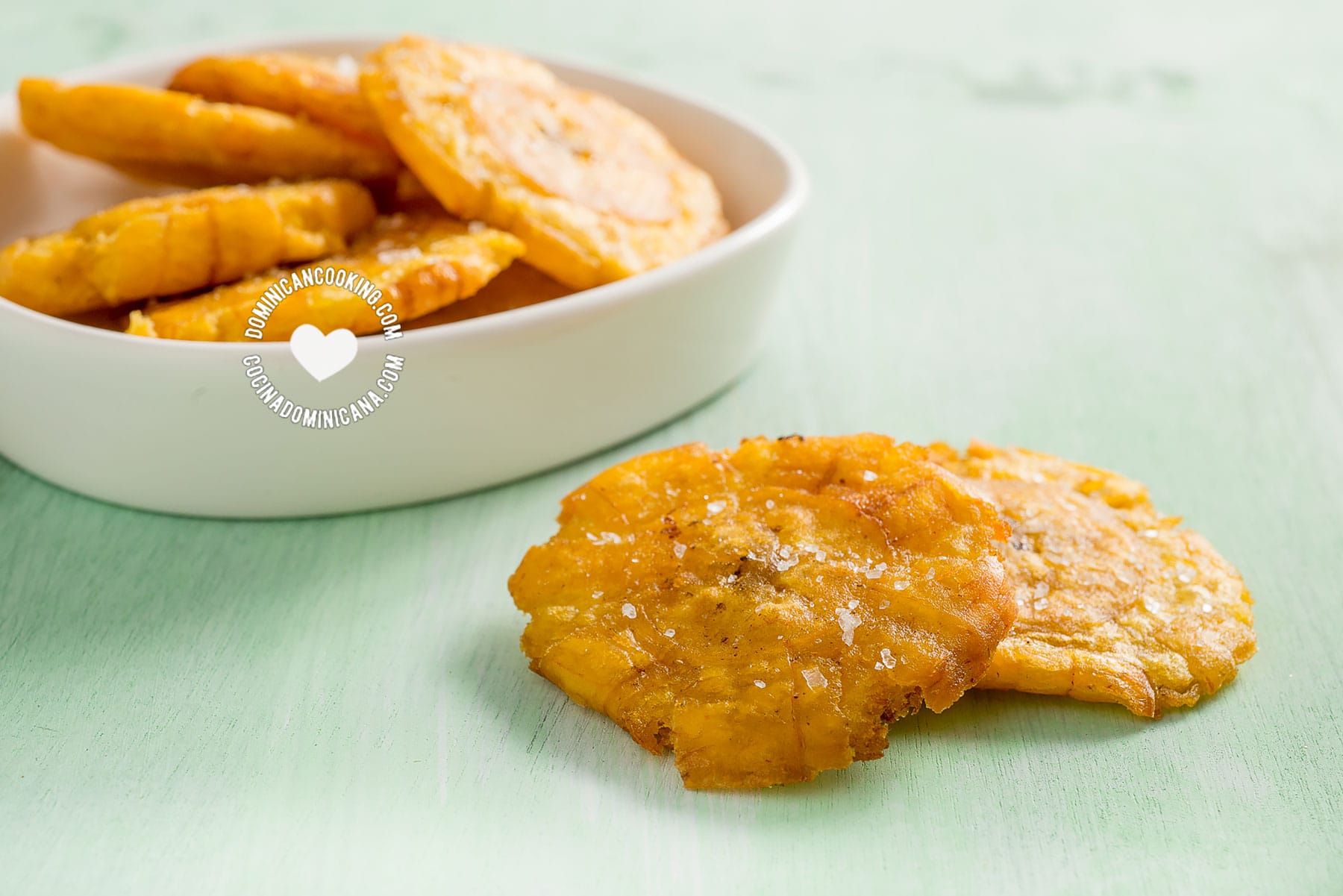
There is a socio-cultural element here and that's probably where the myth originates.
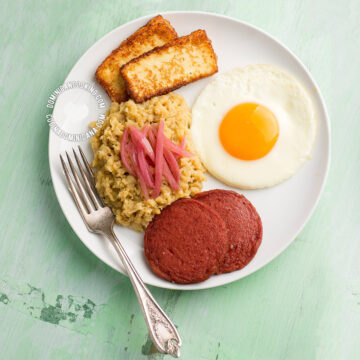
Mangú is a traditional Dominican breakfast, eaten in the campo and in poorer homes, the ingredients are easily accessible, it's filling, and relatively inexpensive.
Is it true at all?
The popular extension of this myth is that children who eat corn flakes are more intelligent than those who eat mangú.
I looked up the nutritional information for the best known brand of corn flakes, but did not lose sight of the fact that for Dominicans, corn flakes (pronounced 'conflé') is the generic word for any breakfast cereal, many of which are junkier than standard corn flakes, with even more sugar and artificial colourings.
According to my research, plantains are nutritionally beneficial, they have more than twenty times the amount of vitamin A, about three times the vitamin C, double the magnesium, and almost twice the potassium as a banana. Very low in fat and sodium, they are cholesterol-free and offer a good source of fibre. One-half cup cooked slices contains about 89 calories.
Doesn't sound too bad, does it?
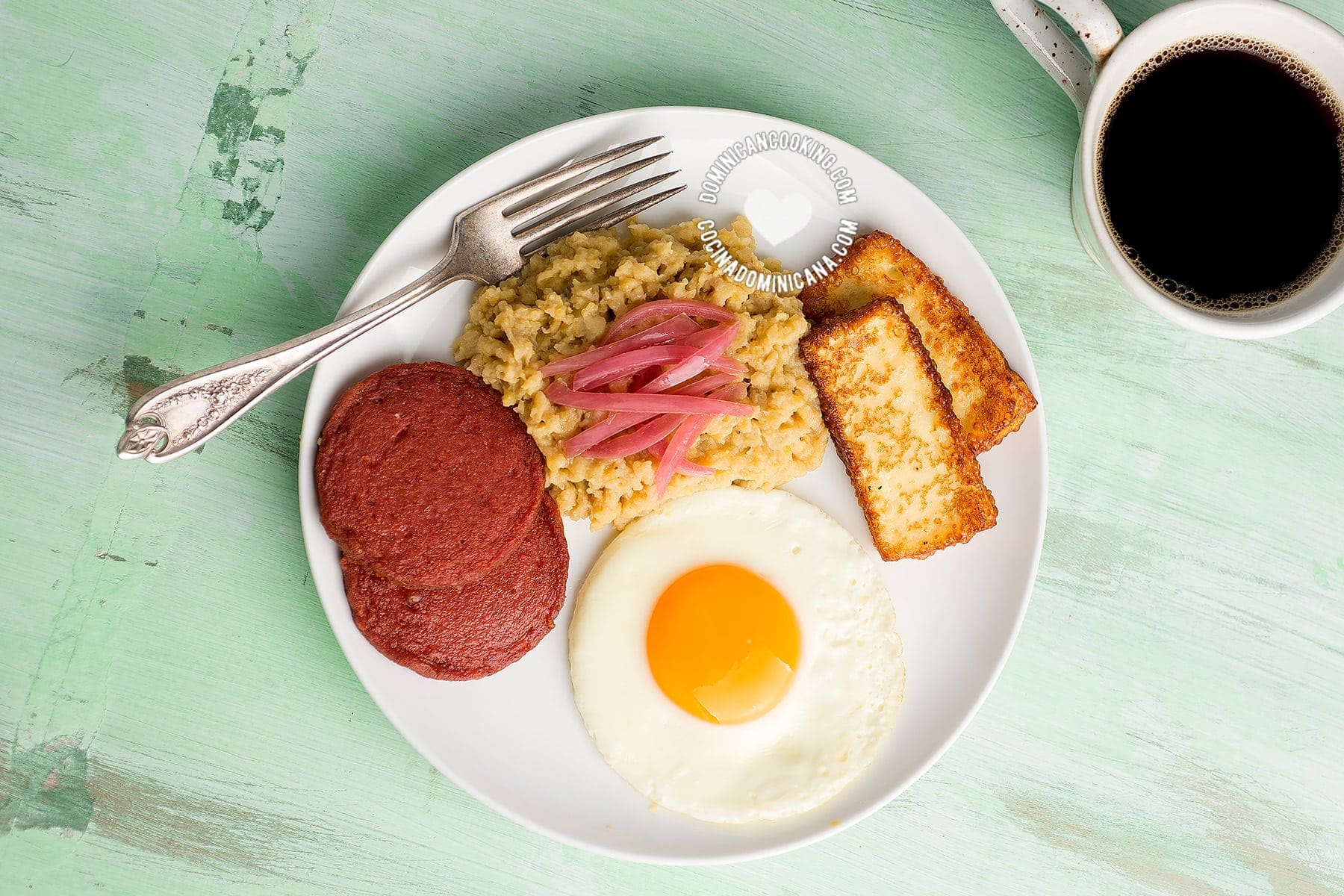
Plantains for breakfast are usually eaten as mangú, which involves boiling the plantains and mashing them with some salt and oil. Accompanied by eggs, fried cheese and fried Dominican salami.
A little heavy on the system, perhaps, but nutritious enough.
Saying it, not believing it
Having said all that, I have still to meet a middle class or even an upper class Dominican who looks down on mangú.
That is one of the things I love about the country: despite sayings like 'el platano embrutece' Dominicans are still fiercely proud and appreciative of their traditional cuisine, and are not about to replace it completely with foreign substitutes.
Dominicans may still say it, but nobody really believes that el platano embrutece.

A note by Tía Clara: While for us Dominicans aplatanarse means "becoming Dominican", and has a positive connotation, in Cuba aplatanarse also means "To stagnate [= to remain in the same position without aspiring to anything more]", so no far off from this myth.
And don't miss our plantain recipes, and learn more about plantains.

- Learn more about me and the humans behind this blog.
- Share your questions and comments about this post.
- Subscribe to receive our recipes and articles by email.
- Please stay in touch! Follow us on: