

Casabe -a yuca or cassava flatbread- has been eaten here for over a millennia. Learn its history, and how you can make it at home with modern methods with our recipe with video.
By - Reviewed: . Original: Jun 16, 2013
❝ This food is excellent... ❞
Why we ❤️ it
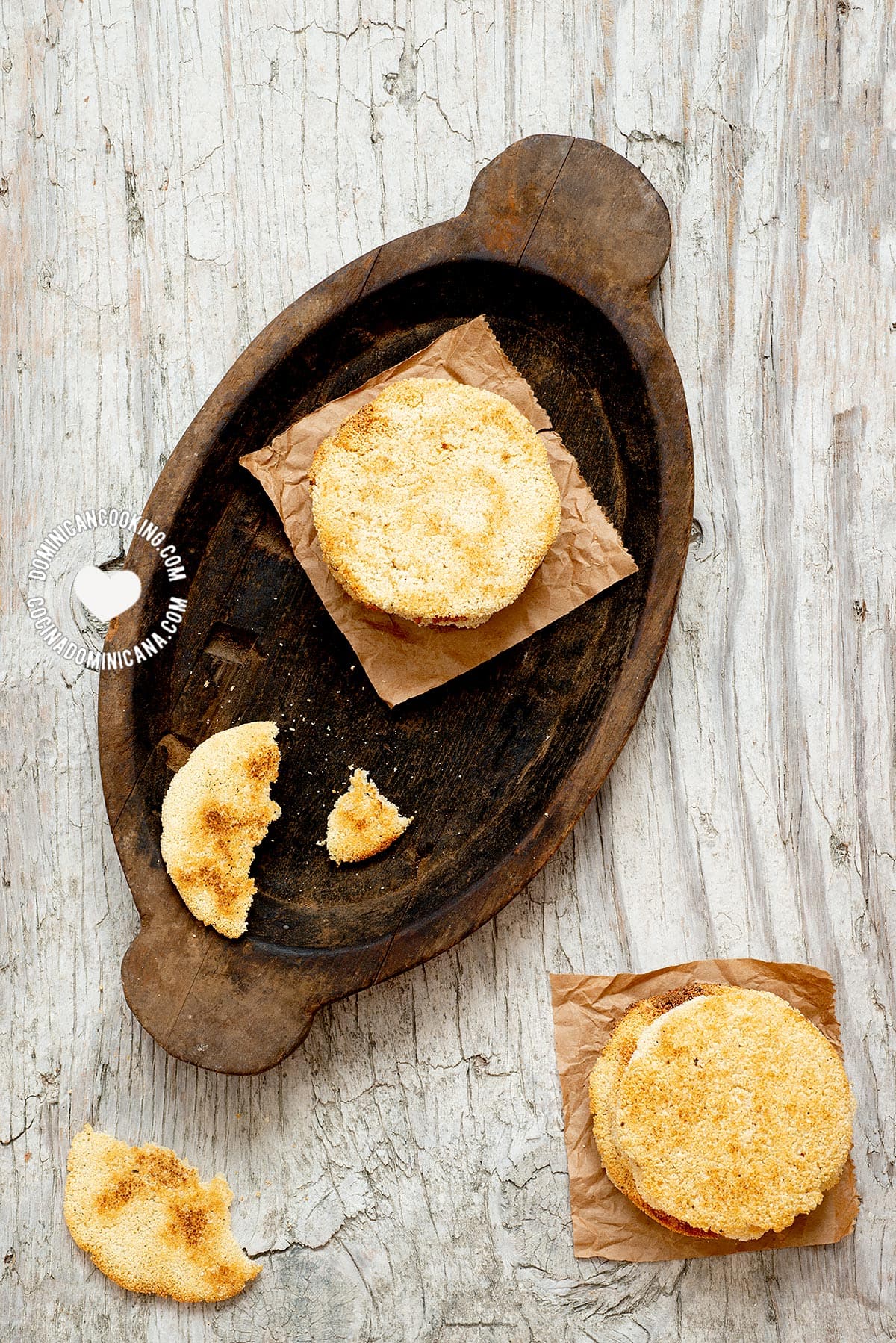
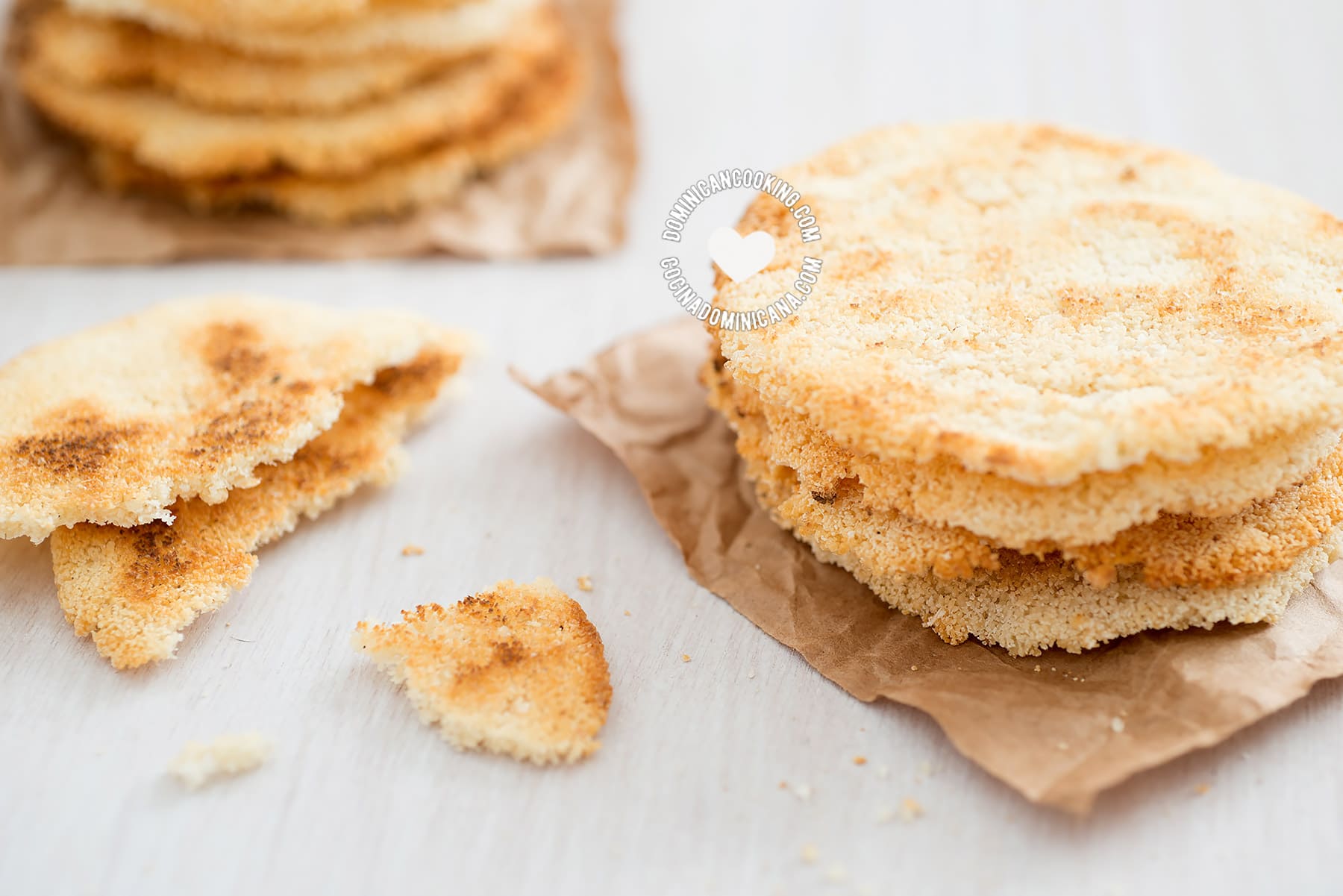
Casabe is one of the oldest dishes in our heritage, it was bequeathed to us by the Taino, the first settlers of the island. Casabe - a crispy flatbread made from cassava (yuca) flour - was at the center of the Taíno diet.
Over 500 years later, casabe is still a popular food in Dominican households, widely available throughout the country over, and reinvented by small businesses that export it to other countries in the Caribbean and Latin America.
What's casabe?
Casabe was one of the staples of the Taino diet. [1] The Taino brought yuca (cassava root) and the knowledge of how to make this flatbread from the mainland. It was a mainstay wherever the Arawak (of which Taino were part) settled.
Casabe is still consumed in modern-day Puerto Rico, Dominican Republic, Haiti, Cuba, Jamaica, and Venezuela.
"So important was this food to these indigenous people [Taino], that the main god in their pantheon was called Yocahu Vagua Maorocoti, which is roughly translated as 'Our Great Lord of Yuca'". [2]
To make casabe, the yuca has to be peeled, washed, ground up, compressed, sieved, and then finally shaped into large circular molds and baked on a stone hotplate called burén (a Taino word) [2].
This ancient yuca bread is fat-free and rich in fiber, and although not formally certified, yuca is always grown organically. Despite being preservative-free, this yuca bread has a shelf life of up to eight months. It is also a great gluten-free alternative for celiacs.
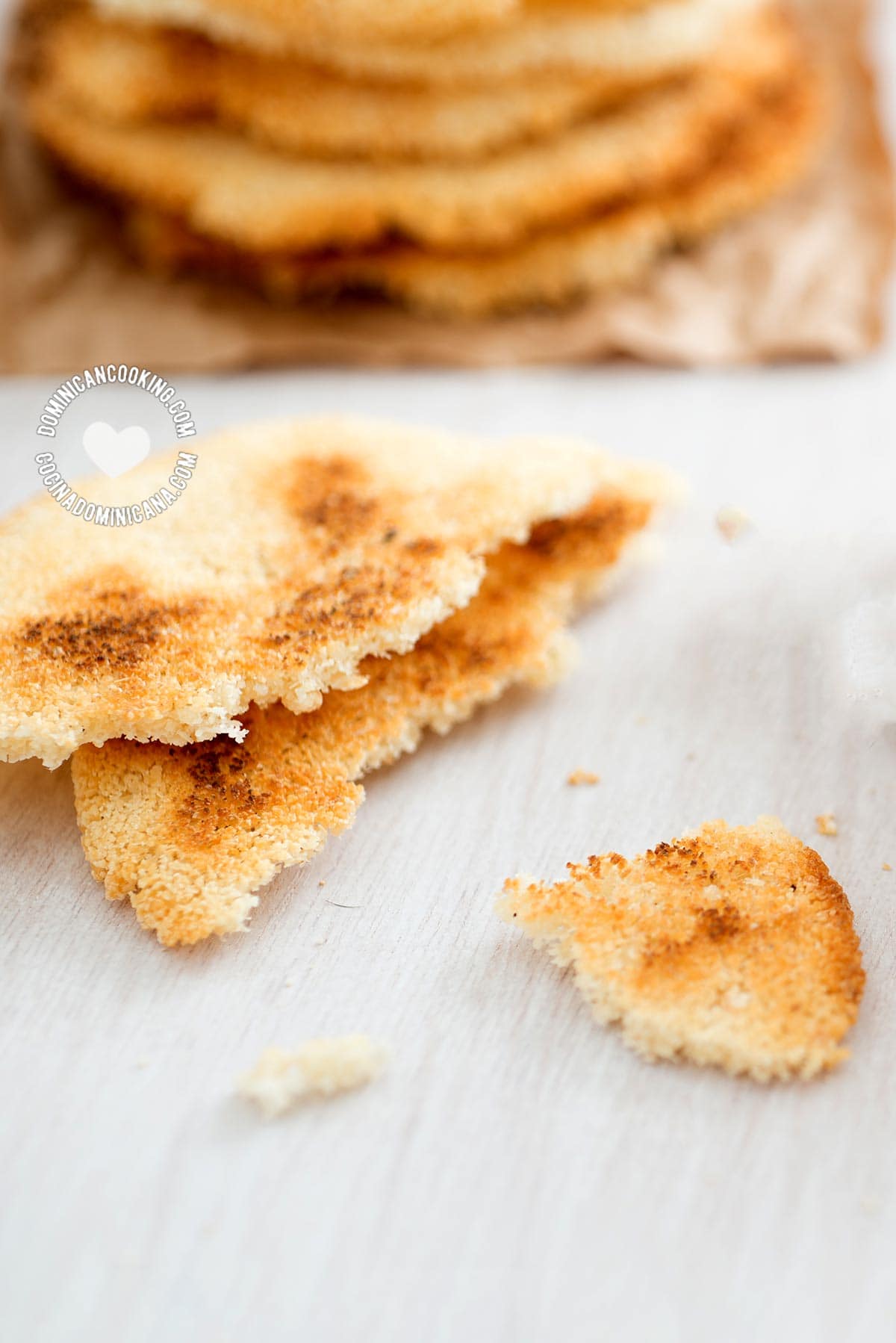
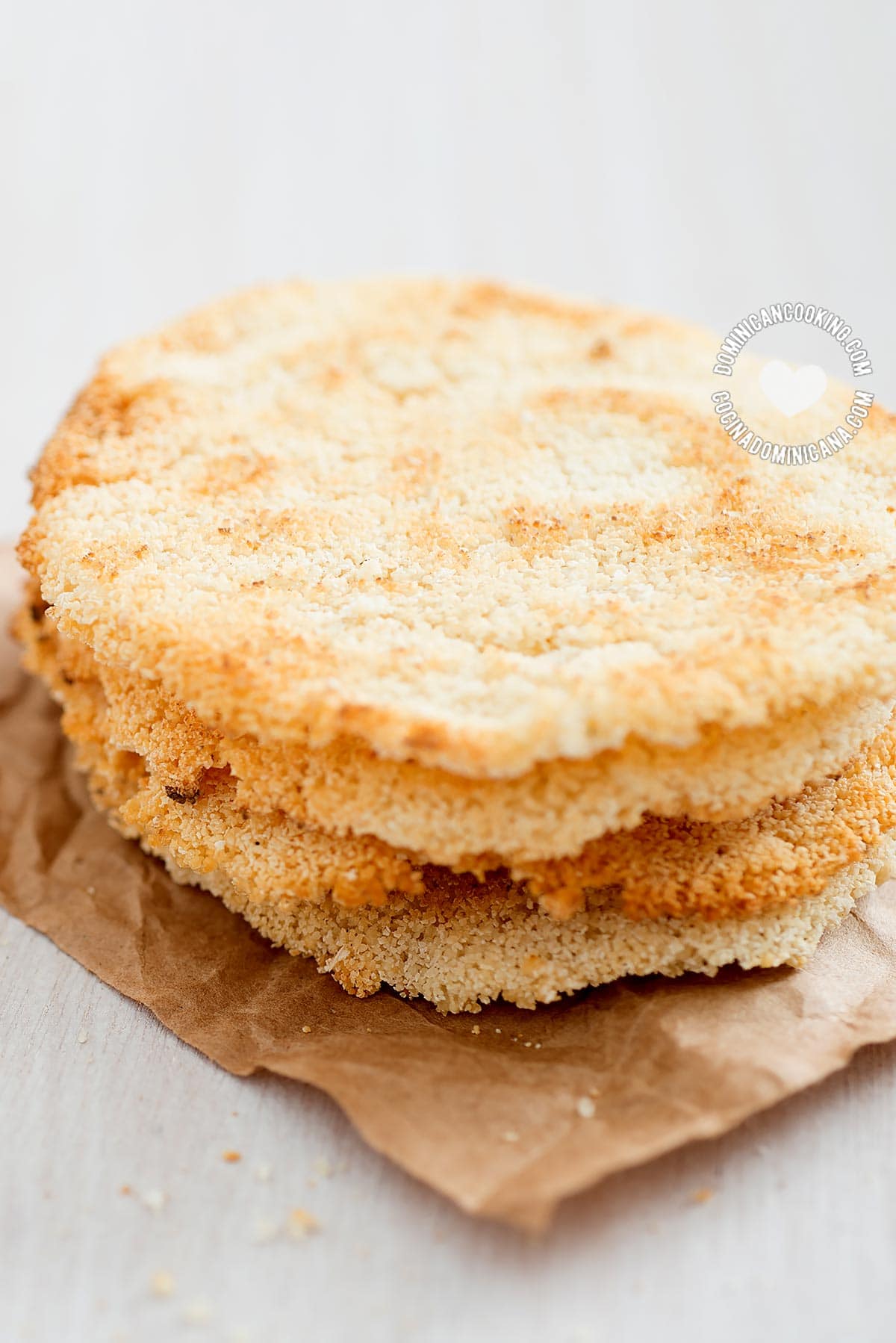
Homemade casabe.
How to eat it casabe
Casabe is commonly found in the Northwest and Southwest served with Mambá, the savory peanut butter, or with Habichuelas con dulce, a uniquely Dominican dessert.
As with conventional bread, it can also be eaten at different times of the day in a variety of ways. Most commonly for breakfast, served with coffee or a Café con leche, it is also used to accompany soups and stews.
Other ways to eat casabe include soaking it in water and serving it with fried eggs or avocado. It can also be baked and served with a sprinkle of salt and a drizzle of olive oil. For a light supper, accompany it with a mug of Dominican Hot chocolate drink.
It can also be used as a buffet food with dips, in the same way as tortilla chips, crackers, or pitta bread.
Top tips
- Pan: Use the smallest pan you have. I used a one-egg pan to make 12 single-serving cassava bread. If yours is bigger, the serving size may vary.
- Thickness: Aim for thin casabe - thinner casabe is crispier. Do not press it! The thin layer of grated cassava has to be fluffy. If you press it it'll become very hard.
- Storing: Place in a tight container and store in a dry place - its natural dryness will help it keep for weeks, if not months.
About this recipe
Why write a recipe for it? After all, Dominicans don't make casabe at home. So what possessed us to even try this?
Years ago, a reader (Hi Catherine!) wrote to us about her teaching some friends in Canada how to make casabe. She ended one of the emails in our exchange with, "Taino women would have been proud of me." They sure would, Catherine.
This exchange -- and Catherine's ideas-- inspired us to create our own recipe that could be made at home with modern kitchen implements but inspired by the ancestral way it was made by Taino Indians.
So go ahead, give it a try. And to make things a bit more interesting, we have added two options for flavored casabe that we hope you like.

Video
Recipe
This awesome free recipe contains Amazon affiliate links, we receive a small commission from any purchase you make at no extra cost to you. Thanks for your support!
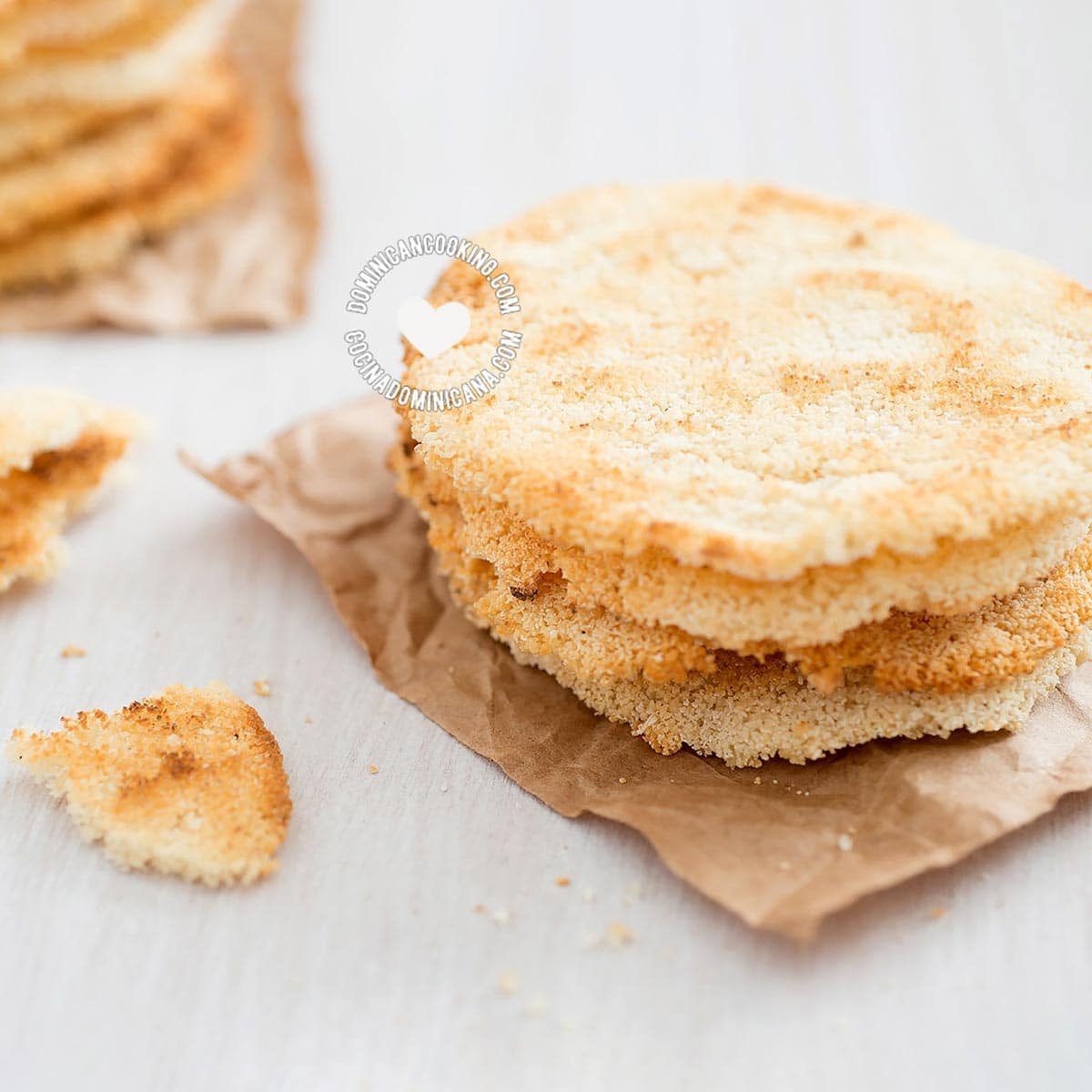
Casabe [Video+Recipe] Cassava Bread
Ingredients
- 1 pound yuca , (cassava), peeled and washed
Parmesan casabe
- ⅓ cup freshly grated parmesan
Garlic casabe
- ½ teaspoon salt
- 2 garlic cloves, (crushed )
- ¼ cup olive oil
Instructions
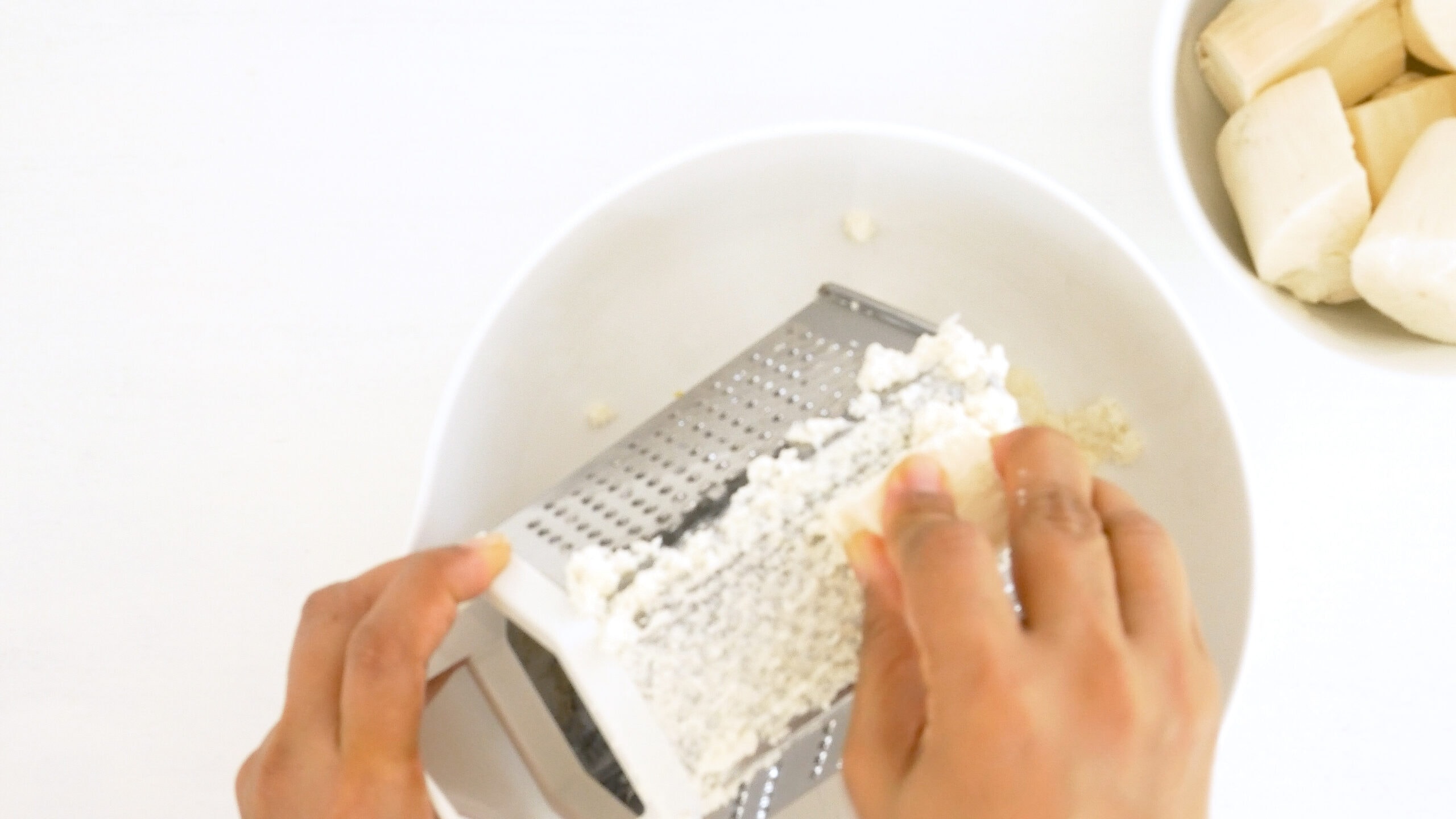
1. Grate yuca
 Grate the cassava with the least coarse side of the box grater.
2. Squeeze out liquid
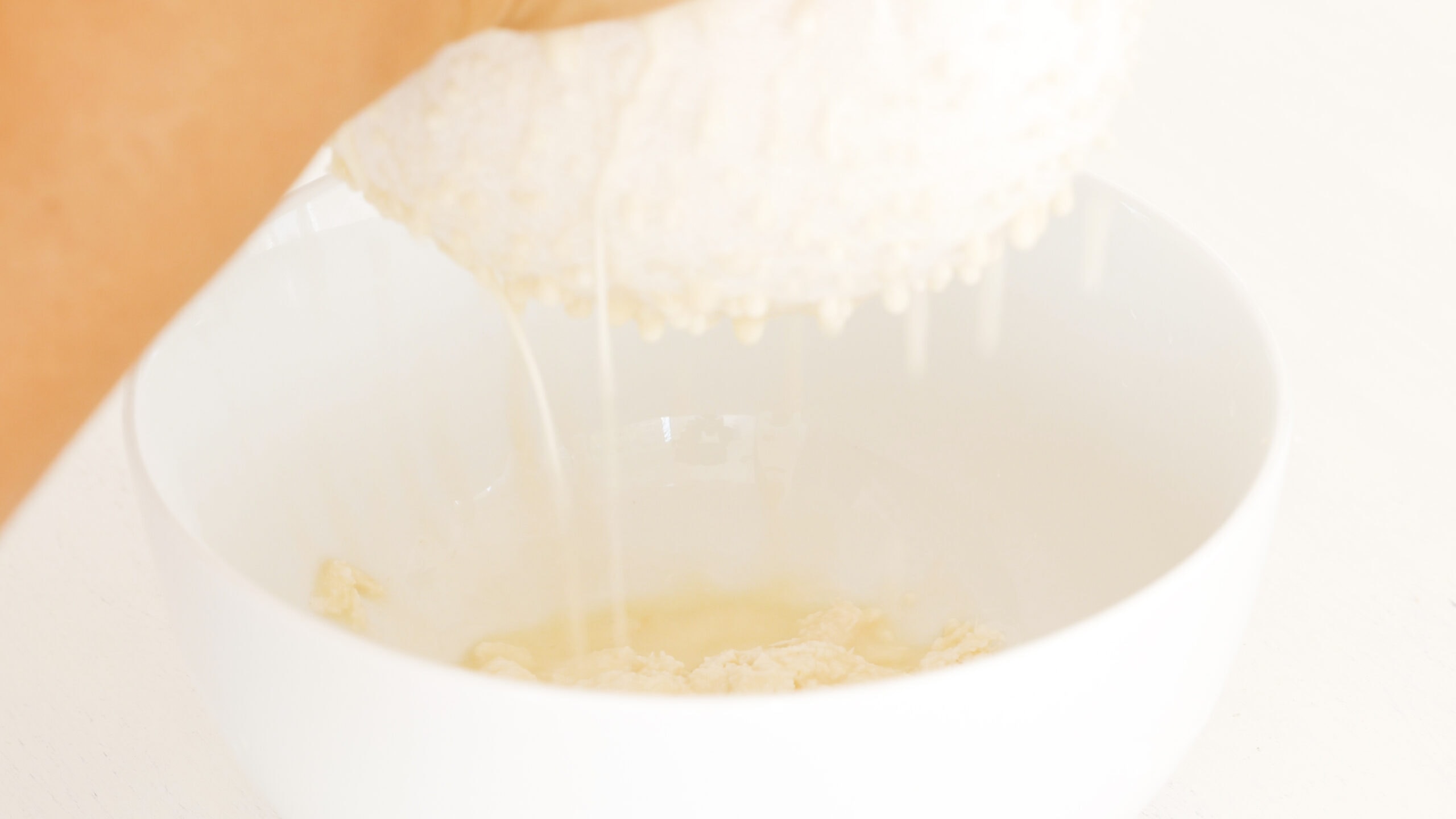
- Using a clean cotton cloth, squeeze the cassava very well until you extract as much liquid as possible. Remove any clumps or chunks of cassava, however small.⚠️ These steps are very important and will affect the final result.
3. Dry
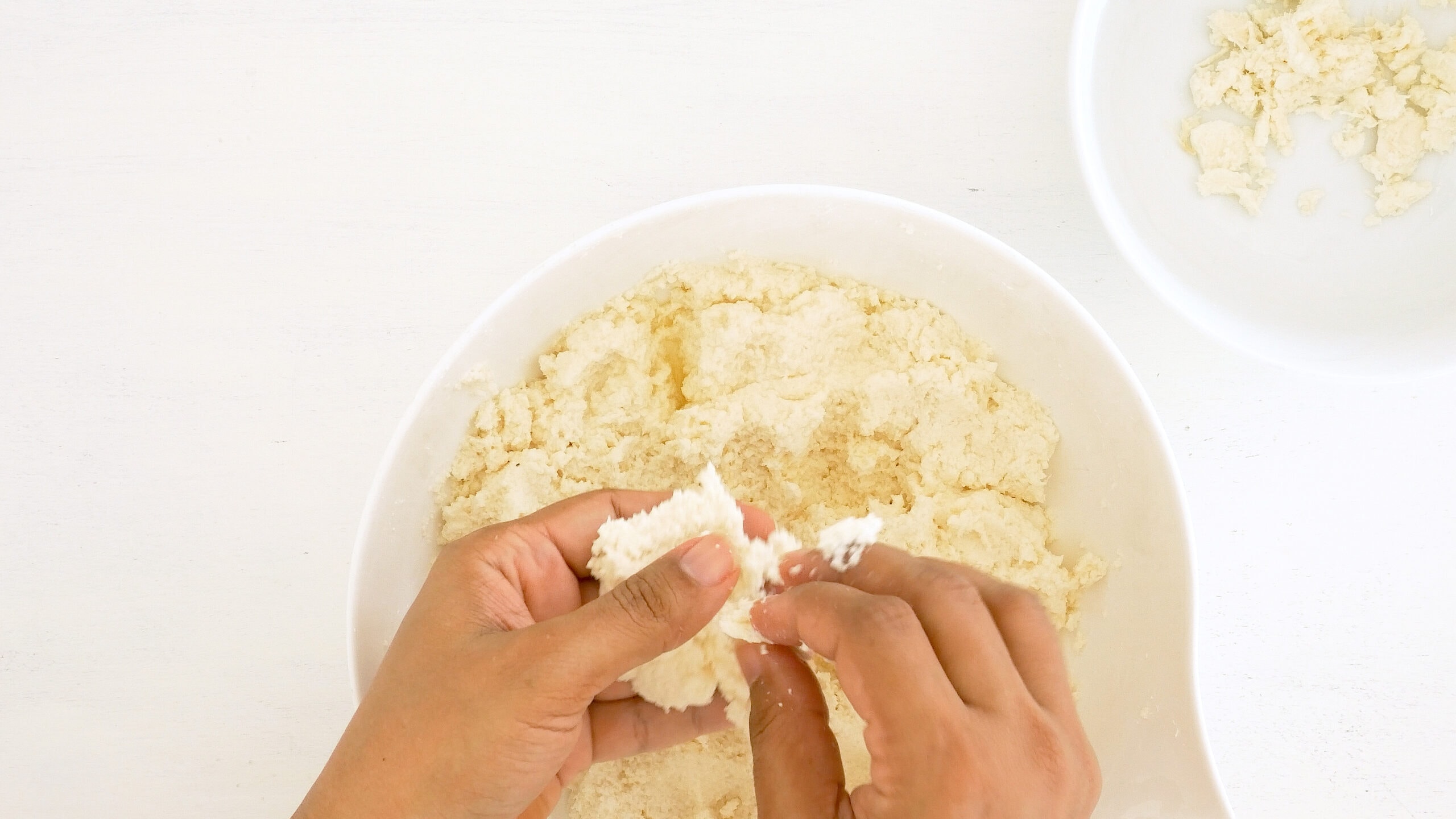
- Spread the yuca on a baking tray and leave in the fridge for 4 hours (the refrigerator acts as a dehumidifier), stirring and breaking clumps at least every hour.By then it should be just slightly damp, and the texture will be similar to finely-grated parmesan.
4. Cook casabe
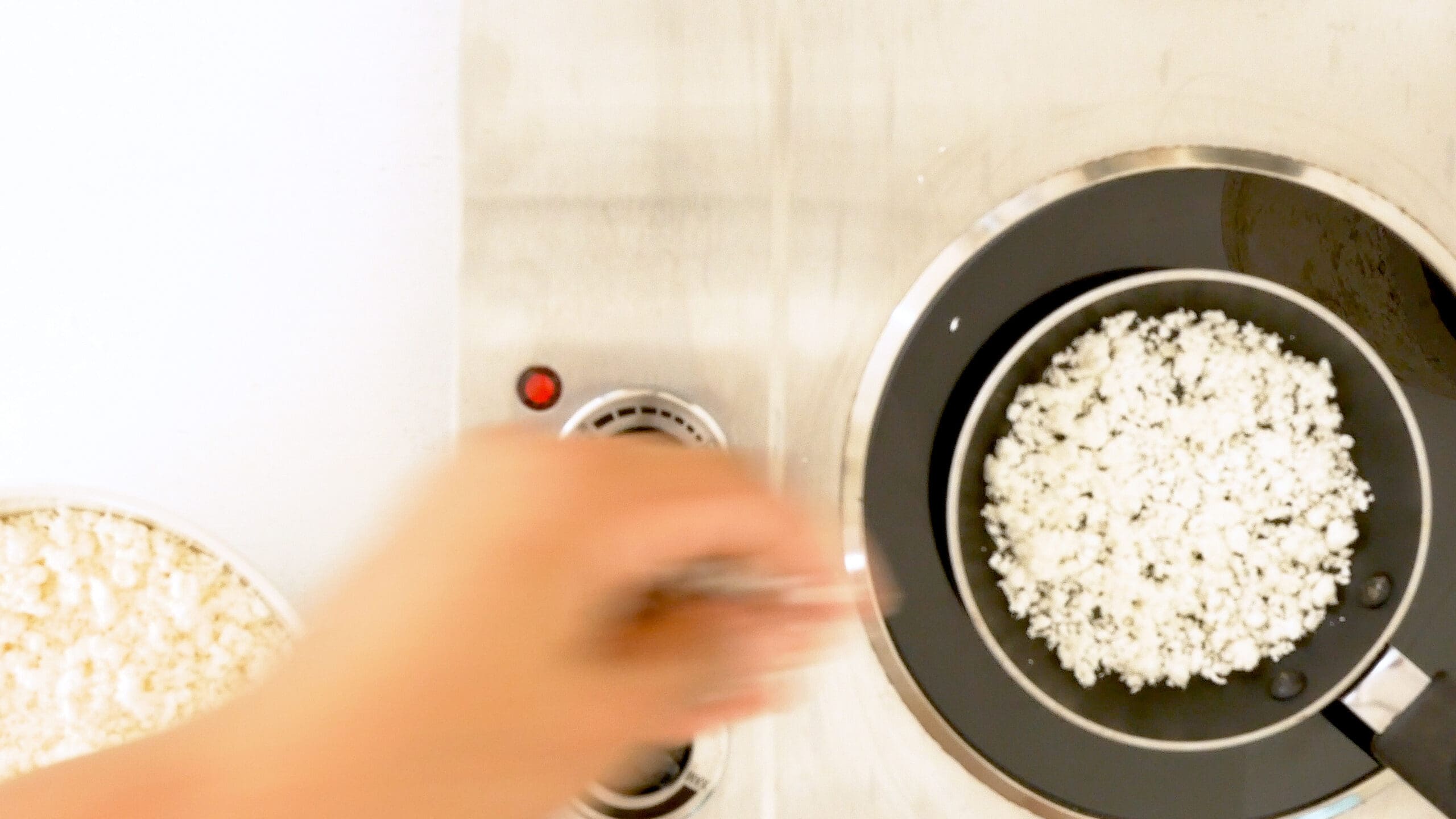
- To make traditional casabe, heat a nonstick pan over medium heat. Spread some cassava on it, making sure to break down any clumps before you do.Cook for 1 minute, turn and cook for another minute, or until both sides are light golden brown, and the casabe is no longer flexible.💡 To make parmesan casabe: Mix half the grated parmesan with the grated cassava. Cook as described above. Sprinkle with the remaining parmesan and toast in the oven.💡 To make garlic casabe: Mix garlic and salt with the grated cassava. Cook as described above. Sprinkle with the olive oil and toast in the oven.
5. Rest
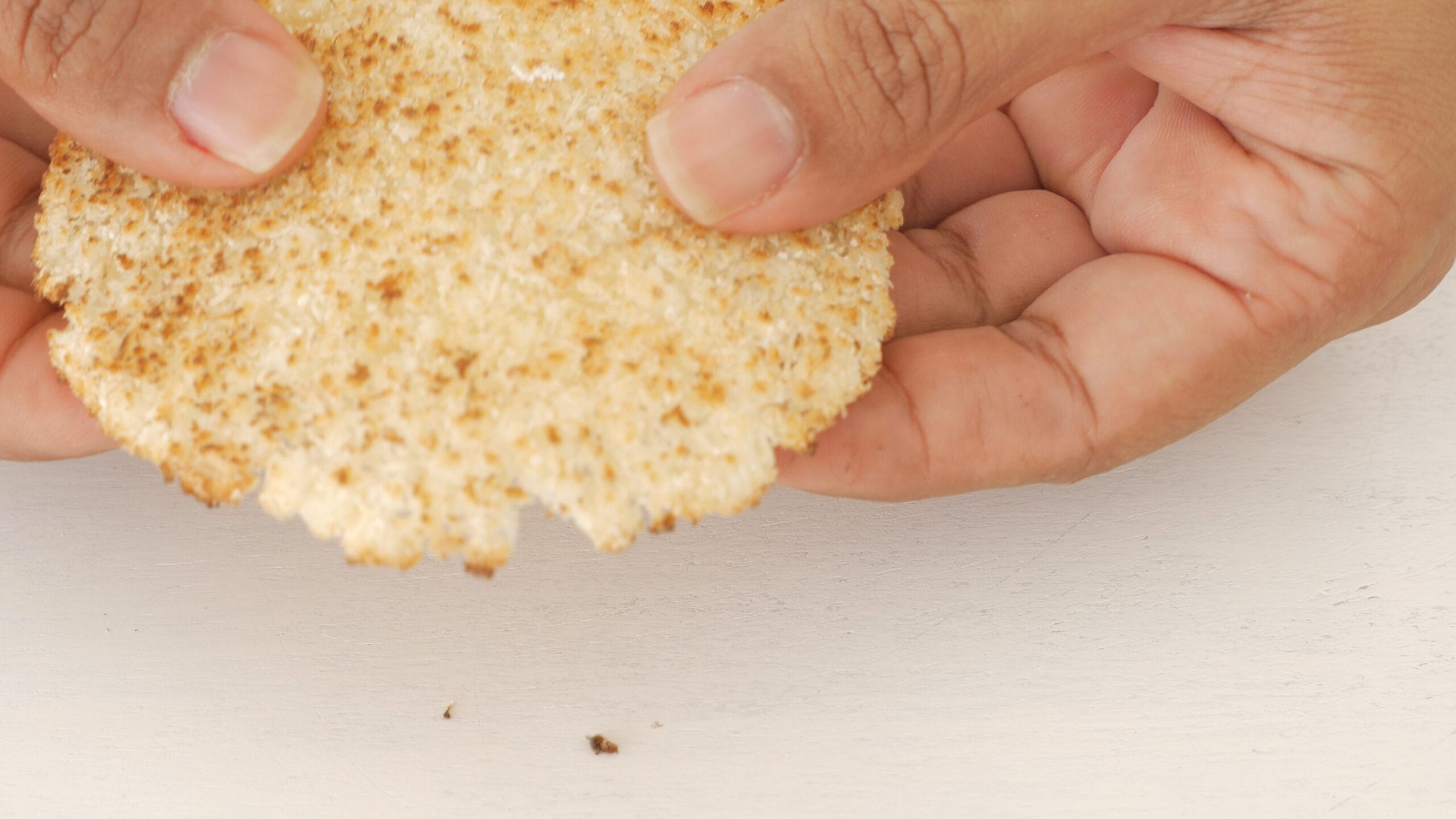
- Once you have made all the cassava bread, place on a wire tray to cool down.⚠️ It should not be flexible; if it is, it means that not all the water has evaporated. If that is the case, cook a bit longer.
6. Storing and serving
 Store casabe in an airtight container for up to 8 months if it only contains yuca. If you have mixed other ingredients, it should last 2 weeks.You can find serving suggestions above the recipe.
Cook's Notes
Nutrition
Nutritional information is calculated automatically based on ingredients listed. Please consult your doctor if you need precise nutrition information.
Want to save this recipe?
Enter your email & I'll send it to your inbox. ❤️ Plus, get great weekly recipes from me!
More recipes with yuca
Yuca, a you can see above, is one of our most beloved ingredients, and we can make so many tasty things with it. Learn how to peel yuca, and check out all our favorite yuca recipes, among them yuca fries, chulitos, arepitas de yuca, boiled yuca al mojo de ajo, yuca hervida encebollada, mofongo de yuca, empanadas de yuca, pastelón de yuca, yuca balls, and the lesser-known panecicos.
And if you are asking yourself whether you can make desserts with yuca, the answer is yes, so enjoy these traditional buñuelos de yuca, or one of my favorite creations, pudín de yuca.
History of casabe and keeping the tradition alive
This part was written in 2003 by Ilana Benady, edited and factchecked by Clara González
When the Spanish first arrived on the island, they soon found that casabe --which they called "the bread of the Indies" [1]-- had advantages over their traditional European bread, in that it has a long shelf life [3] and does not go stale or moldy. For this reason, it is said that the conquest of the Americas was fueled by casabe, taken by the conquistadores from Hispaniola as they continued their push into Mexico and other parts of the continent [4].
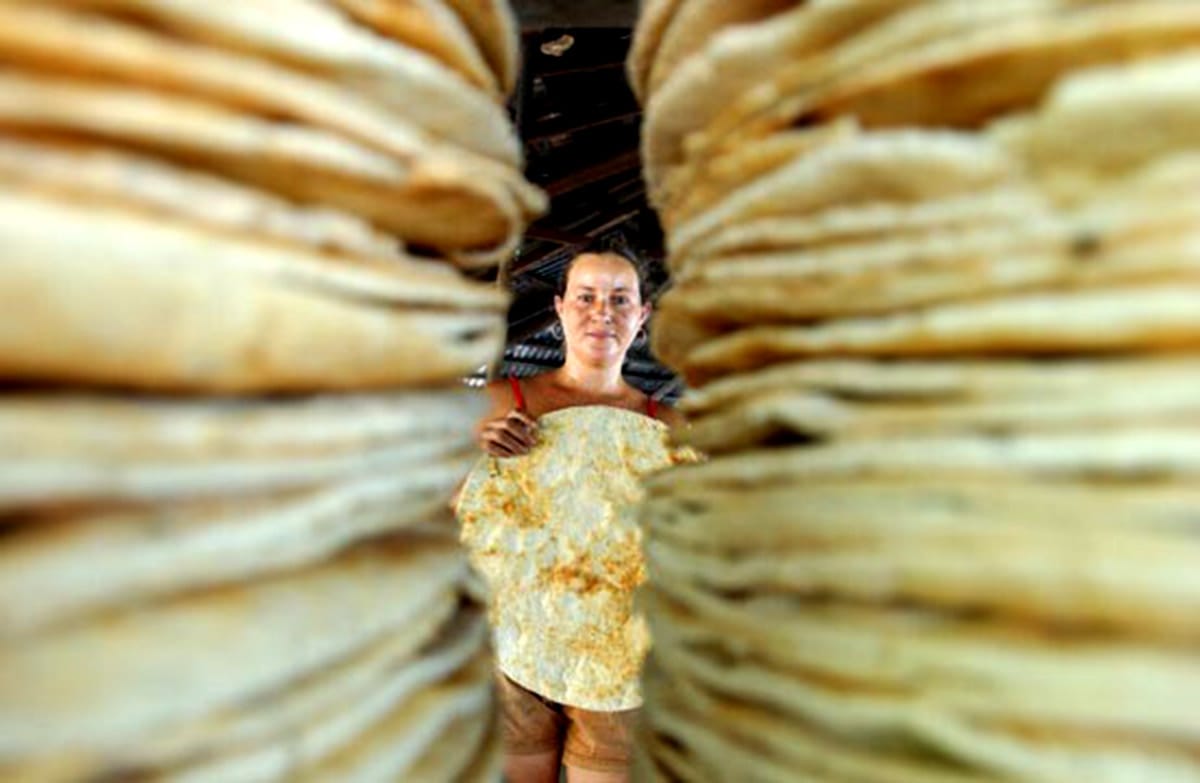
"Casabe lady" photo by Pedrito Guzmán. Used with permission.
Up till a few decades ago, casabe production was a dying tradition in the Dominican Republic. The ultimate cottage industry, it was restricted to several very small producers, mainly in the northwest of the country, and distribution and sales beyond the local area were close to nonexistent.
Making commercial quantities is not an easy task using the traditional method, which is more appropriate for producing the amount needed to feed a household.
This Amerindian tradition was revitalized by enterprising producers like Nicolas Almonte of Casabe Guaraganó, who, in the 1970s, adapted this labor-intensive craft to a larger scale process where much of the production is done by machinery. This allows for increased volumes of production.
Now other producers have followed suit, and casabe is being produced on a much larger scale and being distributed to colmados and supermarkets around the country, as well as to overseas markets, especially the United States.
An additional benefit of the increased production is that it employs a significant amount of people - especially women - in rural areas and acts as an incentive to keep people from migrating to the cities or overseas.
Monción has a population of 14,000 and it is estimated that 4,000 or so owe their living directly or indirectly to this industry. Although the Monción area is home to many small and medium-scale producers, they are working together as a casabe producers association in order to promote the product.
The challenge for these producers is to increase the popularity of this grated cassava bread, which is still seen as a "humble" food. The producers also want to develop the image of casabe and turn it into a gourmet product for the domestic and international market.
Many producers are making several varieties, including garlic-flavored casabe, or as a dessert - a sweet casabe filled with guava or pineapple jam, and different sized ones such as 'bite-size' to serve with dips. They also stress its versatility and health benefits as selling points.
References
- Frank Moya Pons, The Dominican Republic: A National History. Sto. Dgo: First Markus Wiener Publishers, 2006. Page 19.
- Juan B. Nina, El Origen de la Cocina Dominicana. Sto. Dgo: MedyaByte, 2002. Page 21.
Tan importante era la yuca para nuestros indígenas, que el dios principal en su panteón recibía el nombre de Yocahu Vagua Maorocoti, que más o menos equivale a "Gran Señor de la Yuca" - Hugo Tolentino Dipp, Itinerario Histórico de la Gastronomía dominicana. Sto. Dgo. Amigo del Hogar, 2014. Page 27.
- The Journal of Gastronomy. California. American Institute of Wine and Food, 1987. Page 47.

- Learn more about me and the humans behind this blog.
- Share your questions and comments about this post.
- Subscribe to receive our recipes and articles by email.
- Please stay in touch! Follow us on: