

If you are looking for an uncomplicated harina de maíz dessert recipe, this Dominican Pan de maíz (cornbread) is just what you need for breakfast, a mid-afternoon snack, and the best dessert with a cafecito. See why our readers love this recipe, and enjoy a slice in no time.
By - Reviewed: . Original: Dec 28, 2002
Why we ❤️ it
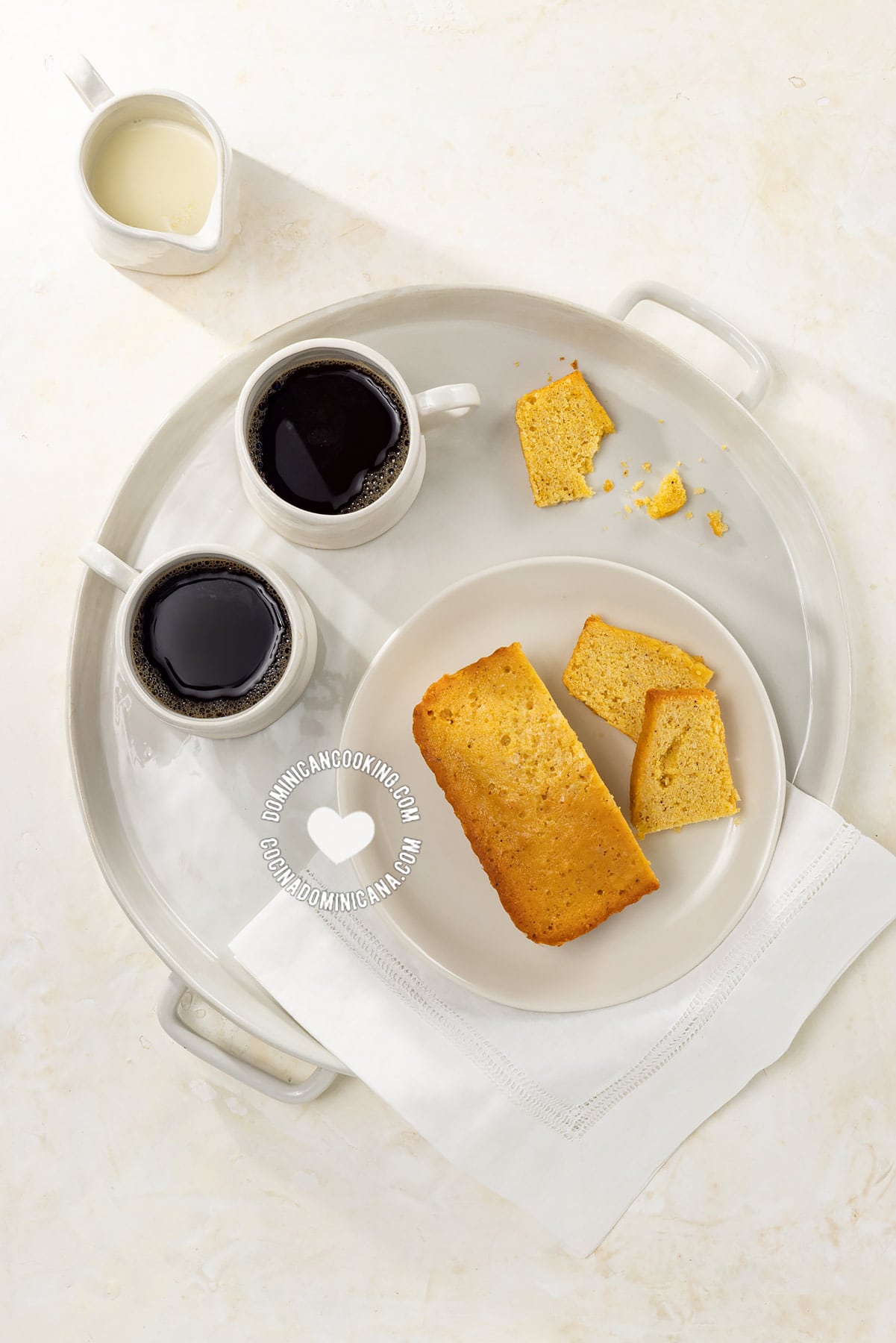
Pan de maiz (cornbread in Spanish) is a dense cake-like cornbread made with cornmeal, that can be served with cocoa as a snack or as dessert.
Pan de maíz is very popular in the Dominican Republic, and for an excellent reason: it is easy to make, inexpensive, requires very few utensils, and is a lovely dessert.
What's cornmeal?
The biggest confusion about this straightforward cornbread recipe is about cornmeal and what it is. Cornmeal is very popular in our cuisine, and we've compiled a handy guide to cornmeal.
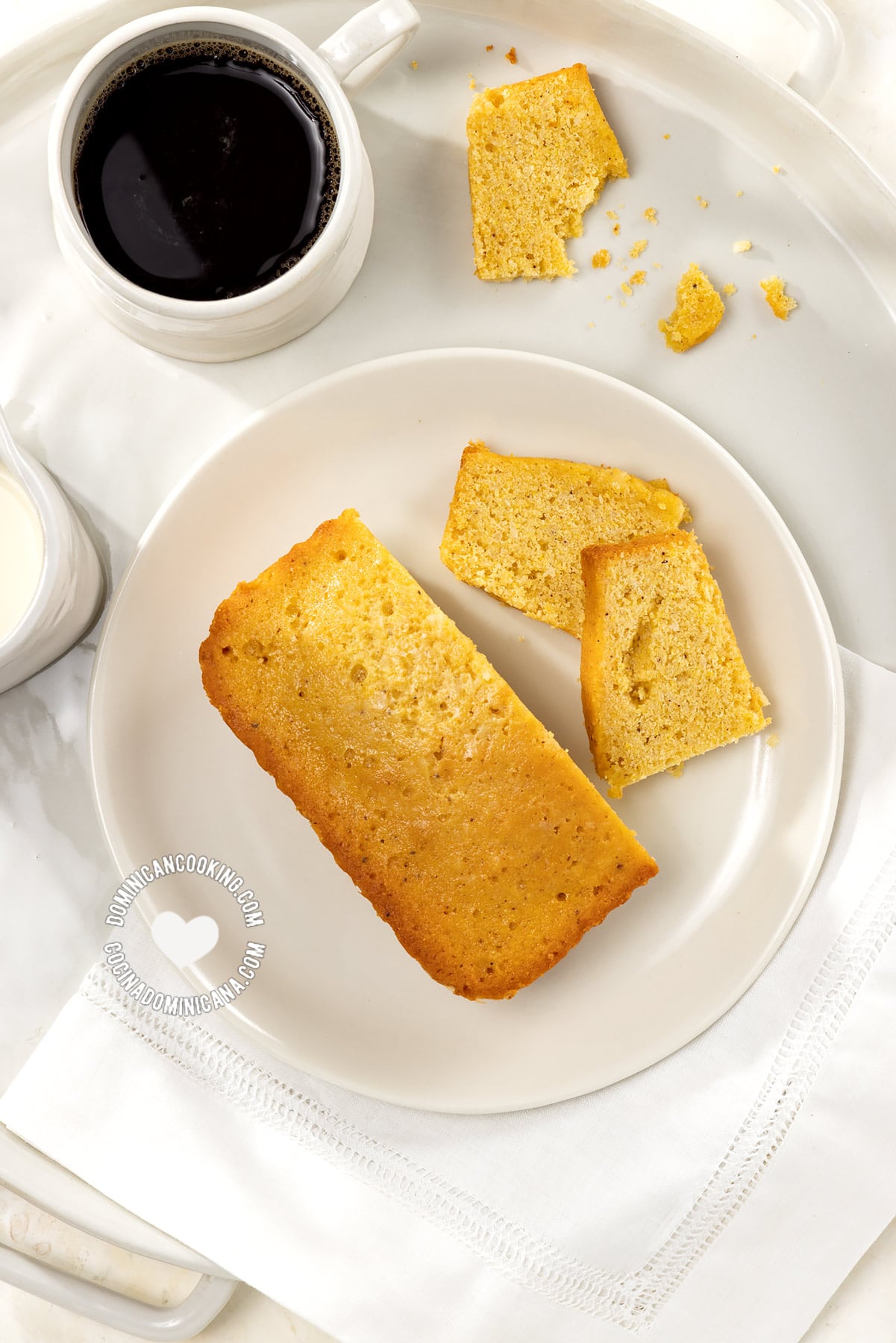
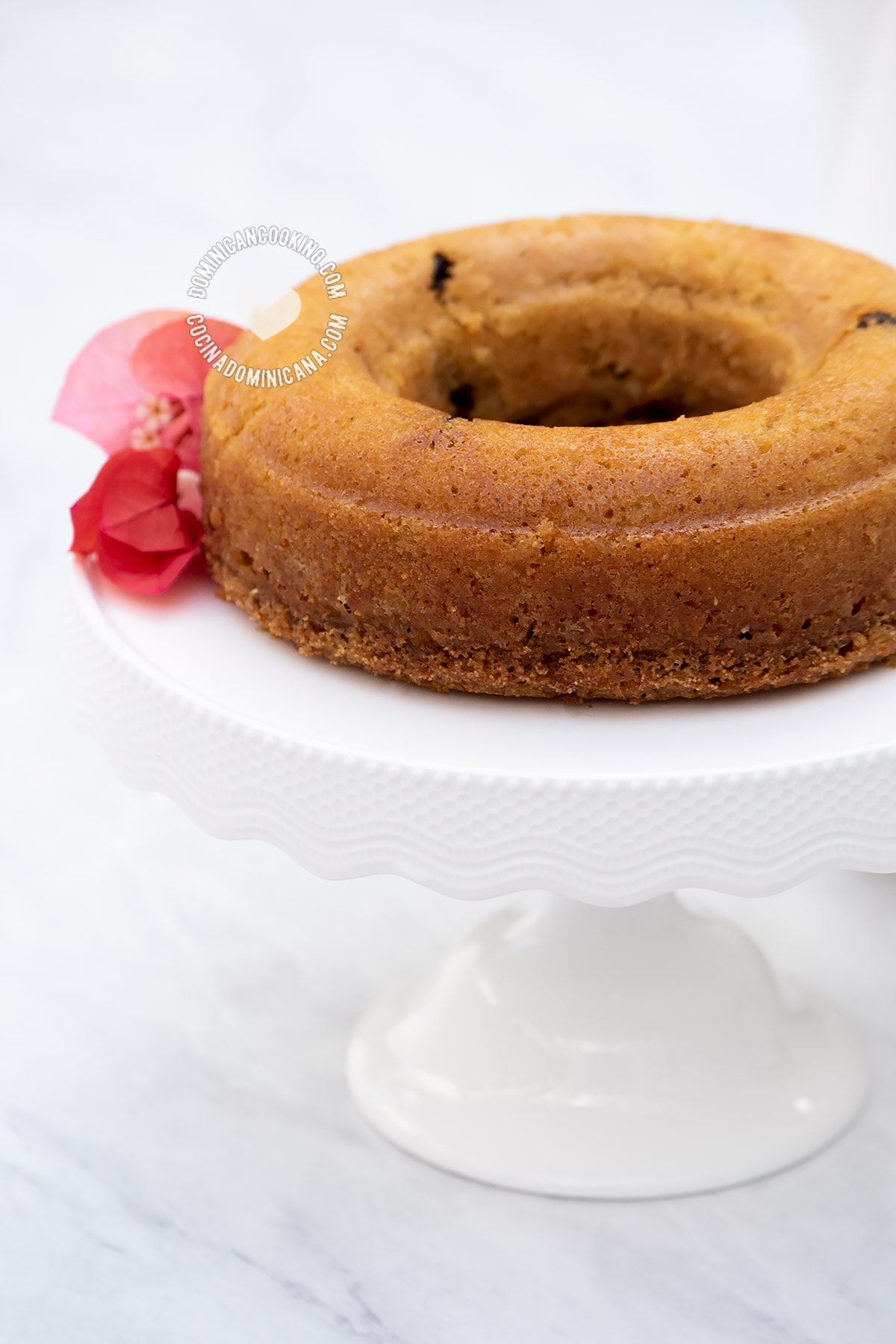
Easy cornbread (Dominican pan de maíz).
Serving suggestions
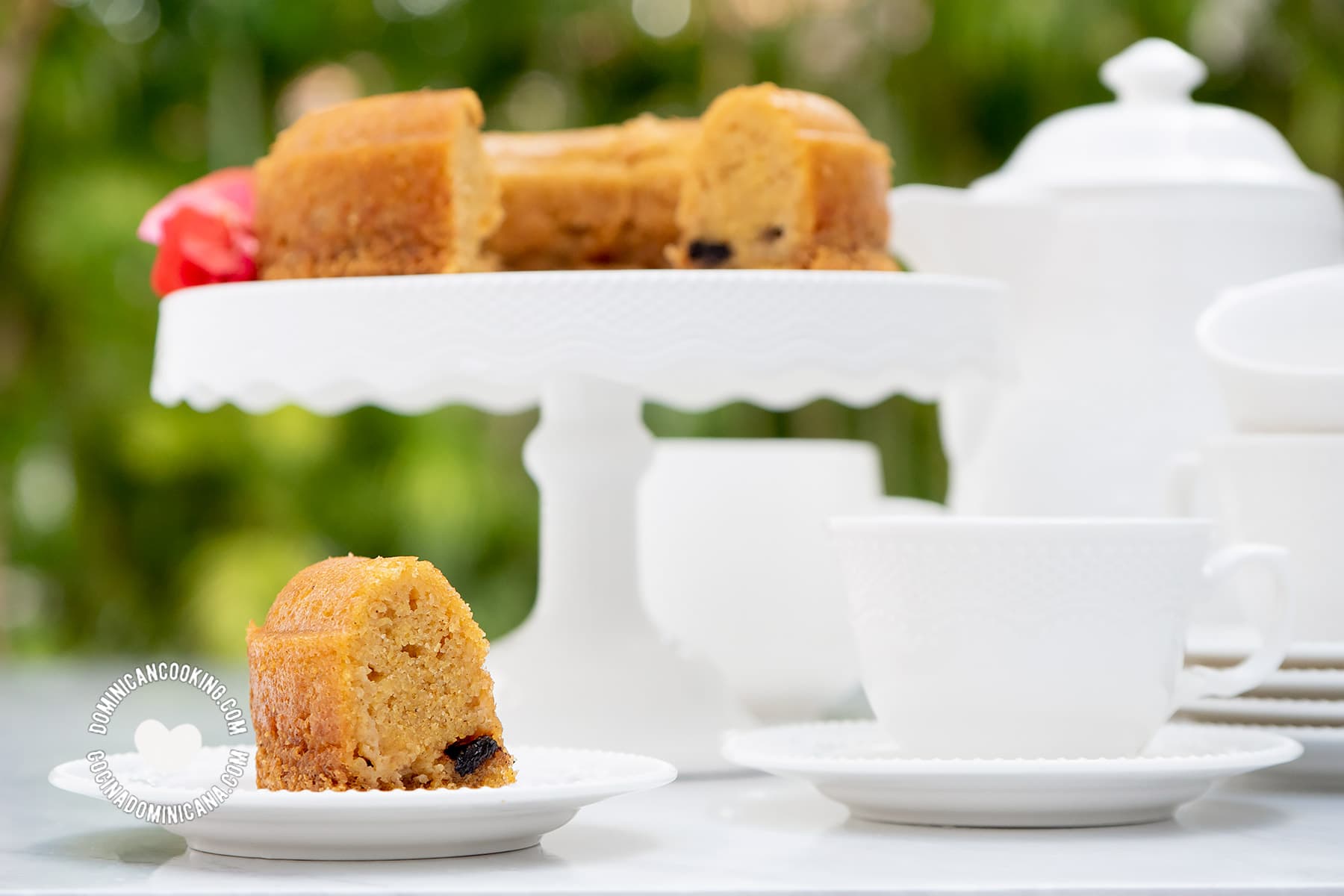
Dominican cornbread is served with non-dairy cocoa or coffee as a snack or dessert after a meal. It is easy to prepare and very popular in the Dominican Republic. It can also be served as a post-lunch dessert, with Café con leche (latte), or cocoa as breakfast or dinner. You can also serve it with any of our hot breakfast drinks.
This cake should be served at room temperature; otherwise, it will be harder and feel drier.
Top tips
- Texture: Do not expect something that has the texture of a cake. Dominican pan de maíz is a little drier, more dense, and less sweet than your regular cake.
- Mold: You can bake this cornbread in a bundt cake or a regular cake pan or make it into cornbread loaves by baking it in a bread loaf pan.
About our recipe
Corn (maíz) was cultivated on the island before the European arrival on the continent. It took some time for creole cookery to develop, as other groups arrived (some forcefully) and made their contributions to our cuisine.
Pan de maíz, unlike wheat flour cakes, can be made with locally-grown ingredients and does not require a lot of expertise, which explains why it became a mainstay of Dominican dessert cookery. Each Dominican home, however, may add small touches that would affect in small ways the flavor or texture.
Keep in mind that this is not as sweet as a regular cake, and its texture is drier/rougher than cakes made with wheat flour. This is why it is best served alongside your favorite drink.
Does your family make this differently? Please let me know in the comments!

Video
Recipe
This awesome free recipe contains Amazon affiliate links, we receive a small commission from any purchase you make at no extra cost to you. Thanks for your support!
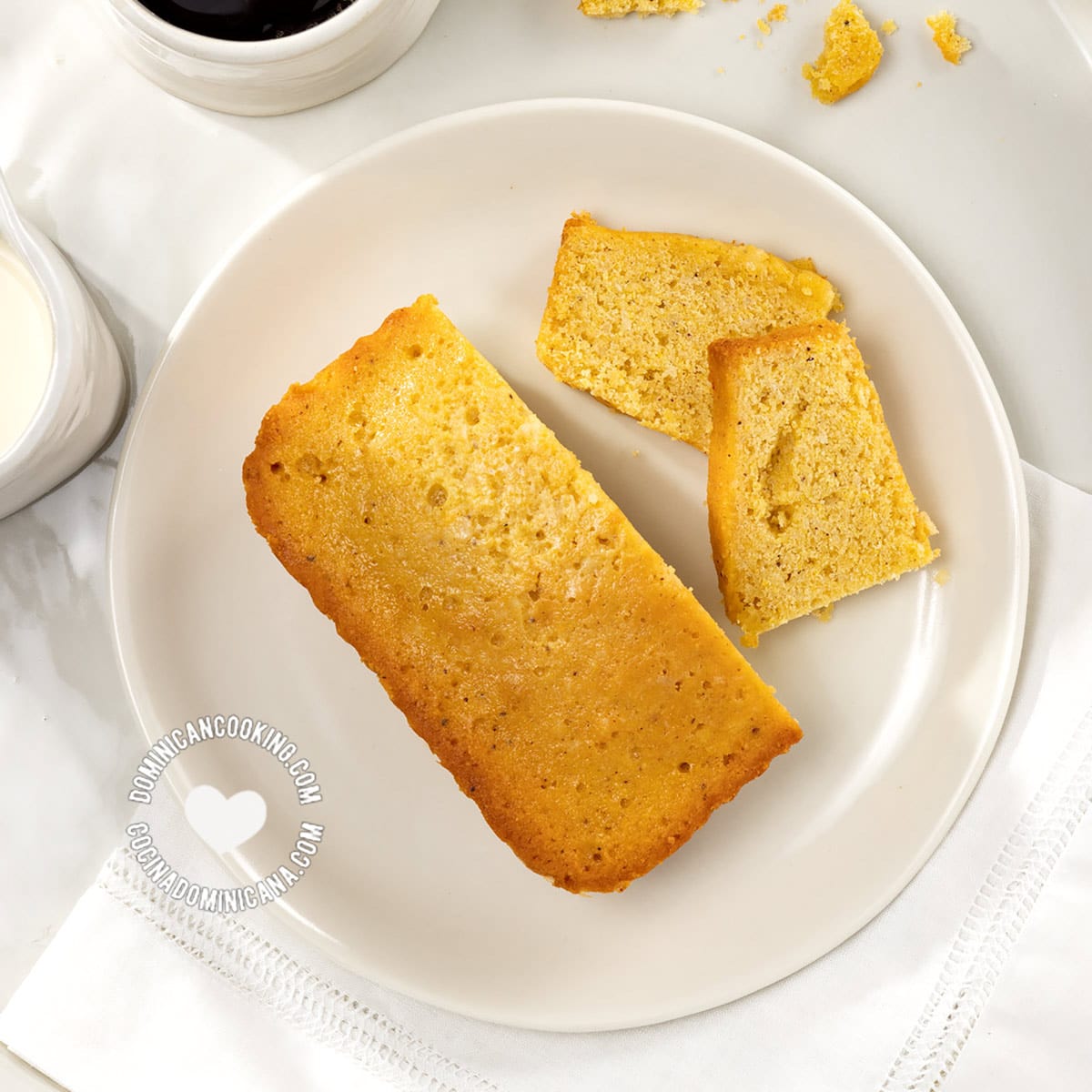
Pan de Maiz [Video+Recipe] Easy Cornbread
Ingredients
Dry ingredients to mix first
- 2 cup cornmeal
- ½ cup brown sugar
- 1 tablespoon cornstarch
- ½ teaspoons salt
- 1 teaspoons cinnamon powder
Rest of ingredients
- 1 cup evaporated milk
- 1 teaspoon baking powder
- 2 egg (medium)
- ⅛ cup raisins, (optional)
- 2 tablespoon salted butter, at room temperature (plus extra for greasing the pan)
Instructions
1. Preheat
 Preheat the oven to 300ºF (150ºC).
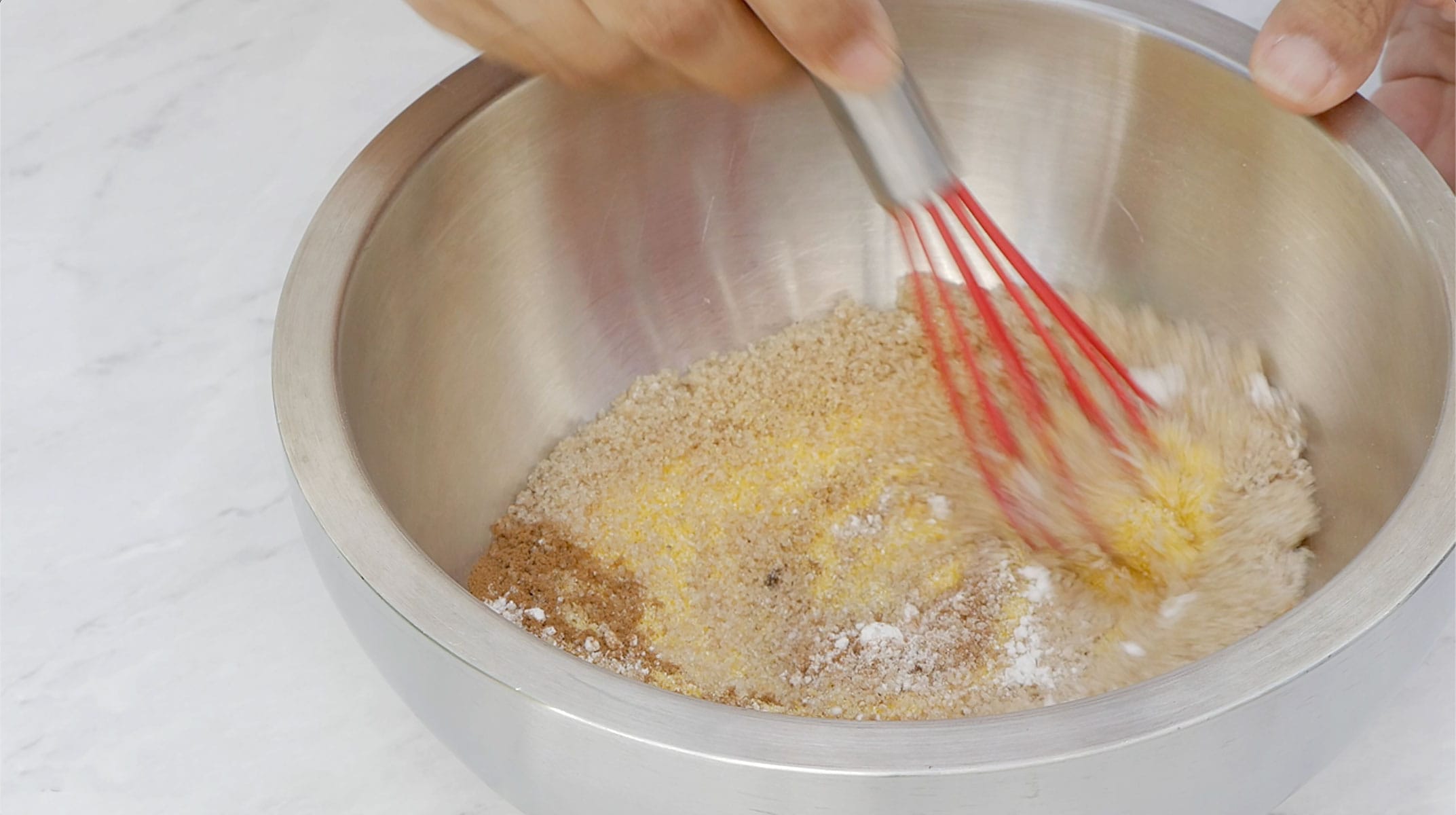
2. Mix
- Mix cornmeal, sugar, cornstarch, salt, and cinnamon. Pour in milk and mix. Let it rest for an hour in the fridge (this is an optional step, but I have found it results in much nicer texture).
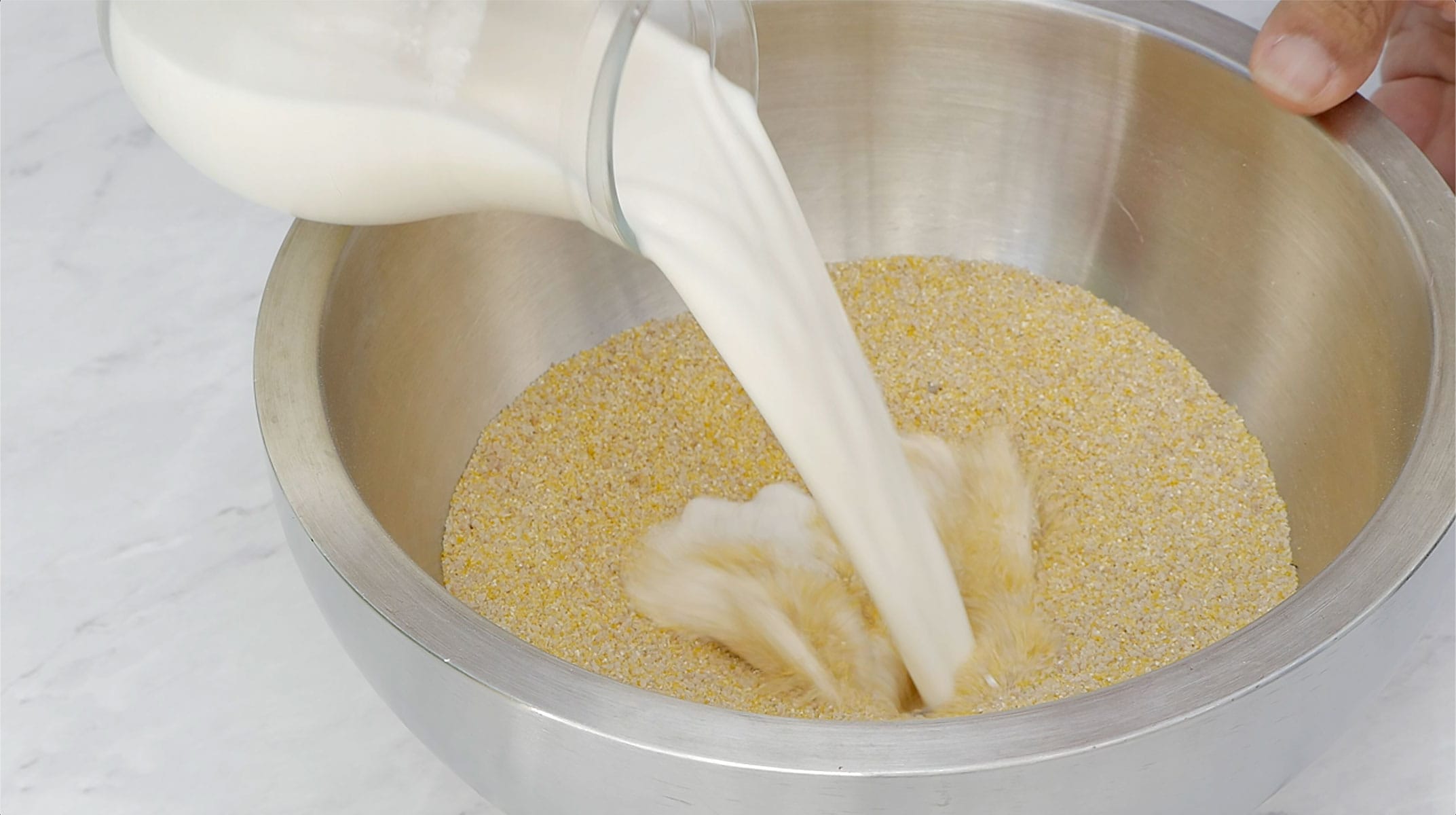
3. Preparing mold
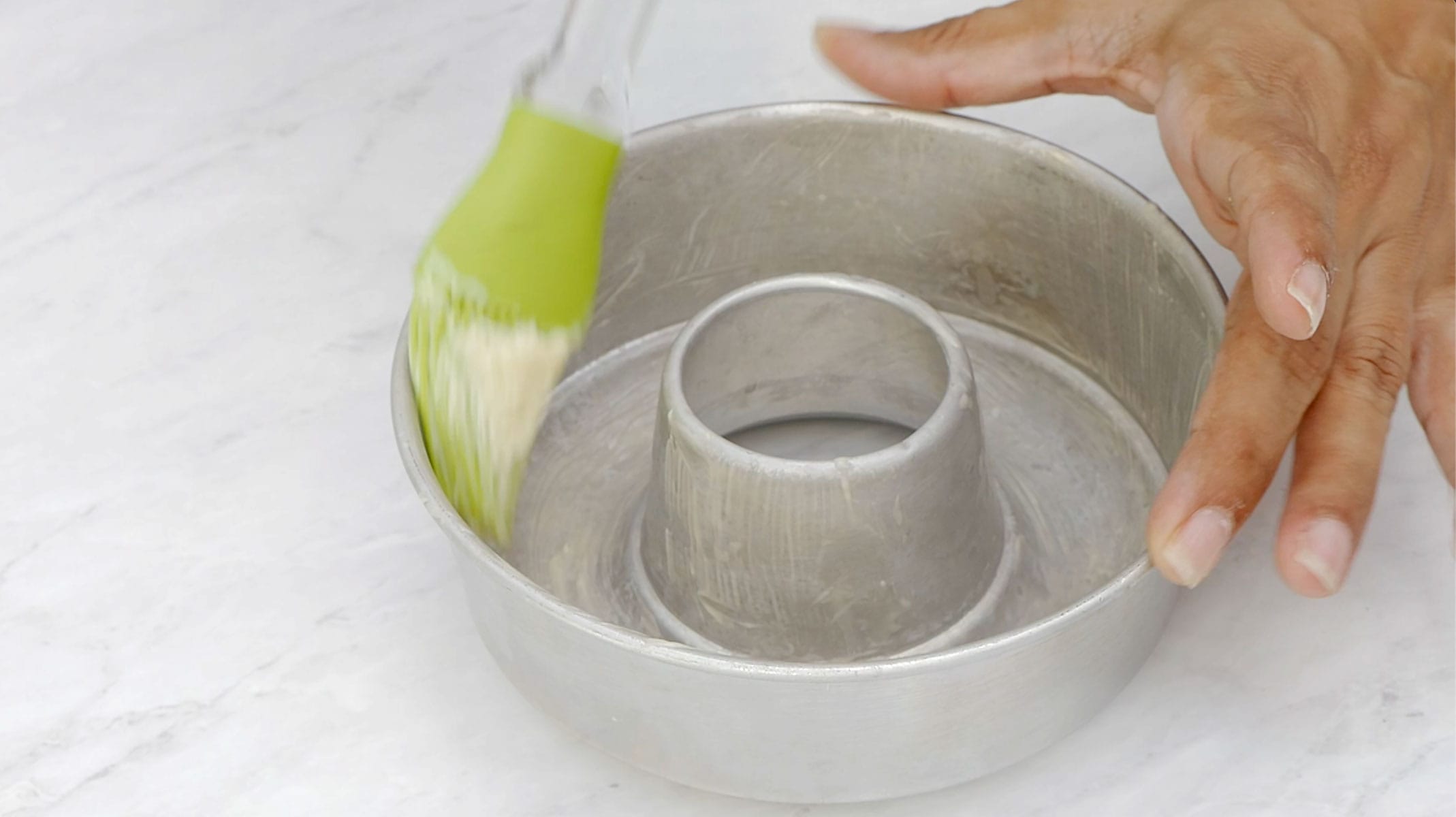
 Grease with butter a small non-stick mold (6 cups capacity).
4. Preparing the batter
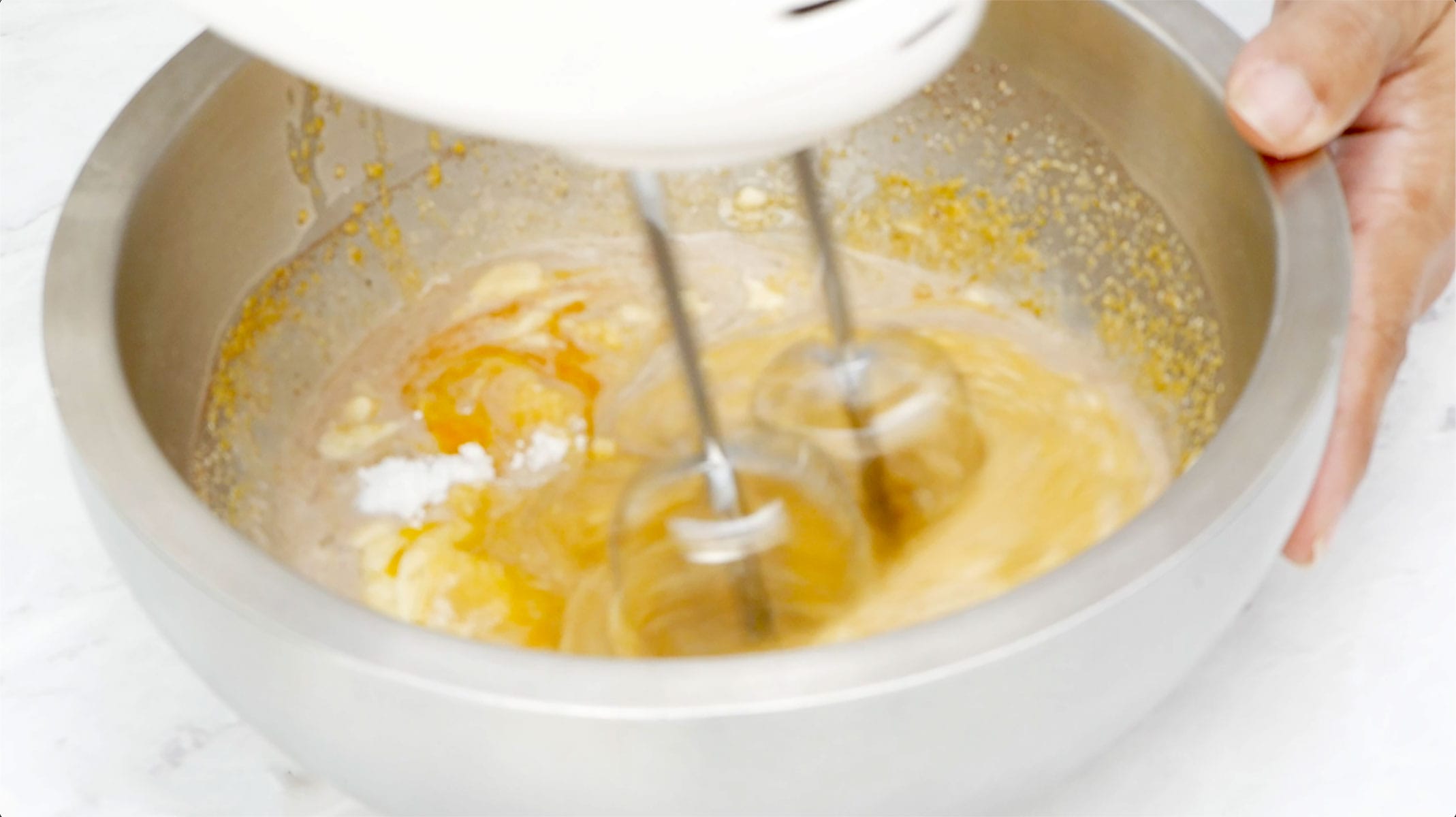
- Add the baking powder to the cornmeal mixture, followed by eggs, raisins and butter. Mix all the ingredients by hand or mixer until all the ingredients have been incorporated (don't worry that the batter is on the runny side, it's okay). Pour the batter into the baking mold.
5. Bake
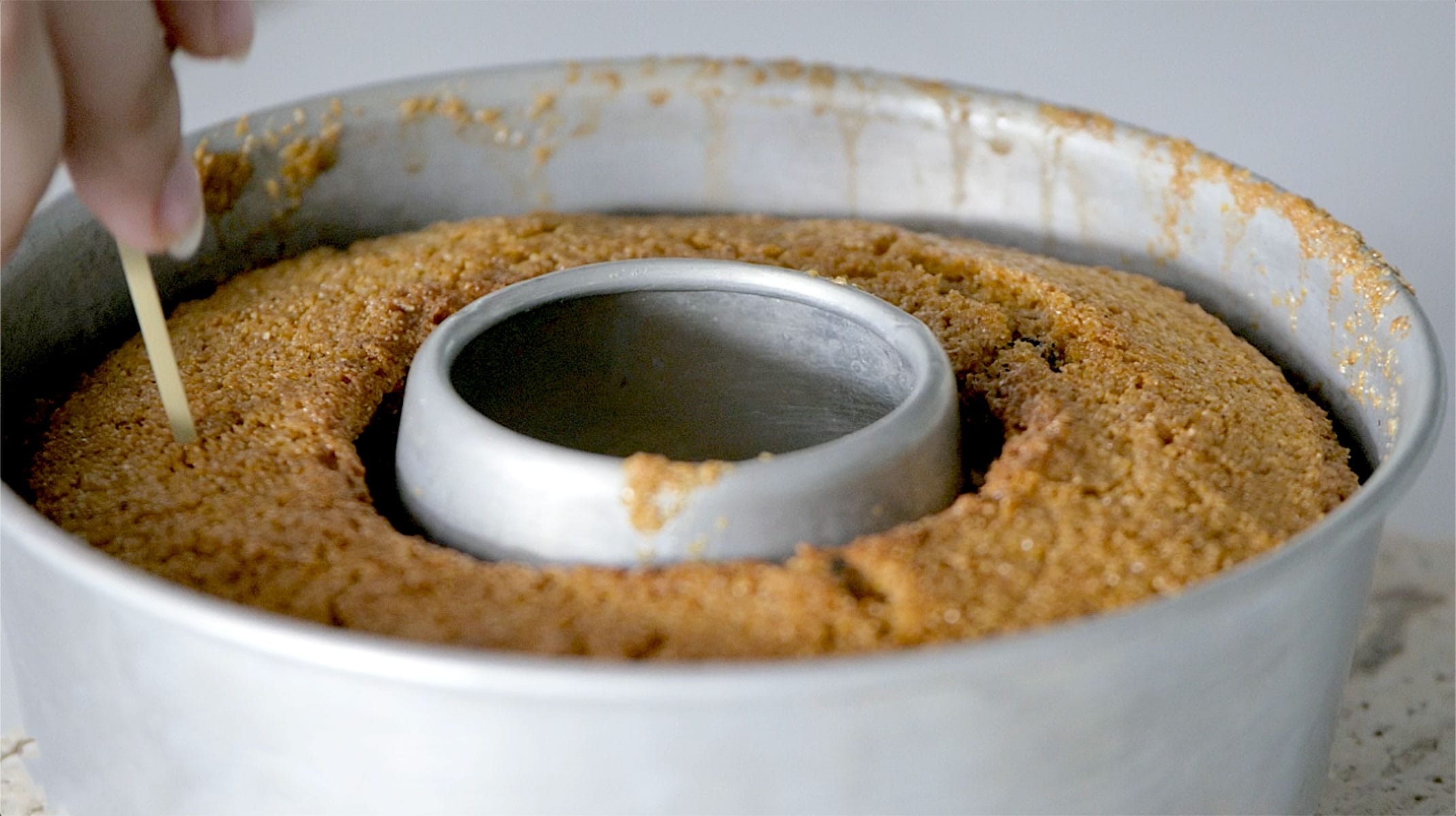
- Bake in preheated oven for 35 minutes or until you insert a toothpick and it comes out clean. Cool before removing from the pan.
6. Serve
 Remove from the pan and serve at room temperature per suggestions above the recipe.
Cook's Notes
Nutrition
Nutritional information is calculated automatically based on ingredients listed. Please consult your doctor if you need precise nutrition information.
Want to save this recipe?
Enter your email & I'll send it to your inbox. ❤️ Plus, get great weekly recipes from me!
More harina de maíz recipes
Harina de maíz is an ancient and popular ingredient in our cookery, and we have several great harina de maíz recipes to showcase its virtues. You must try Arepa, our most popular cornmeal dessert, or Gofio, a childhood classic, and Harina de maíz, our favorite breakfast porridge, and more!
If you want to

- Learn more about me and the humans behind this blog.
- Share your questions and comments about this post.
- Subscribe to receive our recipes and articles by email.
- Please stay in touch! Follow us on: