



Dulce de naranja is a traditional dessert from the Dominican Republic and one of the country's most common desserts. It can be found commercially produced in supermarkets, self-service stores, roadside stands, and in many Dominican cottage industry shops.
By - Reviewed: . Original: May 22, 2024

Why we ❤️ it
What I like most about orange candy is knowing that I am taking advantage of everything from the fruit, where the only thing that is discarded is the seeds. I can use the juice of the fruit to season chicken, beef, and pork or make a homemade seasoning, use the peel to flavor other sweets such as rice pudding, make crystallized orange peel, and take the white peels to make this delicious dessert.
The bitterness of the orange, combined with the spices, makes this dessert sweet but not cloying.
What is dulce de naranja?
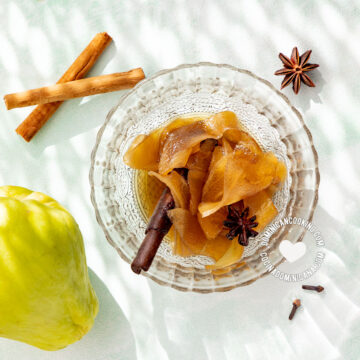
Dulce de naranja is a traditional roadside dessert from the Dominican Republic that is shared by several Latin American countries and Spain. It is a sweet made from the inner peel of the sour orange, also known as albedo and popularly called gollejo.
It combines the bitter and citric flavor of the orange with the spicy aromas of cinnamon, cloves, and malagueta, whose mixture results in a delicious snack to enjoy at any time of the day.
What is naranja agria?
Naranja agria - scientific name Citrus aurantium - is a citrus fruit native to Southeast Asia. It is known in English as bitter orange, sour orange, Seville orange, and apepu.
Green sour oranges have rough green skin when new, and smoother, yellower skin when ripe. It is too bitter to be eaten as a fruit but is ideal for making preserves and for seasoning meats and fish. [1,2]


Naranja agria and Dominican dulce de naranja.
Serving suggestions
Dulce de naranja is consumed only as a dessert or snack, but it can also be used as an ingredient in other preparations, as a garnish for vanilla ice cream, a topping for cheesecakes, a filling for sweet pies, or on yogurt… the possibilities are endless.
It can be eaten at room temperature or chilled from the refrigerator. Serve after lunch with a cup of Dominican coffee.
Top tips
- Using other oranges: This dessert is traditionally made with sour orange, but as this fruit is not readily available in all parts of the world, you can make it with traditional orange or make a mixture of traditional orange peel with grapefruit or pomelo rind. It is possible that these peels are less bitter, so when you go for the third water change, taste them to check the bitterness level.
- Removing the bitterness: To control the bitterness level of the orange rinds, you should run the orange rinds through boiling water several times. I recommend starting with four times and then tasting it. If you still want it a little less bitter, boil it once or twice more. Be careful not to boil for too long, as the firm texture of the rind must be maintained.
- Substitutions: If you prefer brown sugar instead of regular white sugar, you can switch to it in the same proportion.
- Spices: Malagueta, which is a dry berry, is often used. If you cannot get it, you can use allspice. The traditional spices are cinnamon, sweet cloves and malagueta. You can use one, all, or none, and instead add other spices that you like better, such as nutmeg, cardamom or anise.
- Consistency: This dessert can be served in its syrup, or let all the liquid evaporate and mash the peel to make it into a paste. See the notes in the recipe.
- Storage: If you store it in a glass container with a hermetic seal, you can keep it in the refrigerator for up to 2 months. If you prepare the canning glass containers, pasteurized with heat and closed without air, they can remain out of the refrigerator for up to 6 months, as long as they are hermetically sealed, remain closed, and everything has been properly sterilized.
About this recipe
If you have ever wondered what to do with orange rinds, this is the solution, you will get the most out of this wonderful fruit.
I like to make my own because I can control the level of bitterness and sweetness of the recipe. Sometimes, commercial ones are not well balanced and taste only of sugar.
Making your own Dulce de naranja helps you control the flavors; you can add more of the spice you like or other spices that are not traditional, such as anise or cardamom. Besides the customization, doing so brings you the satisfaction of being able to please your loved ones with a treat made with your own hands.
This recipe has been tested by Tía Clara.

Video
Recipe
This awesome free recipe contains Amazon affiliate links, we receive a small commission from any purchase you make at no extra cost to you. Thanks for your support!

Dulce de Naranja [Video+Recipe] Candied Orange Rind
Ingredients
- 6 bitter oranges, washed
- 2½ cup brown sugar
- 4 cinnamon sticks
- 1 pinch salt
- 6 to 10 berries malagueta
- 3 to 6 cloves
- 1 teaspoon vanilla extract
Instructions
1. Peel
 Wash the oranges to remove any residue or impurities from the skin.With a sharp knife or a peeler, remove zest. For this recipe you are only going to use the white part (albedo), which you'll chop or slice.

2. Boil
- Place in a medium saucepan and add enough water to cover it. Boil them for 3 minutes. Remove the water, squeeze the rinds, and boil them again.Repeat this process 4 to 5 times. The purpose of this process is to remove some of the bitterness from the fruit.

3. To make sweet
- In a thick-bottomed pot, place the drained oranges, 1½ cup water, sugar, cinnamon, salt, malagueta, and cloves.Cook over medium heat until the syrup thickens, stirring every two or three minutes.It will take 15 to 20 minutes. Do not let it dry completely, a little of the syrup should remain. Remove from the heat, add the vanilla, and place in an airtight container, preferably glass. Read the notes for instructions to make it "en tabla."

4. Cool and serve
 Let it cool completely.Once cooled, you can consume it or you can chill it for a minimum of 4 hours before serving.Store in the refrigerator in a covered container.

Cook's Notes
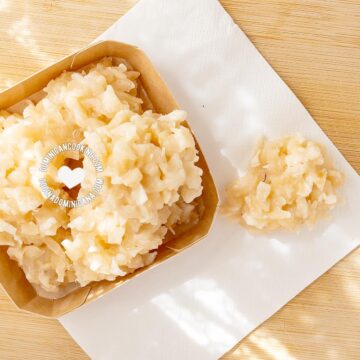
 To make it "en tabla," or into a block, let all the liquid evaporate in step 3 while crushing the rind.
Once it's turned into a coarse paste, press it into a small rectangular glass container you've lined with parchment paper and lightly oiled beforehand. Cool, chill, and remove from the mold.
To make it "en tabla," or into a block, let all the liquid evaporate in step 3 while crushing the rind.
Once it's turned into a coarse paste, press it into a small rectangular glass container you've lined with parchment paper and lightly oiled beforehand. Cool, chill, and remove from the mold.Nutrition
Nutritional information is calculated automatically based on ingredients listed. Please consult your doctor if you need precise nutrition information.
Want to save this recipe?
Enter your email & I'll send it to your inbox. ❤️ Plus, get great weekly recipes from me!
More naranja agria recipes
Agrio de naranja is the most popular sour orange recipe on our blog, but we also use it, and some people prefer it to make Morir soñando. Bitter oranges are also used in Longaniza sausage, to season Tocino or carne seca (salted dried meat), to make the Mojo de ajo sauce we serve with yuca, to season Chivo guisado (goat meat), and to make Wasakaka sauce, among other recipes.
References
- Purdue University - Sour Orange
- Marylin Peralta - Naranja Agria

- Learn more about me and the humans behind this blog.
- Share your questions and comments about this post.
- Subscribe to receive our recipes and articles by email.
- Please stay in touch! Follow us on:


Comments
No Comments