
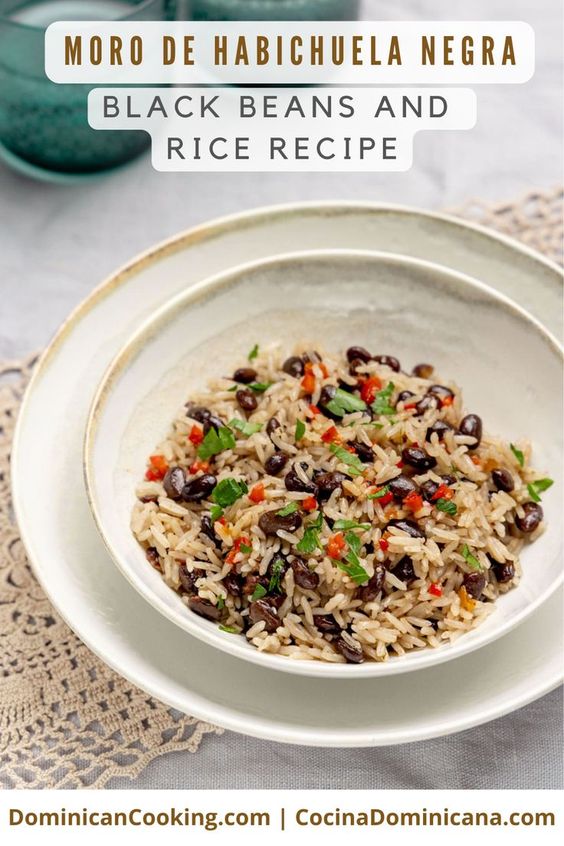

You'll love a steaming plate of our wonderful Moro de habichuelas negras, or black beans and rice A popular rice dish in the Spanish Caribbean, it's called congrí in parts of Cuba. Follow our easy recipe and add Dominican and Spanish Caribbean flavor to your meal
By - Reviewed: . Original: Nov 3, 2010

Why we ❤️ it
Moro de habichuelas rojas, or rice with red beans, is the most common moro (rice and beans) dish in our country, but don't blink on moro de guandules (rice with pigeon peas), or another favorite moro rice. But once in a while, we feel like shaking up the menu, and making moro de habichuelas negras, a spectacular-looking dish to adorn our daily lunch table.
See just how easy it is to make it, and all the serving ideas we share with you.
Canned or boiled beans?
Traditionally, Dominican cooks boil dry beans at home. Many Dominican cooks use pressure cookers to boil beans. Dry beans boiled at home are significantly cheaper and better for the environment. Typically we boil enough for several meals and freeze them in pre-sized portions that can be used for whatever dish we make later.
I suggest you boil beans at home, but canned beans are perfectly OK too. Bear in mind that the rice will turn out darker or lighter depending on what beans you use. I've found that canned beans make lighter moro.
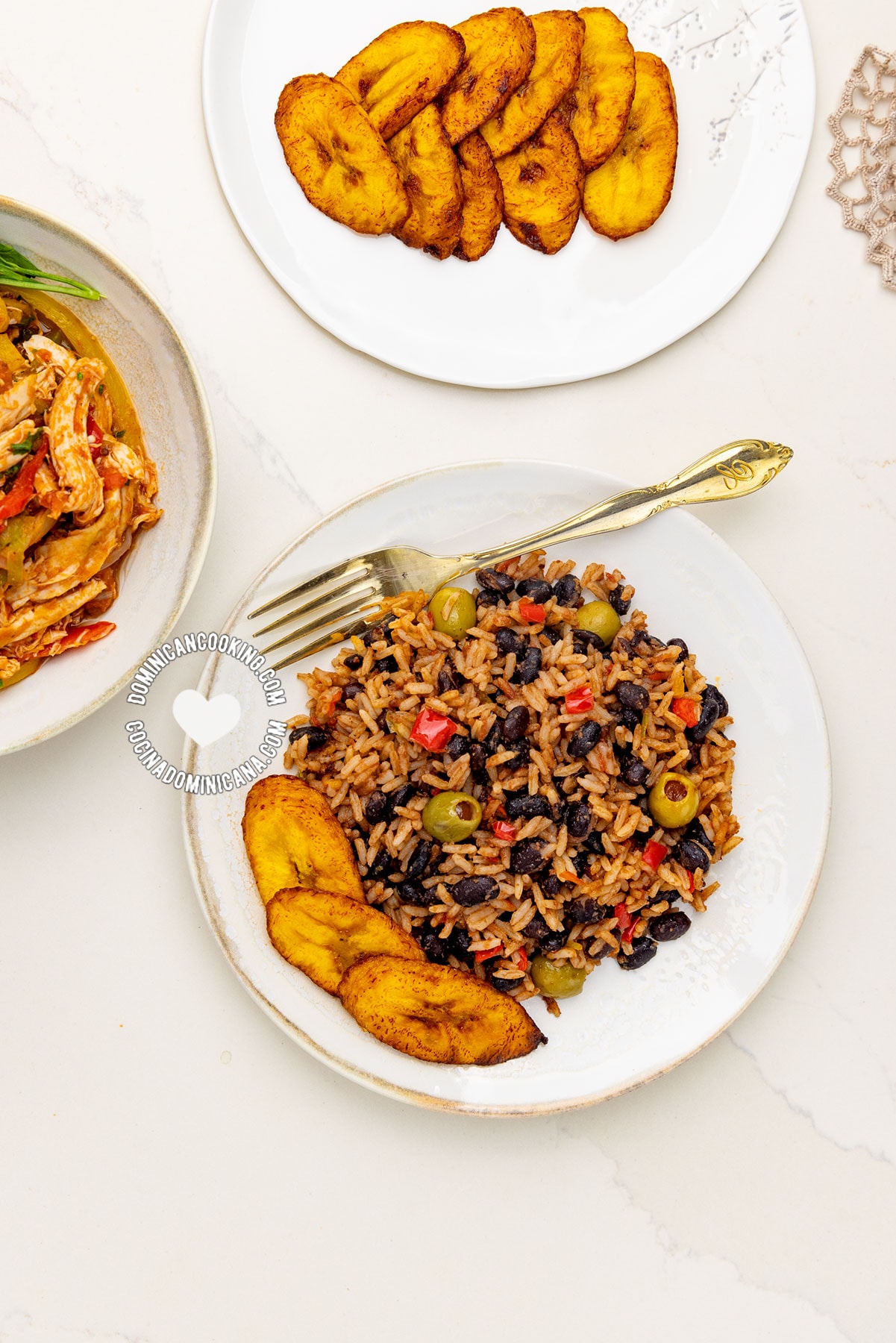

Black beans and rice moro.
Serving suggestions
Moro de habichuelas negras goes great with our Dominican pollo (chicken) guisado, Res (beef) guisada, Cerdo (pork) guisado, Pescado (fish) guisado, liver and onions, and Camarones (shrimp) guisado. I also love it with our Res ripiada (Dominican shredded beef).
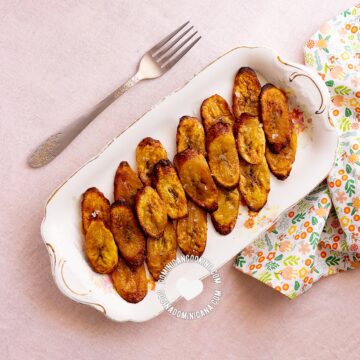
Ensalada verde or Ensalada de Repollo y zanahoria salads, and some Fritos maduros complete a great meal.
Repollo guisado (cabbage pot) is a great vegan alternative to serve with black beans and rice.
Top tips
- Canned beans: The recipe has instructions for using beans boiled at home (my preference) or canned beans. Pay attention to step one.
Some people like to drain the water that the canned beans come in. This isn't necessary, although it does affect the sodium level of the final dish. If you rinse the canned beans, the resulting rice will be paler. It's a matter of taste. - Bay leaf: Cubans love bay leaves in their cooking, so I've borrowed this from the congrí recipe. It's used in some Dominican homes, but it's not very common. You can omit it if you wish.
- Thyme: I use thyme because it's a traditional herb in La Línea (where I come from) for bean dishes. We call it ditén. It's also optional.
- Bouillon: Bouillon cubes are very common in Dominican homes. I don't use them. I prefer vegetable or chicken broth, but I find it unnecessary in this dish. It already contains plenty of fresh herbs and spices.
- Concón: The rice that sticks to the bottom of the pan is the star of the show: the concón. Don't hesitate to try it.
- Servings: This Dominican recipe for black beans and rice serves 6, approximately 1½ cups of rice per person, which is more or less a standard serving at home.
About this recipe
Although black beans are not as common in our cuisine as other types, we love all recipes featuring these nutrient-rich beans.
I have made few changes to mami's usual recipe, except for using red peppers to add more color to the dish.

Video
Recipe
This awesome free recipe contains Amazon affiliate links, we receive a small commission from any purchase you make at no extra cost to you. Thanks for your support!

Moro de Habichuelas Negras [Video+Recipe] Black Beans and Rice
Equipment
- 1½ gallon [6 liter] pot
- 1½ gal [4 liters]-cast aluminum or cast iron Dutch oven with tight-fitting lid
Ingredients
- 1½ cups dry black beans, or a can of black beans
- 5 tablespoons vegetable oil, (I prefer olive oil) divided
- 1 small red onion, minced
- 1 tablespoon mashed garlic
- ⅛ cup pitted green olives, sliced (optional)
- 1 red bell pepper, diced (or cubanela (cubanelle pepper))
- 1 bay leaf, (optional)
- 1 teaspoon oregano (dry, ground)
- ½ teaspoon dry thyme leaves, or a 3 sprigs of fresh thyme
- ⅛ cup capers, (optional)
- ½ cup tomato sauce, 2 tablespoons of tomato paste
- 2 teaspoons salt, (or more, to taste)
- 3 cups rice, long grain rice, Carolina
- 1 tablespoon chopped cilantro
Instructions
1. Boiling beans
 If using dried black beans, rinse the beans. Place in a large bowl and add plenty of water. Cover and soak overnight.Discard the water and place the beans in a pot, add plenty of water and boil over medium-low heat until the beans are tender. Add water if necessary to keep the beans covered with water. Once softened, let cool to room temperature.Whether you use boiled or canned beans, separate the beans from the liquid and set both aside.⚠️ To shorten the time, you can boil the soaked beans in a pressure cooker or instant pot. In a regular pot, it can take between 40 minutes to 1½ hours to soften them, depending on the freshness of the beans. A pressure cooker will cut the time in half.

2. Sauteing seasonings
- Heat half the oil (2.5 tablespoons) in the Dutch oven over medium heat and sauté the onion, garlic, olives, bell pepper, bay leaf, oregano, thyme, and capers.Cook and stir for one minute or until the ingredients release their aroma. Add the black beans, cover, and cook until the beans are heated through (one minute or two), taking care not to burn them.Add the tomato sauce and season with the two teaspoons of salt.

3. Adding water
- Once hot, add 3 cups of the water in which they were boiled (or water from the can), using fresh water to make up 3 cups if necessary. Bring to a boil.Taste the liquid and add salt to taste (if necessary) before continuing.

4. Cooking rice
- When the water comes to a boil, add the rice and cook over low heat until almost all the liquid has evaporated, stirring frequently to prevent it from sticking too much.⚠️ Be sure to scrape any rice that sticks to the bottom so that it doesn't burn later.

5. Simmer
- When the water has evaporated, cover with a tight-fitting lid and cook over very low heat for 15 minutes. After 15 minutes, uncover, drizzle with the remaining oil, and stir.Cover again for another 5 minutes. After this time, the rice should be firm but cooked through.⚠️ If the rice is not quite cooked, cover and cook for another 5 minutes over very low heat (if it seems too dry at this point, drizzle with a couple of tablespoons of water before covering).

6. Serve
 When the rice is cooked through, discard the bay leaf and thyme sprigs if you used fresh thyme.Scoop the rice into a serving bowl. Scrape the crispy rice from the bottom and serve in a separate bowl (see serving suggestions above the recipe).

Nutrition
Nutritional information is calculated automatically based on ingredients listed. Please consult your doctor if you need precise nutrition information.
Want to save this recipe?
Enter your email & I'll send it to your inbox. ❤️ Plus, get great weekly recipes from me!
More beans recipes
Recipes with beans are an important part of our collection of Dominican recipes. We use them in many of our moro rices (rice and beans) dishes, or in Habichuelas guisadas (stewed beans) to serve with Arroz blanco (white rice) or Locrios (rice with vegs and proteins).
I used black beans in a tasty Moro-locrio (pork with rice and beans) and Habichuelas negras guisadas (stewed black beans), great with white rice (Arroz blanco). Check them out too.

- Learn more about me and the humans behind this blog.
- Share your questions and comments about this post.
- Subscribe to receive our recipes and articles by email.
- Please stay in touch! Follow us on: