

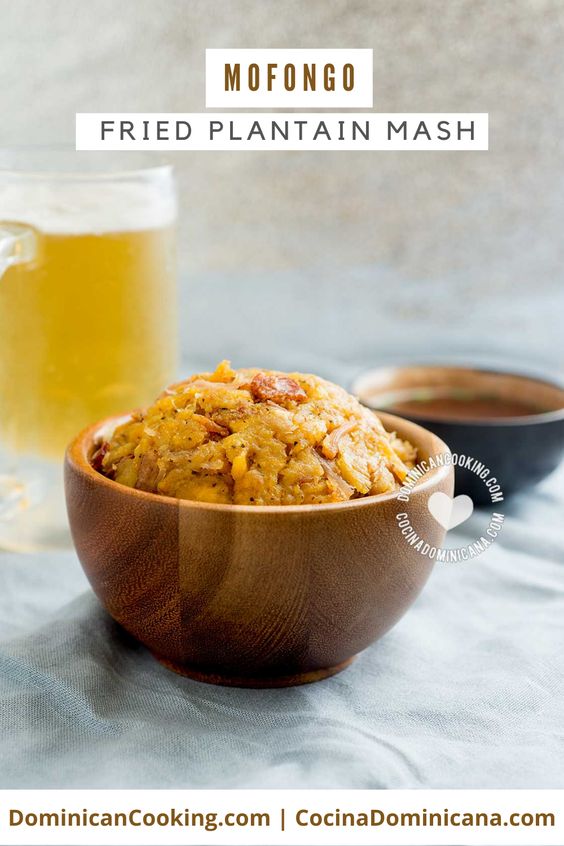
What can we say about a Mofongo recipe that has been shared over 100k times and made and loved by tens of thousands of readers? That it is indisputably delicious, for one. With an absolutely essential video to make it even easier, enjoy a great dinner any day of the year.
By - Reviewed: . Original: Dec 21, 2003
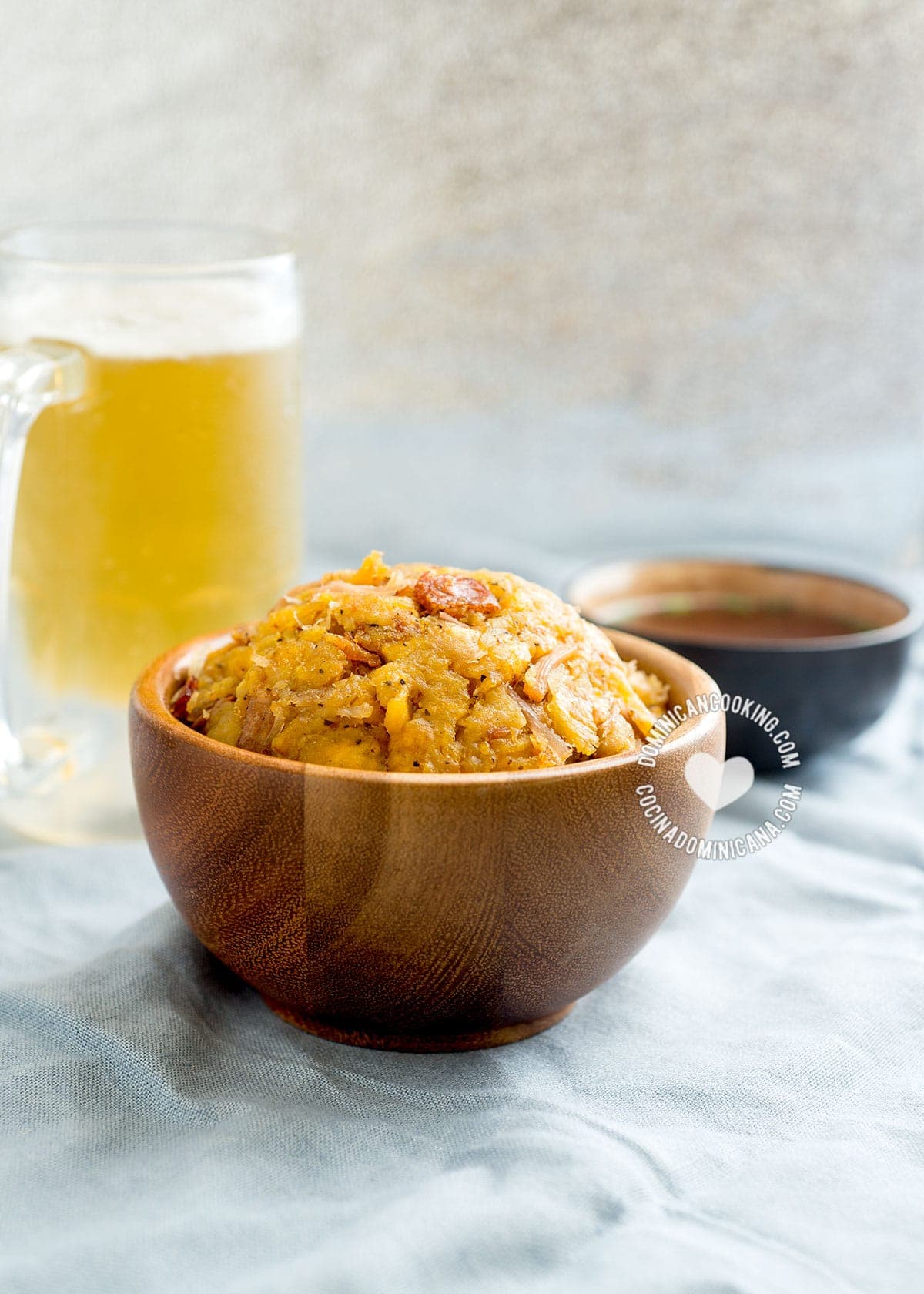
Why we ❤️ it
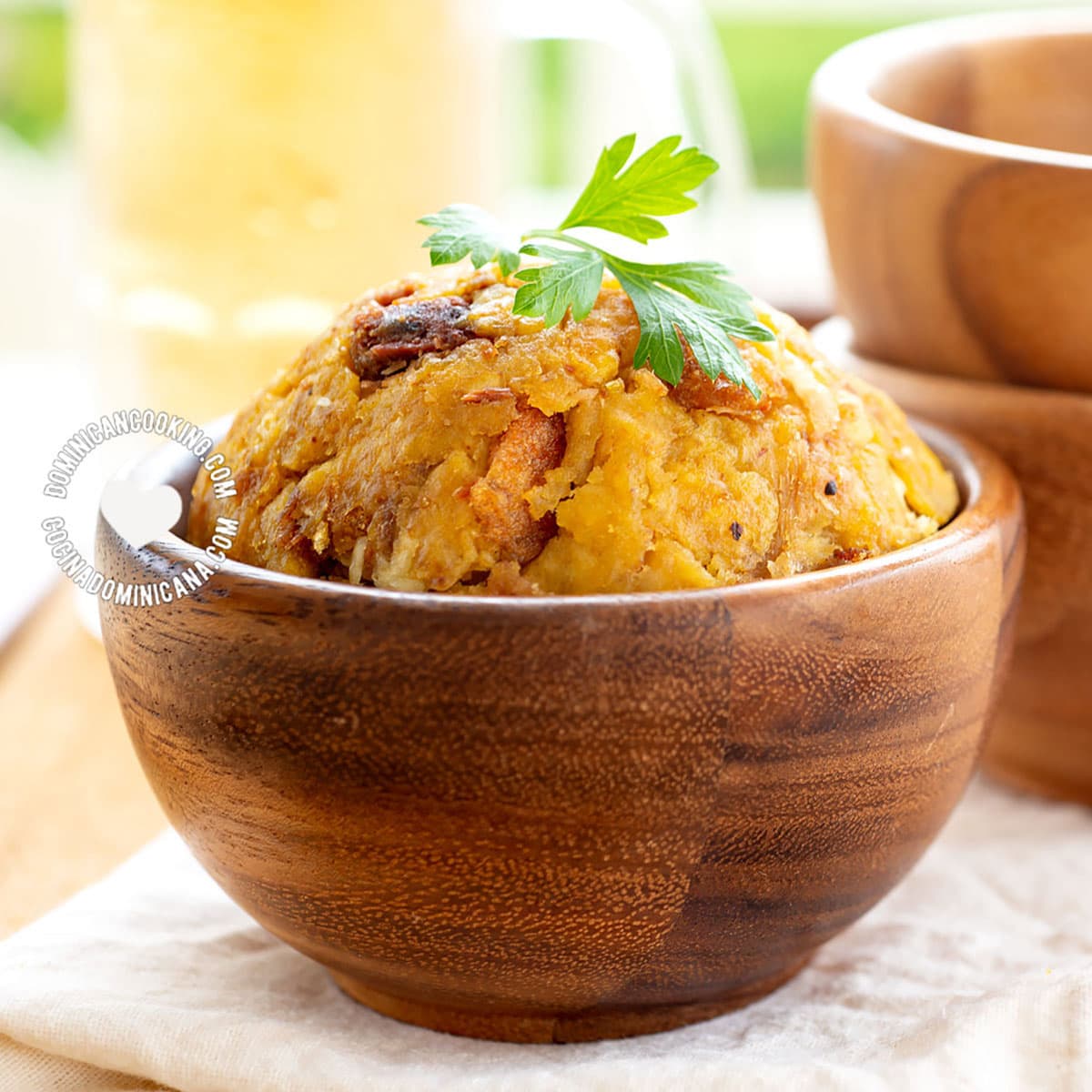
Plantains are a staple in any Caribbean kitchen, and the delicious mofongo - never, ever to be confused with mondongo! - is one of our star plantain recipes. An amazingly flavorful dish that, while rarely made at home, you can now enjoy any time.
If I had to define mofongo in a word, that would probably be umami (savory), there are so many strong flavors in this plantain dish, but they somehow manage to work together. It truly is an unforgettable dish.
What's mofongo?
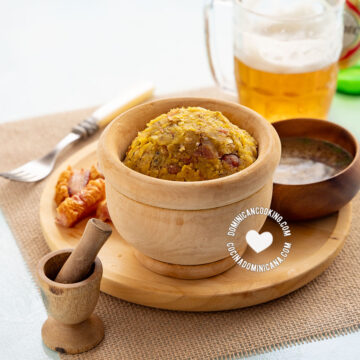
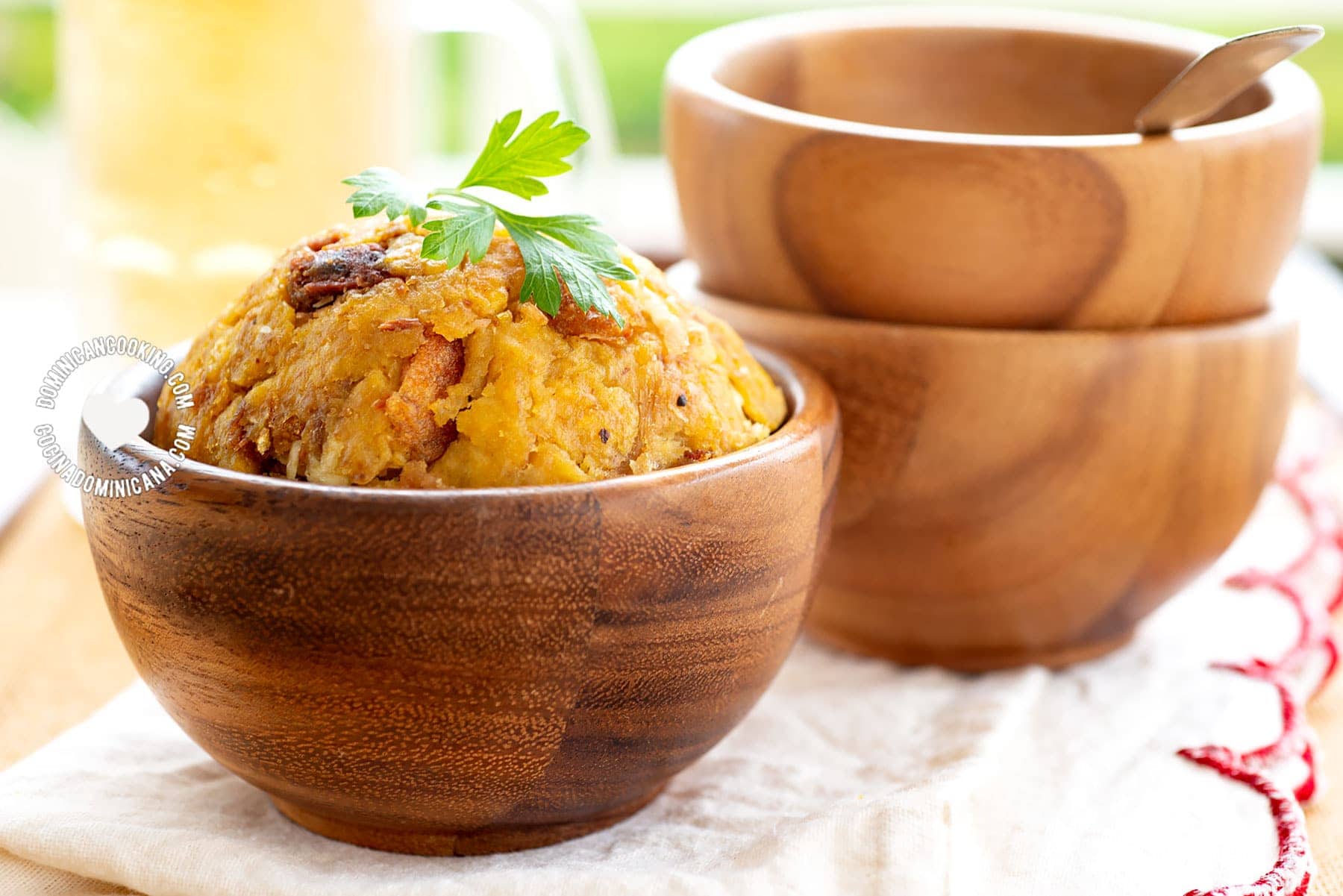
Classic plantain mofongo is a dish made of fried plantains, mashed and mixed with garlic paste and chicharrón (crispy pork skin). It is served alongside beef broth. Traditionally, mofongo is served in a pilón, a wooden mortar (the bowl-like part of the mortar and pestle).
Read more about its history and origin.
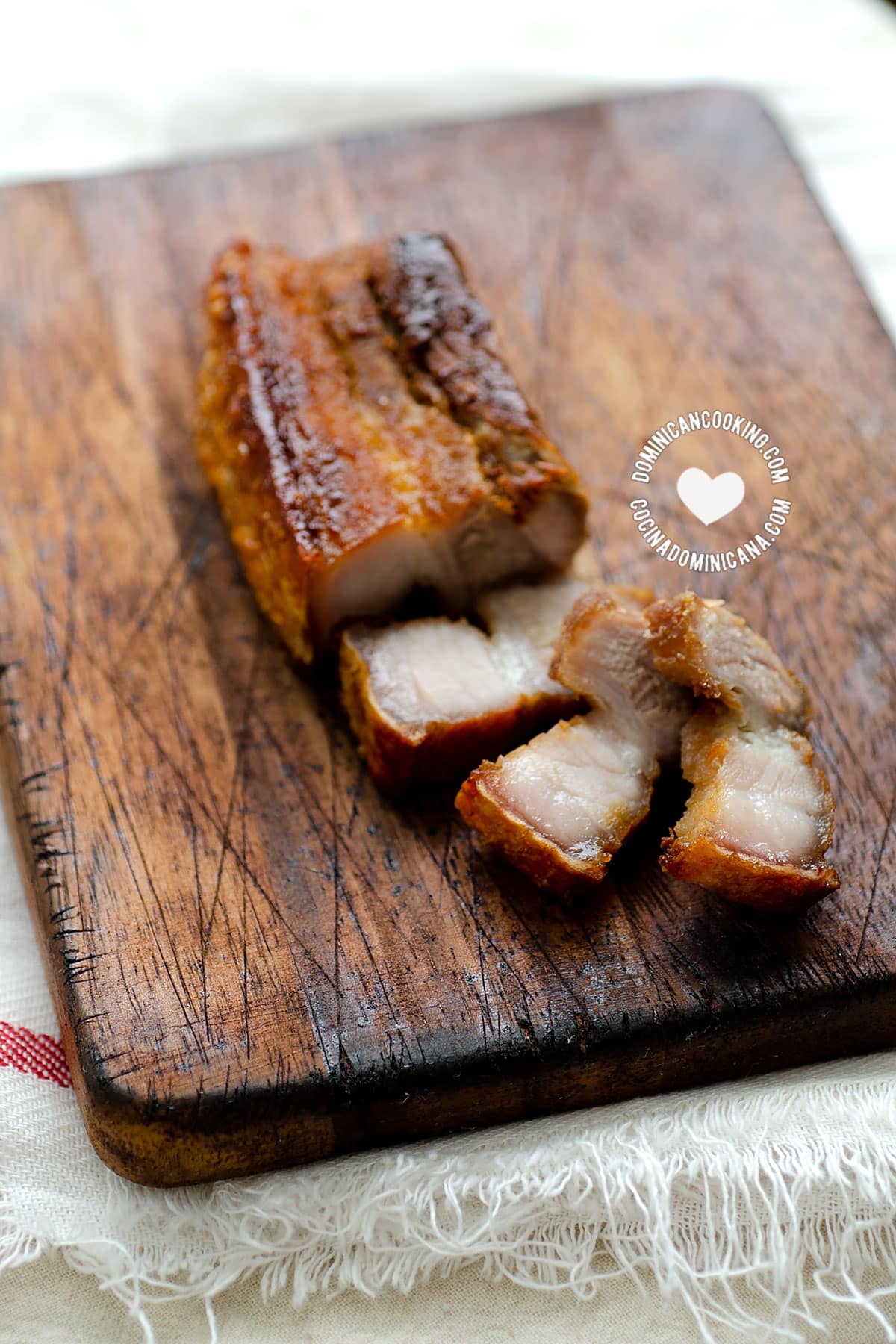
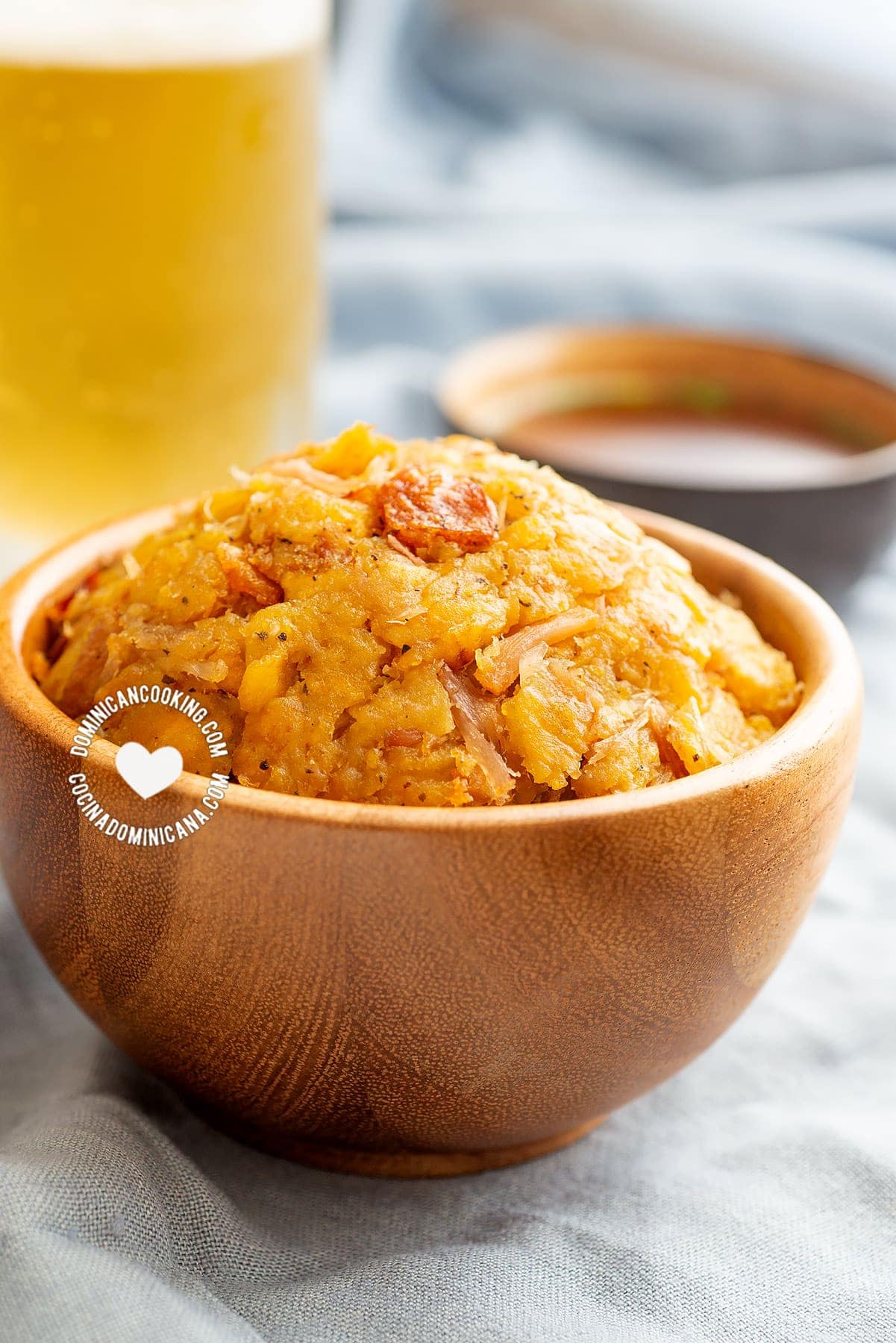
Chicharrón and mofongo
How to serve mofongo
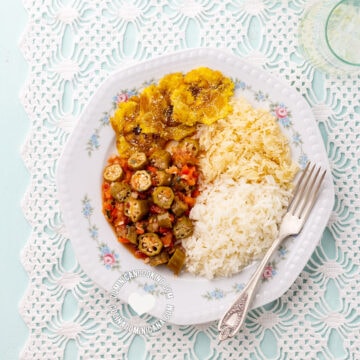
The recipe includes a beef broth, but you can also serve it with Caldo de pollo (chicken broth), or for a vegan mofongo, leave out the chicharrones and serve with our vegetable stock.
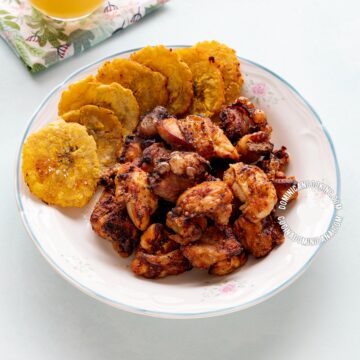
For chicken mofongo, you can serve it alongside Pollo guisado with abundant sauce, instead of broth. Another great combination is serving it with Res ripiada, our Dominican ropa vieja-style beef.
Top tips
- How to reheat: If you ever have leftover mofongo that you want to reheat, the best way to do so is to heat a non-stick pan over medium heat and pan-fry the mofongo until it is heated through. I never had leftovers, though.
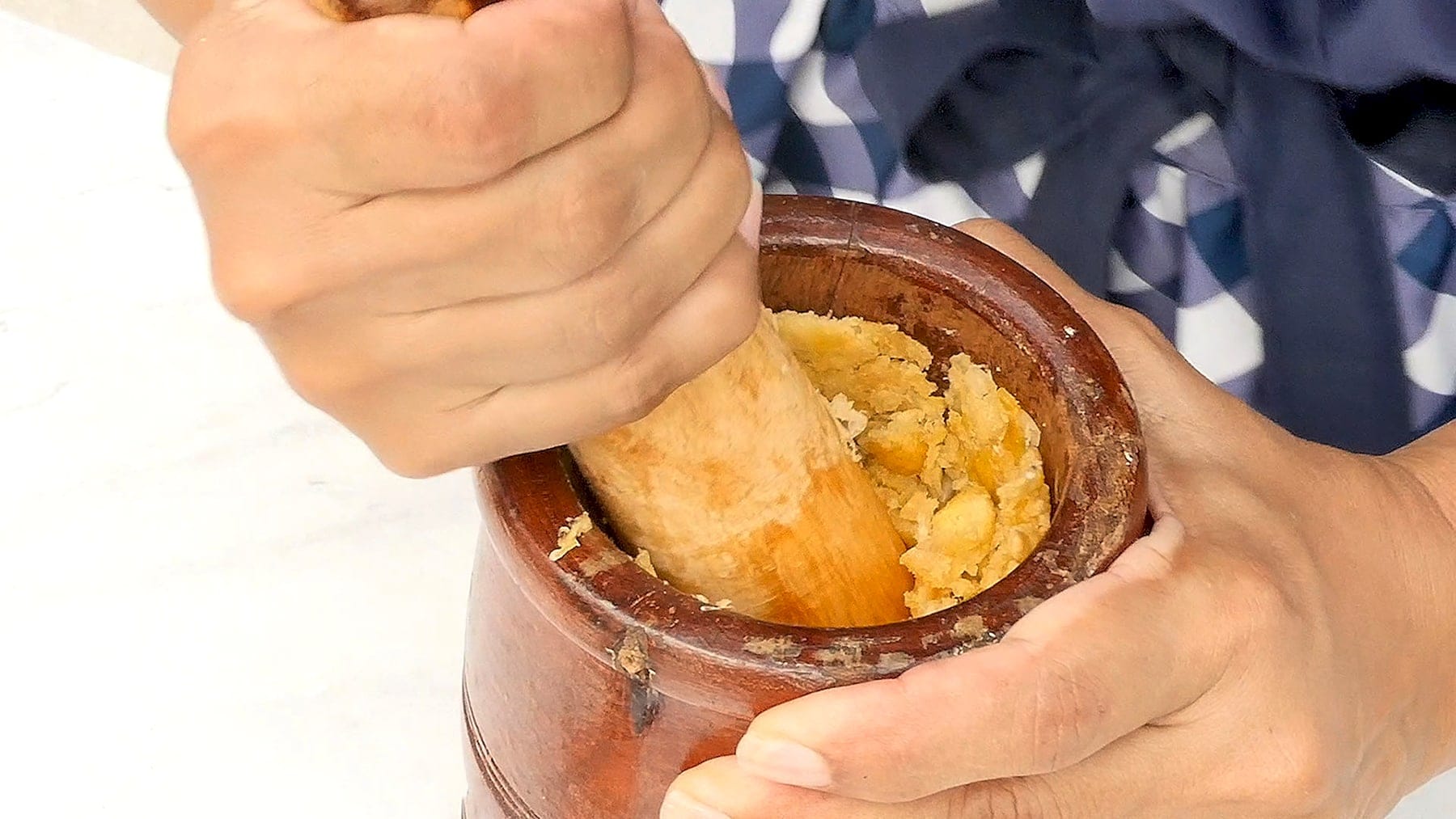
- Mashing plantains: I would not advise making it in a food processor, as the plantain slices would not retain the texture we expect in mofongo. Typically, we mash the plantains with a mortar and pestle, which is a bit labor-intensive but guarantees the best result. You can also use a potato masher or the bottom of a metal cup.
About this recipe
As I expand on under the recipe, there are two types of mofongo: the Puerto Rican dish, which is made from fried plantains, and has become the most common one served everywhere, even in the Dominican Republic. Dominican mofongo, however, was traditionally made from roasted plantains, typically cooked by burying them under hot ashes (just like Batata asada).
In the recipe, I show you how to make both types of mofongo, though I have adapted the Dominican version to modern ovens and air fryers since I cannot make a fire to bury plantains under the ashes, and would guess that most of you can't either.
As a result, one will be the fried mofongo we all love, the other - a bit drier, I admit - it's much lighter and lower in fat content, but requires a lot more broth to serve.
If you want to make pork cracklings from scratch, follow the directions and video in this recipe.

Video
Recipe
This awesome free recipe contains Amazon affiliate links, we receive a small commission from any purchase you make at no extra cost to you. Thanks for your support!
Mofongo [Video+Recipe] Garlicky Fried Plantain
Ingredients
For the beef broth
- 2 tablespoons olive oil
- 1 pound beef bones, [0.45 kg] any type would do
- 1 tablespoon mashed garlic, cloves
- 1 red onion, halved
- 1 sprig cilantro
- 1 sprig of recao/cilantro ancho/culantro, optional
- ¼ teaspoon oregano (dry, ground)
- ¾ teaspoon salt, (or more, to taste)
For the Puerto Rican mofongo
- 1 cup oil for frying, (vegetable oil)
- 4 plantain (green, unripe), peeled (how to), cut into ¾" [2 cm] slices
- 1 pound pork cracklings, (fried pork skin) minced
- 4 garlic cloves, mashed (about 2 tablespoons)
- 1½ teaspoon salt, (or more, to taste)
For the old-style Dominican mofongo
- 4 plantain (green, unripe), unpeeled
- 1 pound pork cracklings, (fried pork skin) minced
- 4 garlic cloves, mashed (about 2 tablespoons)
- 1½ teaspoon salt
- ¼ cup olive oil, (optional)
Instructions
1. Make the broth
 In a large saucepan heat the olive oil over medium heat. Brown the beef bones being careful that it does not burn. Add the garlic and onion and stir. Pour in 4 cups of water, and add cilantro, cilantro ancho, and oregano.Boil for an hour over low heat, topping off the water every once in a while to maintain the same level.Season with salt to taste. Sieve and remove the solids.
2. Cook the plantains
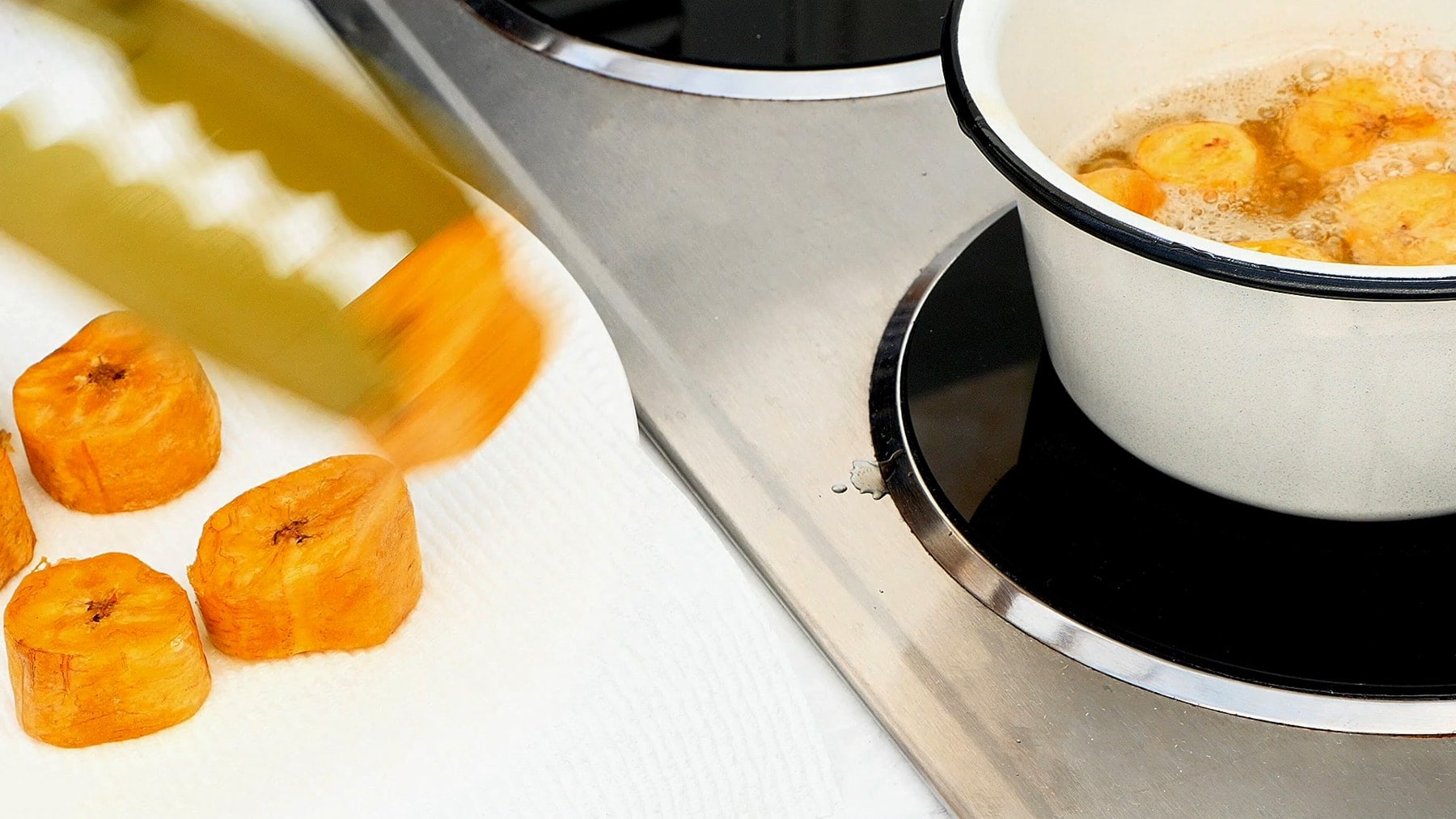
- For Puerto Rican-style mofongo: Heat oil in a small pot or saucepan over medium heat and fry the plantain slices till golden brown all over (3-5 mins). Remove from the oil and place on a paper towel.For old-style Dominican mofongo: Wrap the plantains in aluminum foil. Bake plantains in a preheated oven at 400ºF [200ºC] for 35 minutes, or cook in an air fryer preheated to 350ºF [175ºC].Remove the plantains from the oven and let them cool down for 5 minutes. Carefully peel them.
3. Crush plantains
- Using a pilón (large mortar and pestle) or potato masher, crush the garlic and salt together, add in plantains and mash, then add pork cracklings and mash and crush to combine with the plantains (You might have to divide the ingredients and do it in 6 batches to fit in your pilón). It will have a dense consistency and more or less form a ball. If you made it with roasted plantains, mix it with the olive oil, because this mofongo mix is much dry than fried mofongo.
4. Serve
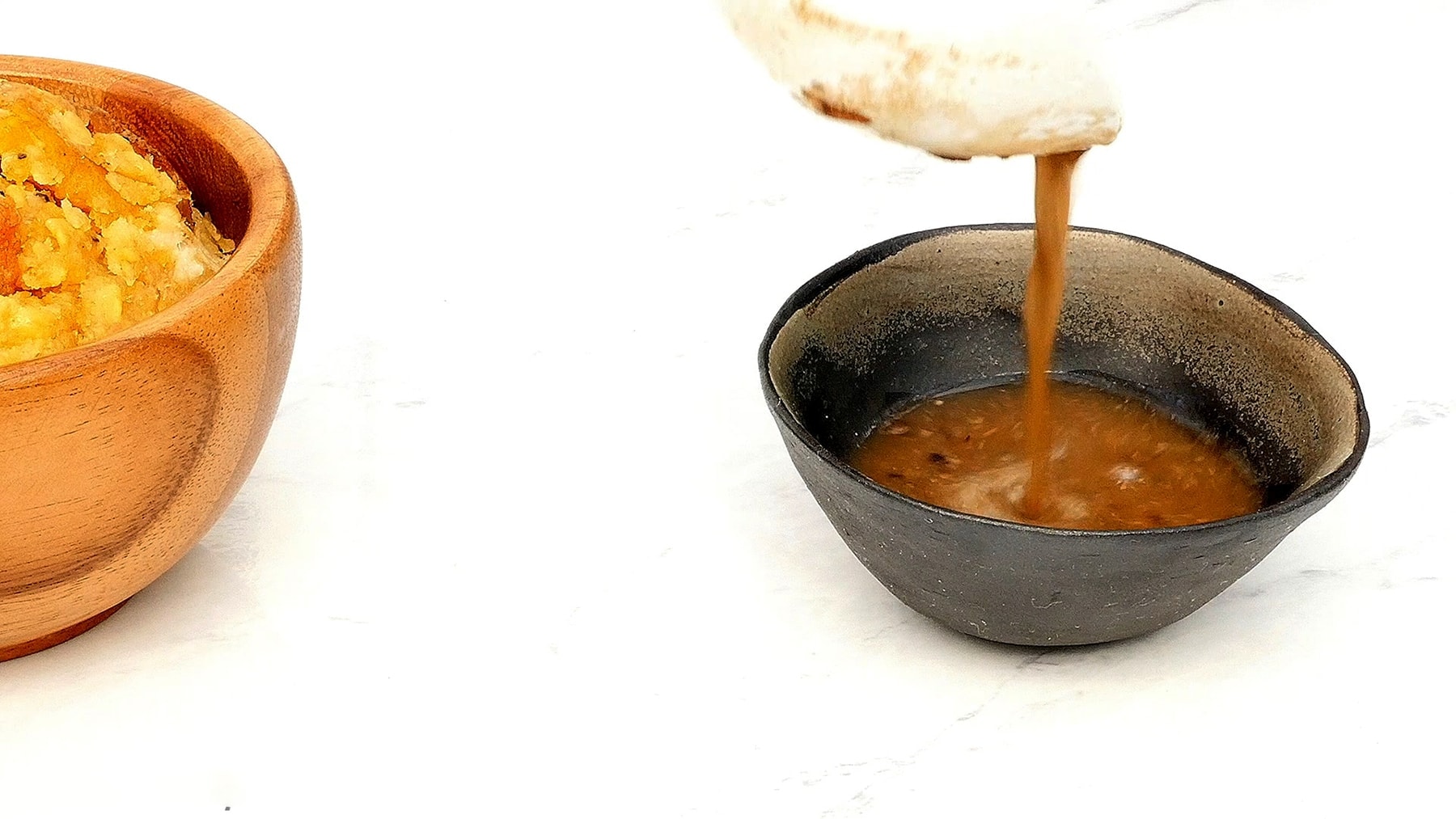
- Shape the mixture into 6 balls and place each in a small bowl.Place the balls into the serving plates, and garnish with the broth, that you'll use to pour over and moisten the mofongo balls.
Cook's Notes
Nutrition
Nutritional information is calculated automatically based on ingredients listed. Please consult your doctor if you need precise nutrition information.
Want to save this recipe?
Enter your email & I'll send it to your inbox. ❤️ Plus, get great weekly recipes from me!
More Mofongo recipes to try
These are other amazing mofongo recipes to try.
- Mofongo de yuca (fried cassava mash mofongo with pork rind and cheese sauce)
- Shrimp mofongo with tomato sauce (camarofongo or mofongo con camarones)
- Ripe plantain mofonguito, or mofongo relleno de pollo
- Tostones rellenos or mofonguito cups with avocado and shrimp
History and culture
Mofongo is possibly a pan-Caribbean dish (it may exist in one way or another in Cuba, the Dominican Republic, and Puerto Rico). In an 1875 dictionary of Cuban words (1), I found a mention of a dish called "mogo" that sounds like something between a mangú and a mofongo (there's a Mexican mogo too).
There's also a Puerto Rican version called Trifongo made with green plantains, ripe plantains, and yuca combined.
In Dominican cookbooks from up to the middle of the last century, all mofongo recipes were based on roasted plantain [2][3]. And it was the case even in the mid-20th century editions.
I also remember that my grandmother used to make a dish exactly like that, though I don't remember what she called it. I was a little kid, so no surprise.
The Dominican mofongo recipe turns out to be a different version than fried Puerto Rican mofongo, and it was made with plantains roasted under hot ashes, in the same way, we make batata asada.
Interestingly, there is also a traditional Dominican soup based on a similar principle in our collection of traditional recipes.
So, although we have made known to the world our informed opinion that fried mofongo comes from Puerto Rico, it is clear that roasted plantain mofongo was a Dominican dish probably during the same time, and perhaps - I speculate - a proto-mofongo of a common African origin also found its way to Cuba. My belief that both mofongo and mangú came from our African side of the family explains perfectly how all this happened.
My first encounter with Puerto-Rican-style mofongo was in the early 80s at Casa del Mofongo (Mofongo House), a pioneering mofongo restaurant in Santo Domingo. Today, many Dominican Restaurants serve Puerto-Rican-style mofongo, most famously, the Adrian Tropical chain. A Mocano (from the town of Moca) version bathed in a cheese sauce has made its mark in our cuisine.
So much of Puerto Rican cuisine is similar to Dominican food, owing to a common history (that only diverged during the 19th century) and during which there was constant back-and-forth movement between the two islands. We share very many dishes, share our love for the same starchy vegetables and plantain, and have rice and beans as the staple of our cuisines.
There are some differences in our cuisine, like in the spelling. What we know as guandules (pigeon peas) in the DR is spelled gandules in PR. Similar or identical dishes sometimes have different names. And some Puerto Rican dishes share a name but little else with some Dominican dishes.
It isn't surprising then that two similar dishes with the same name exist in both countries or that a popular Puerto Rican dish has become a favorite here; after all, both countries share the same influences from Taino, Spanish, and West African cuisine. Plantains were introduced to the Caribbean when they arrived on our island shortly after the first enslaved Africans arrived in Santo Domingo.
So this is my final answer: As far I can tell, fried mofongos are Puerto Rican recipes, and the traditional Dominican one is made with roasted plantains, although nowadays fried mofongo is the most popular and common in our country and we have adopted it with enthusiasm, so thanks to Puerto Rico for that.
References
- Amanda Ornes de Perelló, Cocina Criolla. Sto. Dgo: Ed. del Caribe, 1962.
"Mafongo [sic] [...] Se asan plátanos y se majn [sic] y se mezclan con chicharrón molido." - Ligia de Bornia. Comidas Típicas Dominicanas. Sto. Dgo: Arte y Cine, 1965
"Mofongo [...] Maje los plátanos asados y los chicharrones en el mismo pilón." - Esteban Pichardo. Diccionario Provincial Casi Razonado de Vozes y Frases Cubanas. Habana: Imp. El Trabajo, 1875
"[...]plátano salcochado y majado con manteca [...] En Bayamo . se denomina Mogo, que tal vez será síncopa de Mofongo, palabra de Nigricia, usada en algunas de las Antillas."

- Learn more about me and the humans behind this blog.
- Share your questions and comments about this post.
- Subscribe to receive our recipes and articles by email.
- Please stay in touch! Follow us on: