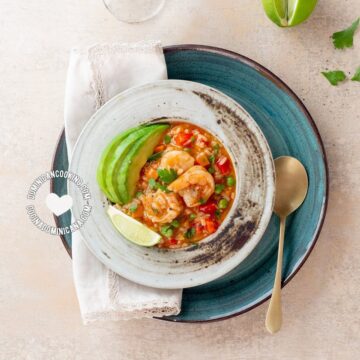


Dominican sancocho is one of Dominicans' most cherished dish. Though it is usually made for special occasions, enjoy sancocho Dominicano any day with this foolproof recipe.
By - Reviewed: . Original: Dec 20, 2001
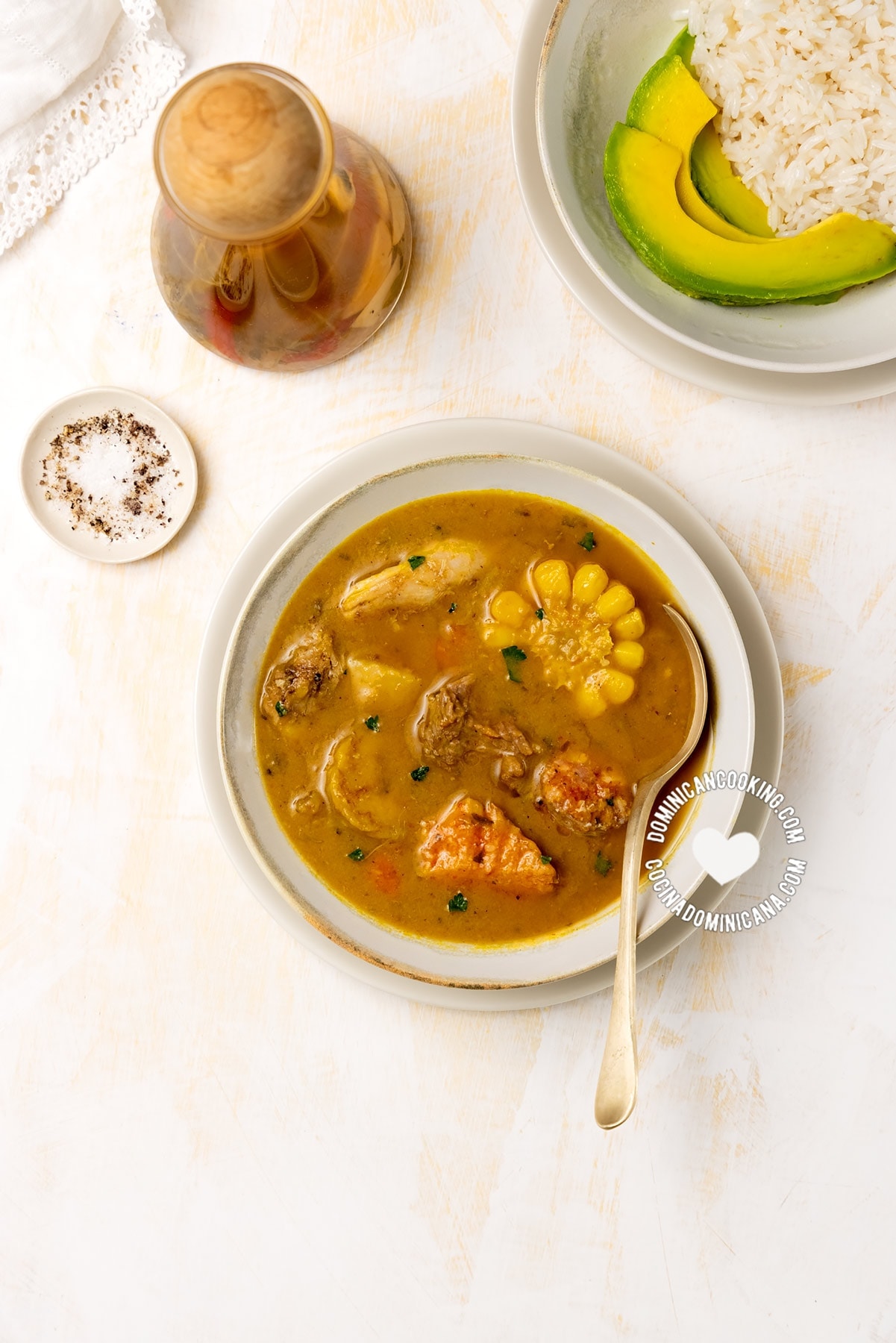
❝ My first attempt at making sancocho and with Clara's recipe it was a total success... ❞
Why we ❤️ it
Where there are two or more Dominicans, a party can suddenly break out. On that kind of occasion, it is indispensable that someone knows how to make a great sancocho Dominicano, our beloved national stew.
If it's your turn, our authentic sancocho recipe is here to the rescue.
What is sancocho?
Let's start with the name: It's sancocho [1], not "salcocho".
Sancocho is a meat and tubers based stew that appears in different forms in several countries of Latin America, especially those bordering the Caribbean Sea.
There are Colombian sancochos, Panamanian sancocho de gallina. There is a Venezuelan sancocho and a Puerto Rican sancocho. In some parts, they have sancocho with other names: sancochado, sopón, olla de carne, etc.
A funny note: in Cuba "sancocho" is a derogatory name for pigs slop. 😮
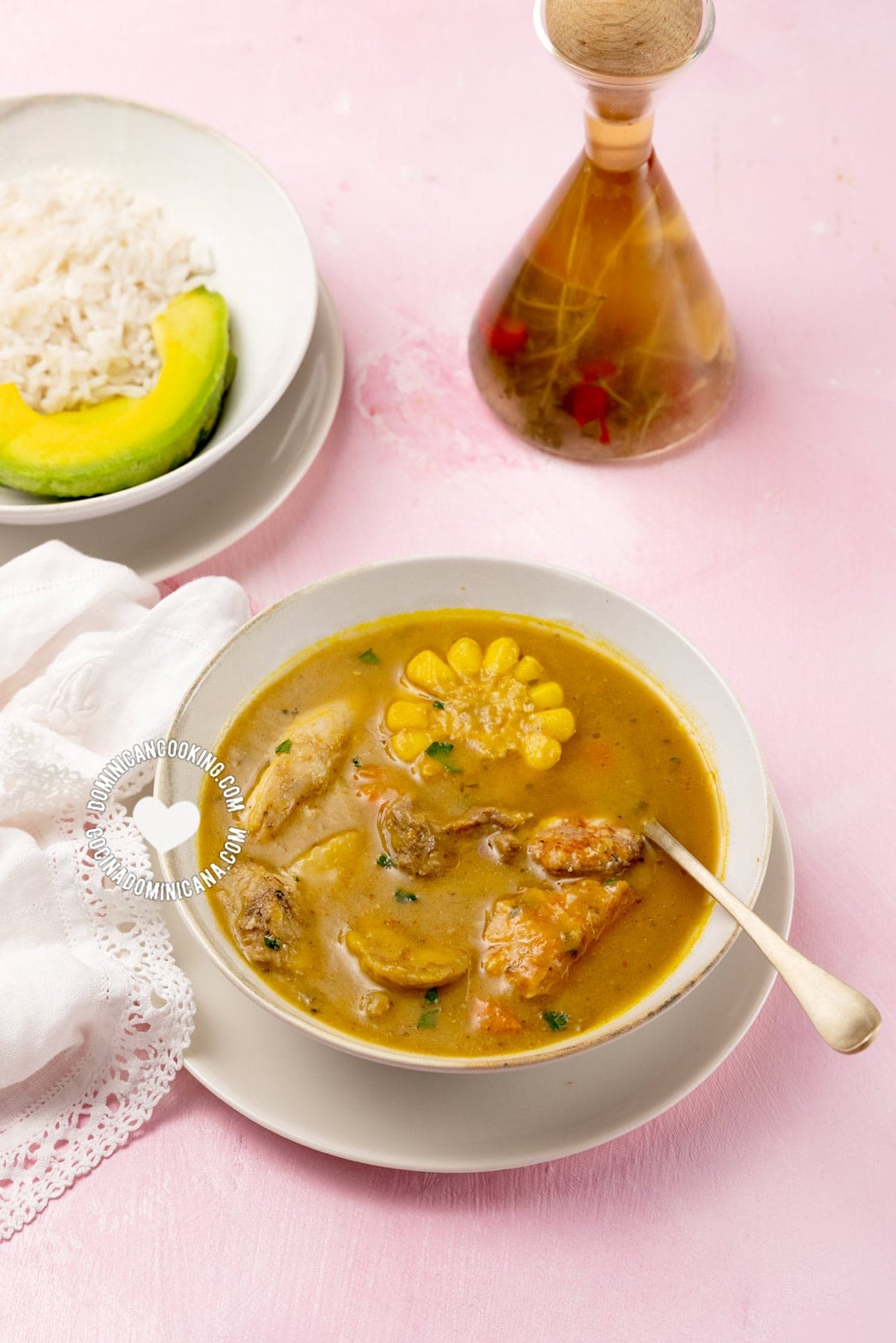
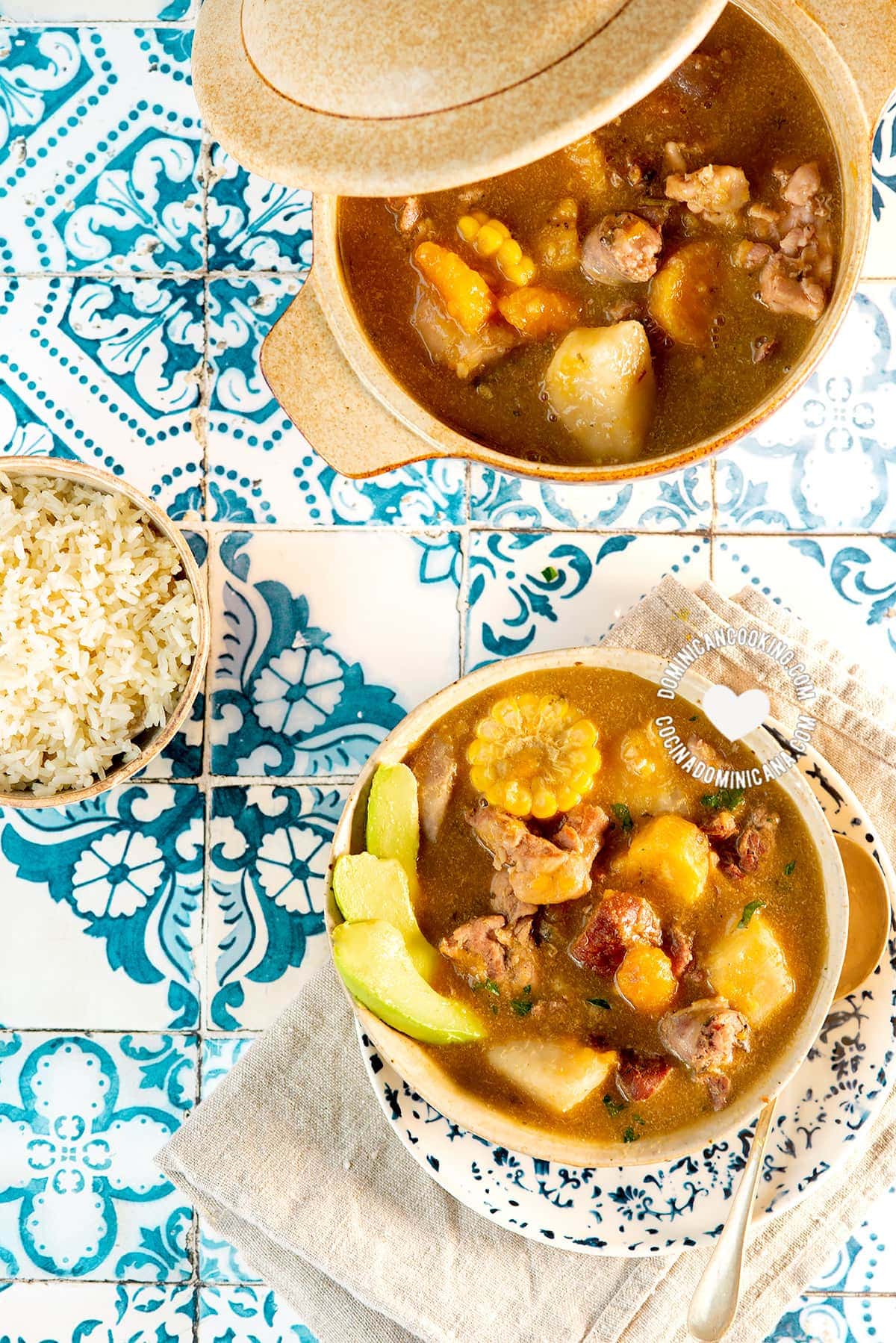
Dominican sancocho.
Serving suggestions
Sancocho dominicano is always served with white rice (Arroz blanco). Some slices of avocado completes the meal, serve hot sauce on the side but it's much better if you have or make the traditional Dominican Agrio de naranja.
Top tips
- Meats: This recipe describes how to make Sancocho de siete carnes, the Dominican deluxe sancocho. However, if you want to make a simpler version (the simplest is beef sancocho, followed by beef and chicken sancocho), you can leave out the other meats. Just add a proportional amount of extra beef or chicken as you like and add the meats in the order described in the recipe.
- Cooking order: The trick to this dish is adding the ingredients from the longest-cooking ones to the shortest-cooking ones. That way, in the end, everything is tender, but some of the vegetables and meats have not dissolved into the soup.
- Vegetables: The vital vegetables in sancocho are yuca, plantain, and auyama. If you can't find any of the others, don't worry; just add a proportional amount of yuca, plantain, and auyama to the one you are not going to add.
- What not to add: Some rules, though, seem to be almost universal: never add potatoes, noodles, or tomato sauce.
About this recipe
There are approximately 3.5 million recipes for Dominican sancocho (the number of Dominican households), so each Dominican cook will have things they'll love, dislike, or be indifferent about.
Every Dominican cook has his or her version of this dish, and what vegetables are added and what meats are used in Sancocho de 7 carnes vary from home to home and cook to cook. As an example, goat meat is used for Sancocho in my region of the country (La Linea) but are not necessarily added in others.
Some rules are, however, nearly universal: There should never be noodles, potato, or tomato sauce in Sancocho. And definitely not batata (don't ask me about that).
If you have another great tip for sancocho, please share it with us in the comments.

Video
Recipe
This awesome free recipe contains Amazon affiliate links, we receive a small commission from any purchase you make at no extra cost to you. Thanks for your support!
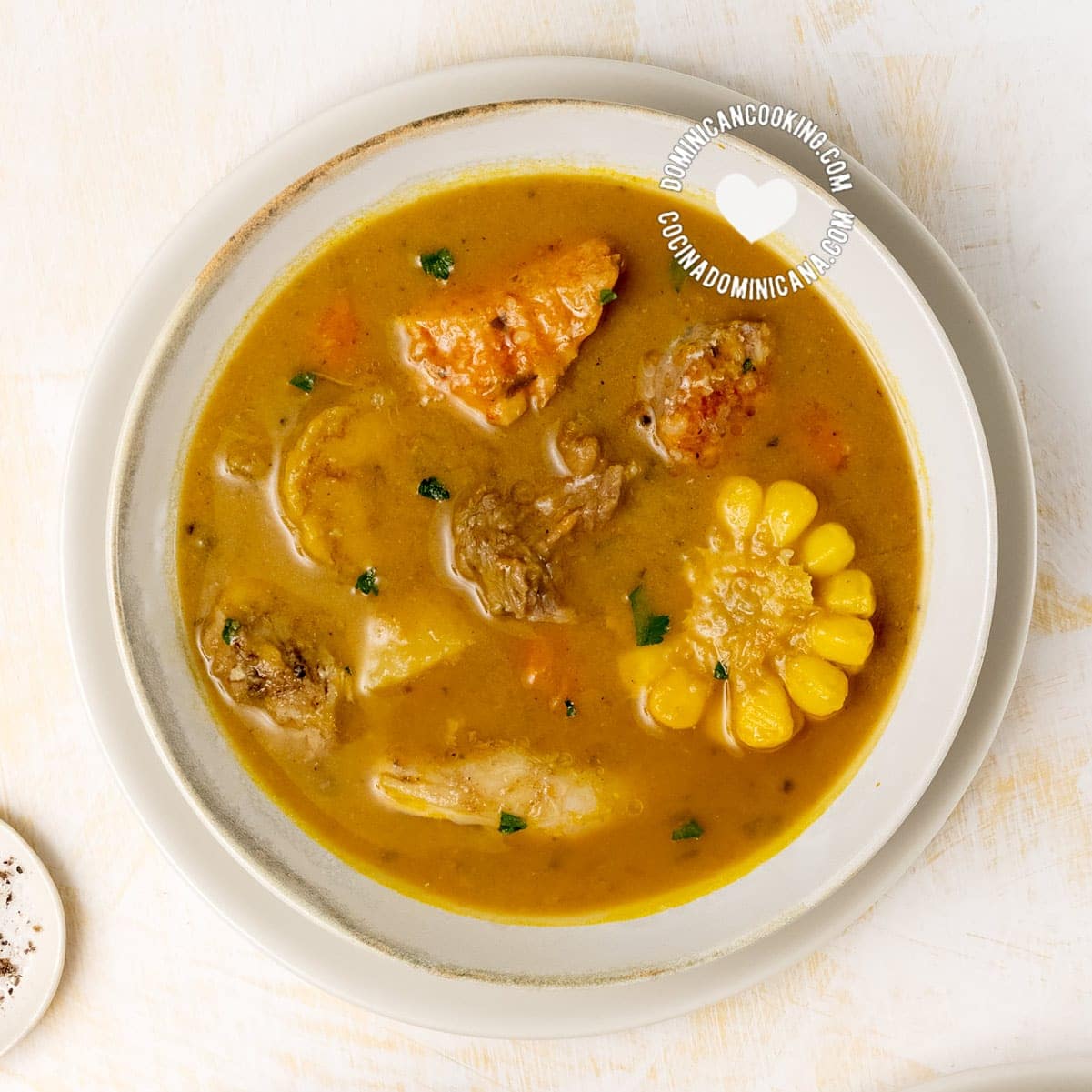
Sancocho [Video+Recipe] 7 Carnes, or Beef & Chicken Stew
Ingredients
- 1 pound beef flank, chuck, or round [0.45 kg] cut into small pieces
- 1 pound goat meat, [0.45 kg] cut into small pieces
- 1 pound pork for stews, belly, or chump end [0.45 kg] cut into small pieces
- Juice of 2 limes
- 1 teaspoons minced cilantro, or parsley
- ½ teaspoons oregano (dry, ground), powdered
- 1½ teaspoons garlic, crushed
- 1½ teaspoons salt
- 4 tablespoon vegetable oil
- 1 pound chicken, [0.45 kg] cut into small pieces
- 1 pound pork ribs, [0.45 kg] cut into small pieces
- 1 pound bones from a smoked ham, [0.45 kg] cut into small pieces
- 1 pound pork sausage, longaniza [0.45 kg] cut into small pieces
- 2 corn cob, cut into ½-inch slices, optional
- ½ pound auyama (kabocha squash), (auyama) cut into 1-inch pieces [0.23 kg]
- 3 plantain (green, unripe), peeled, 2 cut into 1-inch pieces, one left whole
- ½ pound ñame (yam), cut into 1-inch pieces [0.23 kg]
- ½ pound yautia (malanga), cut into 1-inch pieces [0.23 kg]
- ½ pound yuca (cassava), cut into 1-inch pieces [0.23 kg]
Instructions
1. Seasoning the meat
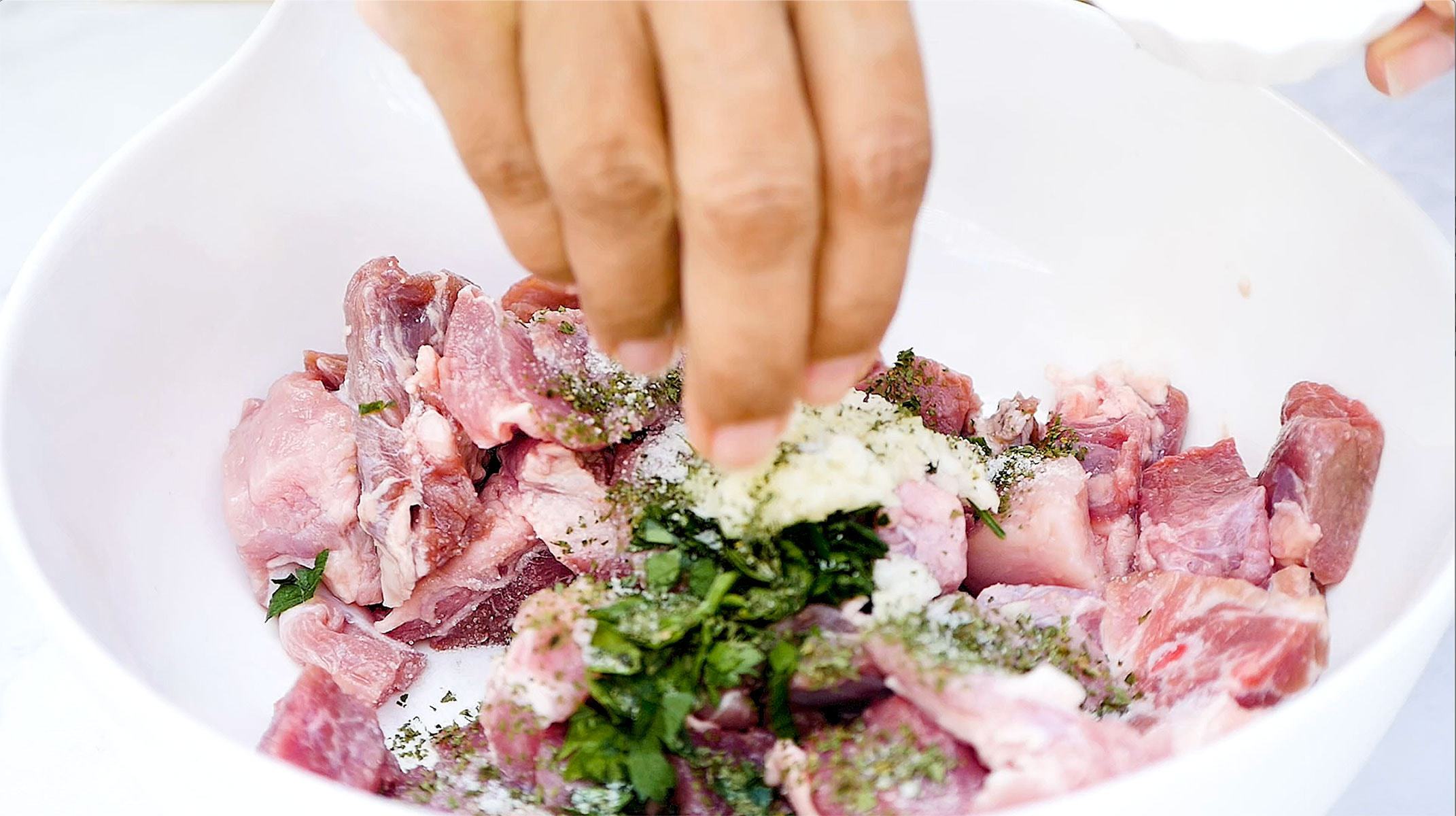
 Place the beef, pork, and goat meat in a large bowl and season with lime juice, cilantro (or parsley), oregano, garlic, and a teaspoon of salt. Coat meat with the seasoning. Marinate for at least half an hour, better an hour.
2. Cooking the meat
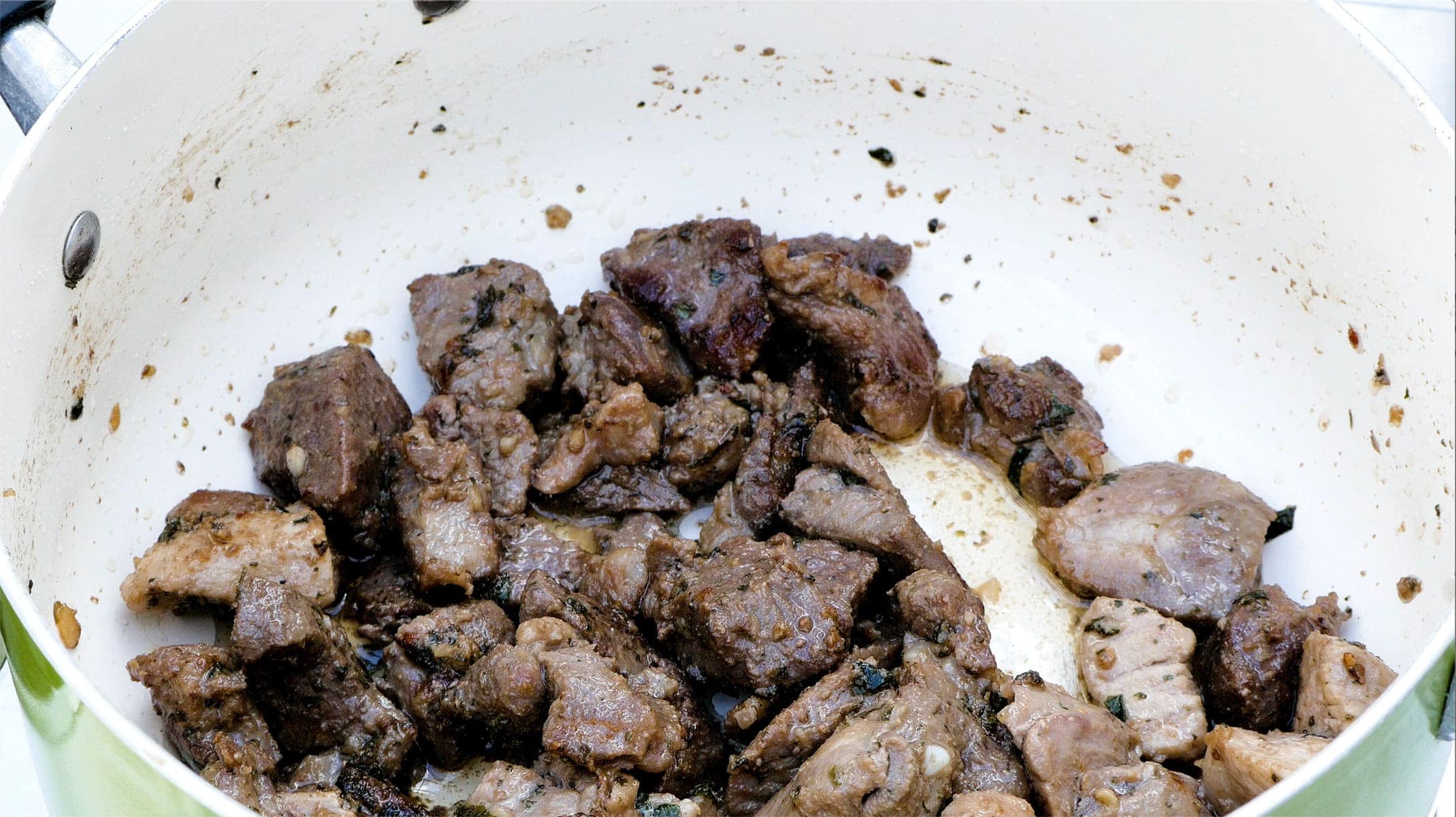
 In a large pot heat the oil over high heat, add the seasoned meats, and stir (be careful with hot oil splattering). Cook stirring until browned. Add the remaining meats (chicken, pork ribs, ham bones, pork sausage) and corn, and cook stirring for a couple of minutes.
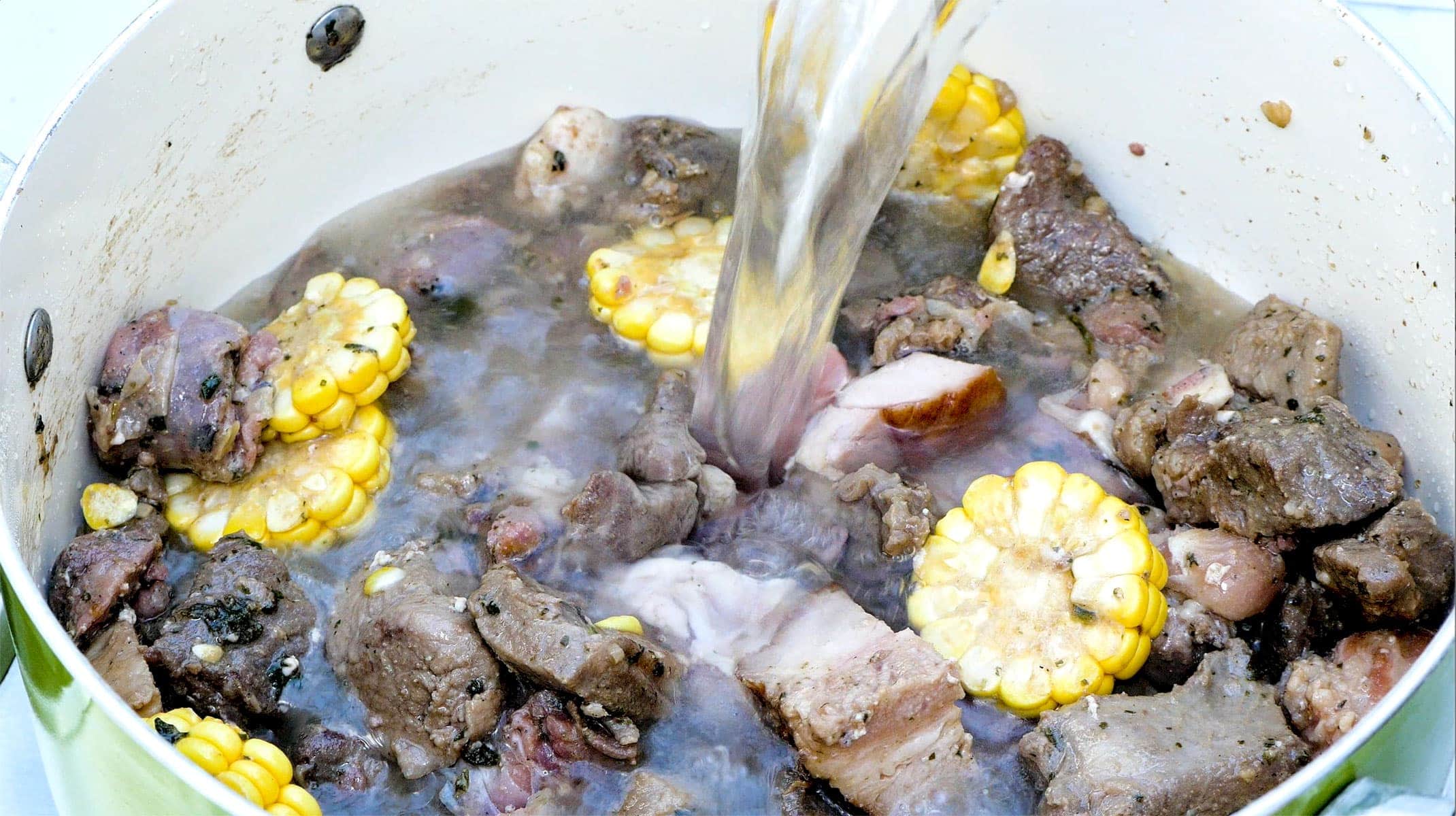
3. Adding water
- Lower heat to medium and pour ½ gallon [2.5 lt] of water. Simmer until it breaks the boil.
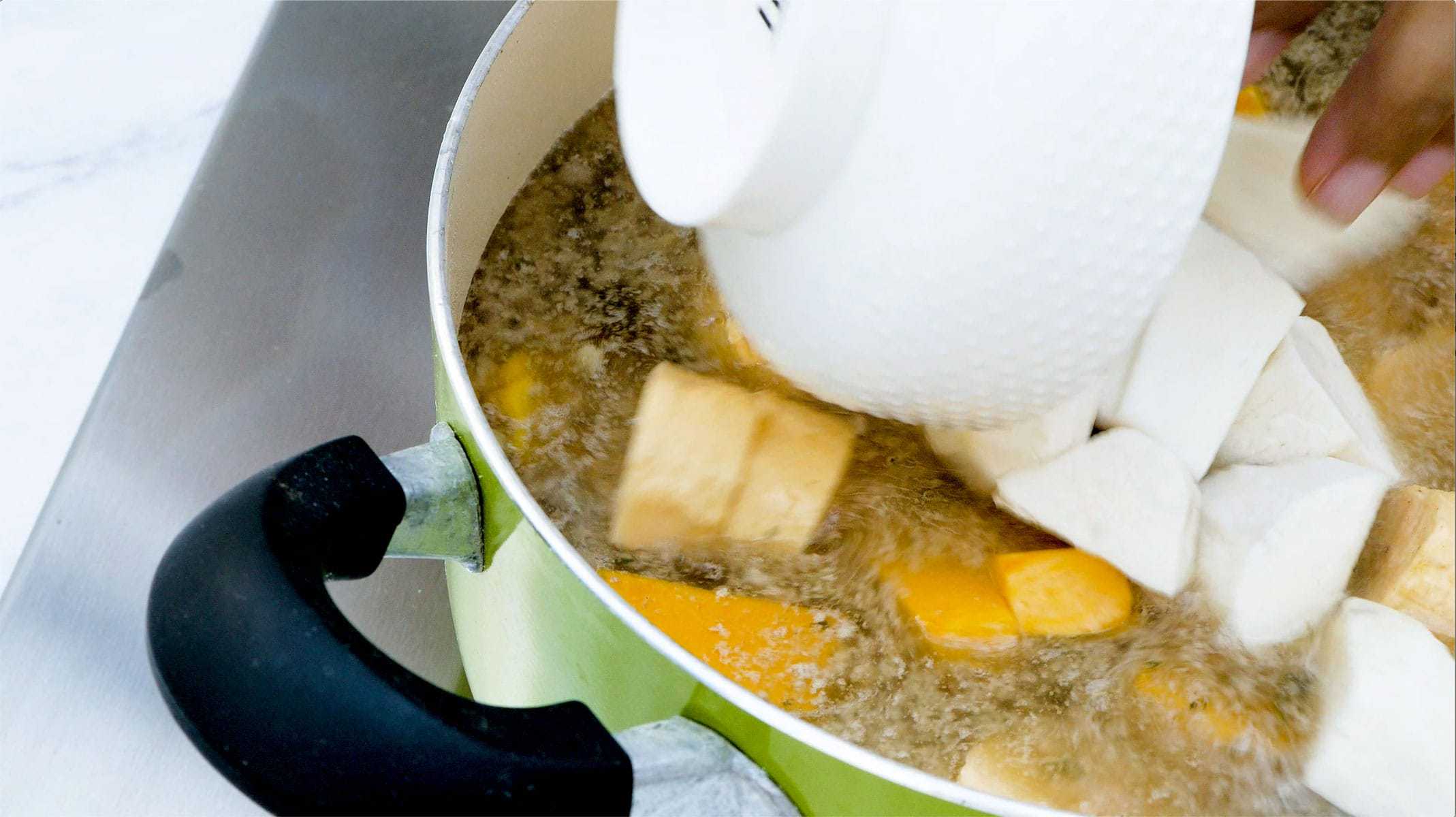
4. Adding the vegetables
- Once the water breaks the boils, add auyama, chopped plantain, and root vegetables (ñame, yautía, yuca). Grate, or scrape with the knife the remaining plantain to make it into a pulp, and add to the pot.
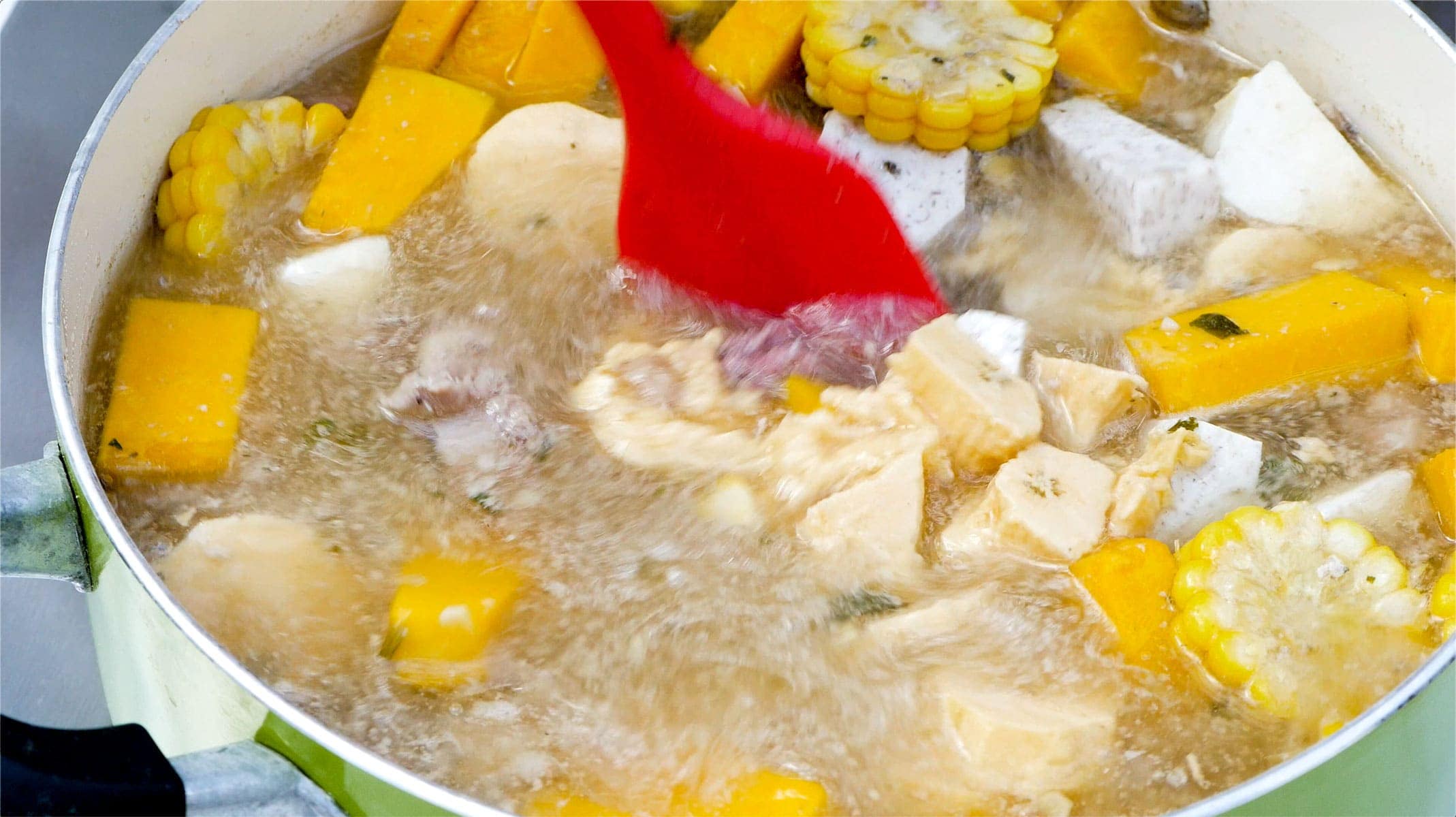
5. Cooking the vegetables
- Simmer covered over low heat until the last ingredients you added are cooked through, it should have thickened a bit too. If it dries too much, add water as necessary, or simmer uncovered to reduce if it is not thick enough for your taste. Season with salt to taste.
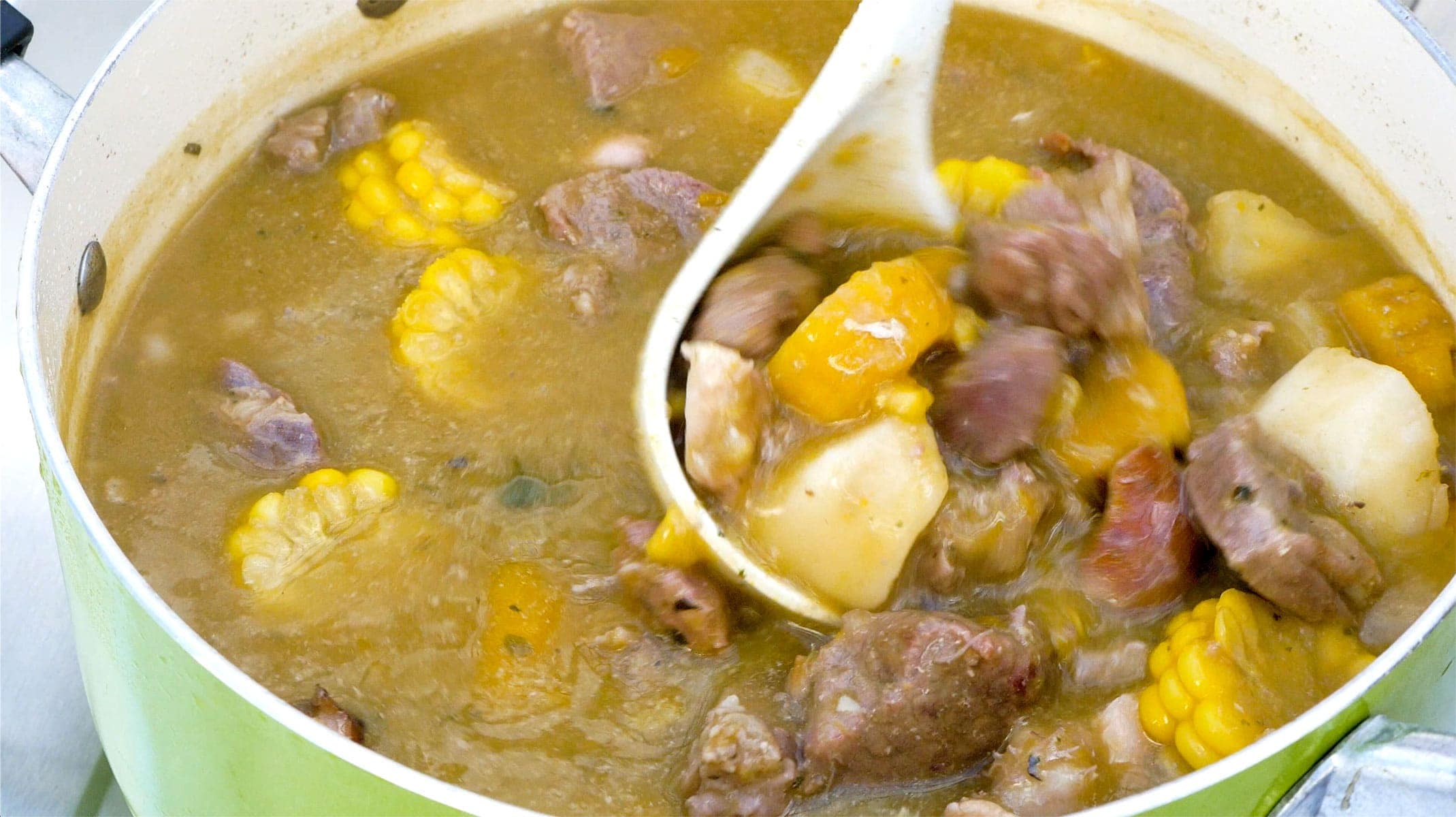
6. Serving
- Remove from the heat and serve (see suggestions above the recipe)
Cook's Notes
Nutrition
Nutritional information is calculated automatically based on ingredients listed. Please consult your doctor if you need precise nutrition information.
Want to save this recipe?
Enter your email & I'll send it to your inbox. ❤️ Plus, get great weekly recipes from me!
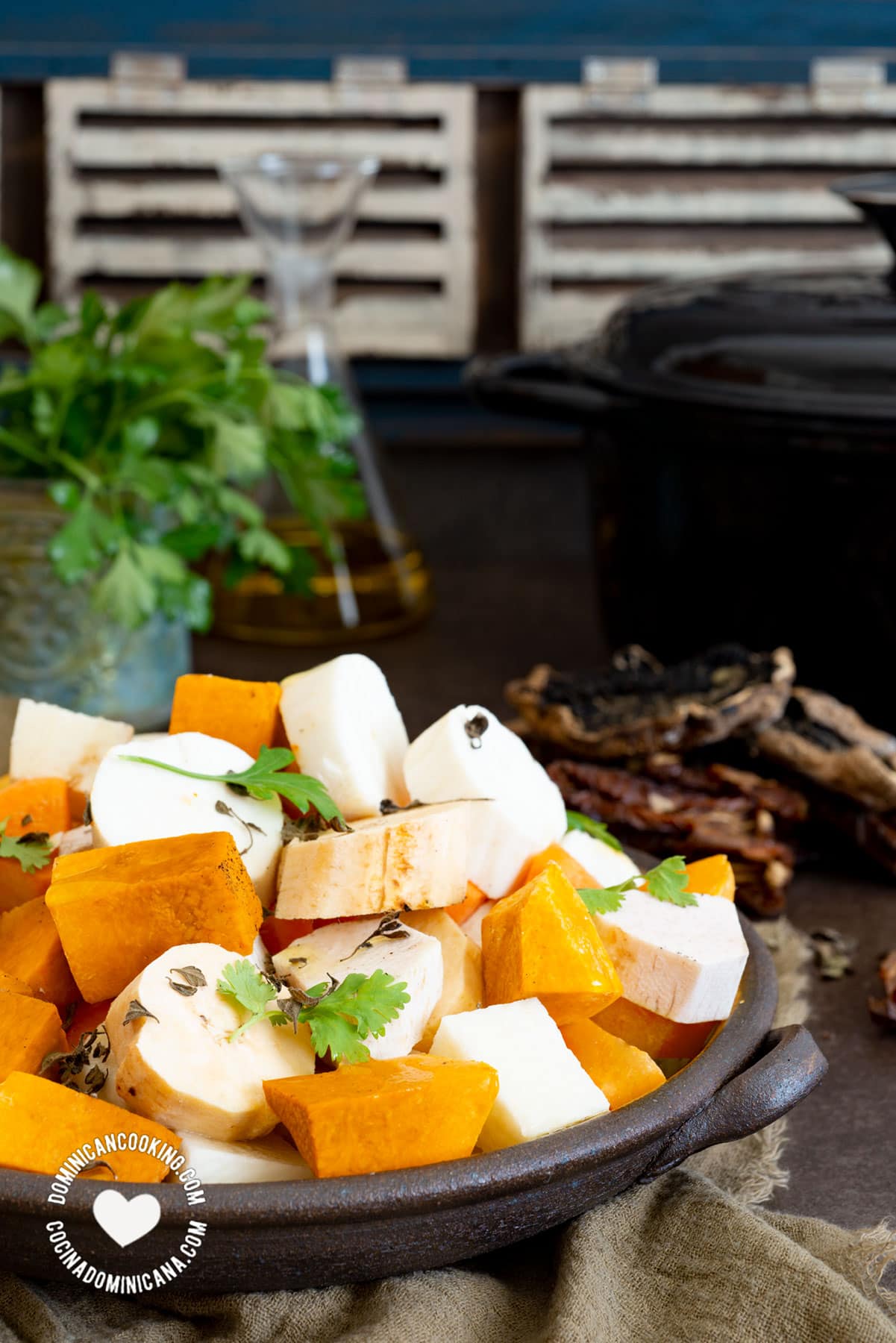
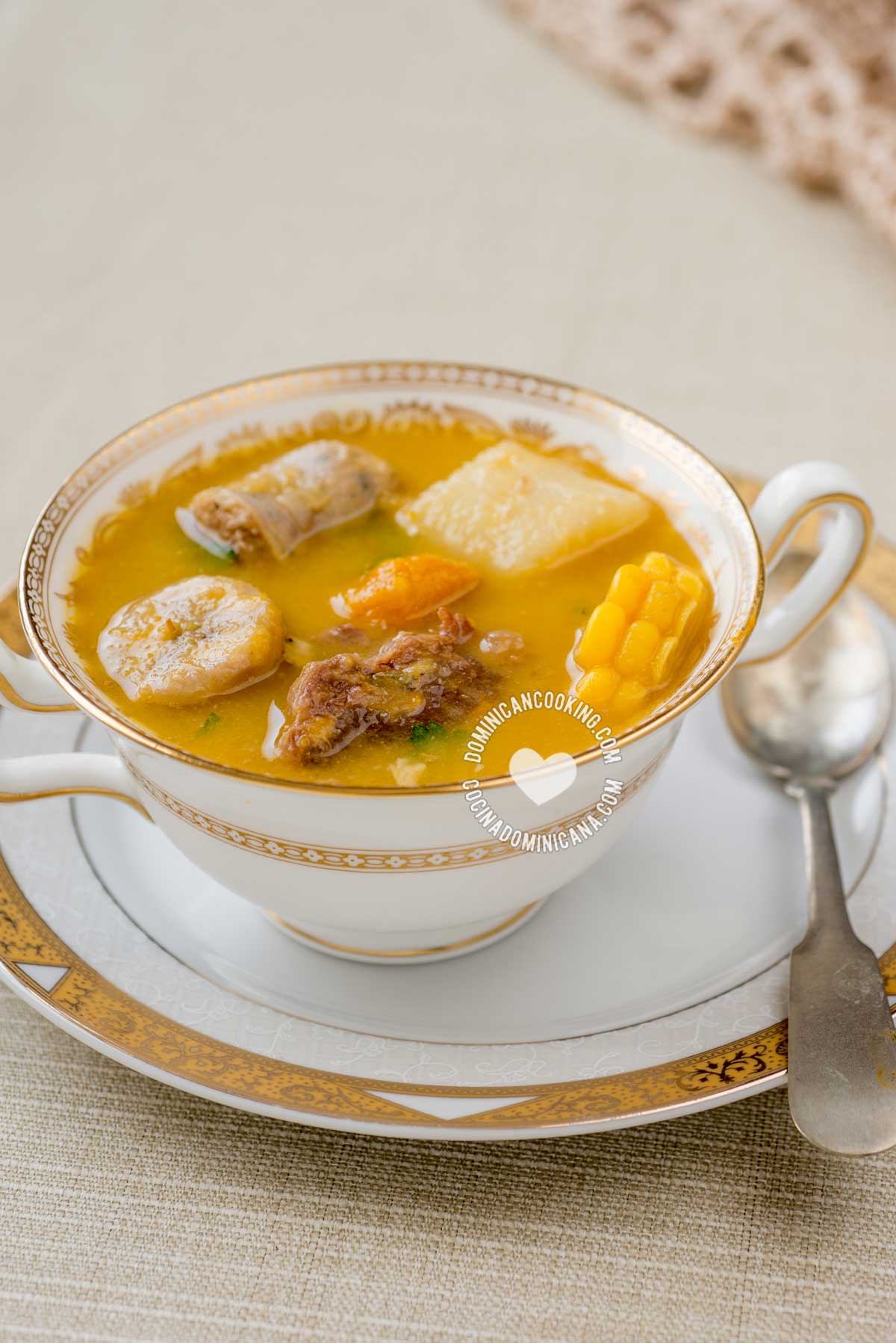
Ingredients and Dominican sancocho.
Dominican sancocho recipes
In the Dominican Republic, there are also different versions of traditional sancocho. These will depend on the taste of each family and of each cook.
Sancocho is usually prepared on special occasions since it contains many ingredients and its preparation is long. However, the time it takes to prepare is the time that is best enjoyed with friends.
Sancocho de siete carnes
Sancocho de Siete Carnes is the deluxe version, and it has seven types of meat from four different animals [2]. The types of meats may vary depending on regional differences and family preferences. It is the most complex and sophisticated Dominican sancocho.
Sancocho con res y pollo
The most common version is beef, followed by beef and chicken - or a gallina vieja (an old hen). It is the most economical and simple sancocho.
Sancocho prieto
It is also worth mentioning sancocho "prieto" ("prieto" means black in our country). It is so-called because the long cooking time and low temperatures gives it a dark brown color, in contrast to the orange-brown color of the "normal" sancocho, which obtains much of its color from the auyama (pumpkin). So, basically, it's normal sancocho cooked over lower heat for longer.
More sancocho recipes
You can also try the traditional Sancocho de habichuelas made with beans, and a Sancocho de guandules made with pigeon peas.
I love experimenting and adapting our traditional recipes, so we now have a Vegan "sancocho" so meatless aficionados can enjoy an approximation of our tasty stew. We also have a Seafood "sancocho" that I absolutely love!
References
- Fundeu - sancocho y salcocho, diferencias
- A Fuego Alto - ¿Cuáles son las 7 carnes del Sancocho dominicano?

- Learn more about me and the humans behind this blog.
- Share your questions and comments about this post.
- Subscribe to receive our recipes and articles by email.
- Please stay in touch! Follow us on: