

This quesillo may look like a simple coconut flan recipe, but there's a subtle difference that may be only apparent to Dominicans. You'll love it, even if you think our quesillo de coco is just flan de coco. Language quirks aside, we really know our way around flans and coconut.
By - Reviewed: . Original: Jan 2, 2011
Why we ❤️ it
Dominicans certainly adore their sweets and desserts and have something of a sweet tooth. And we love coconut flavor, from simply eating the tender flesh from fresh coconut to coconut water, and adding coconut to any number of savory and sweet dishes.
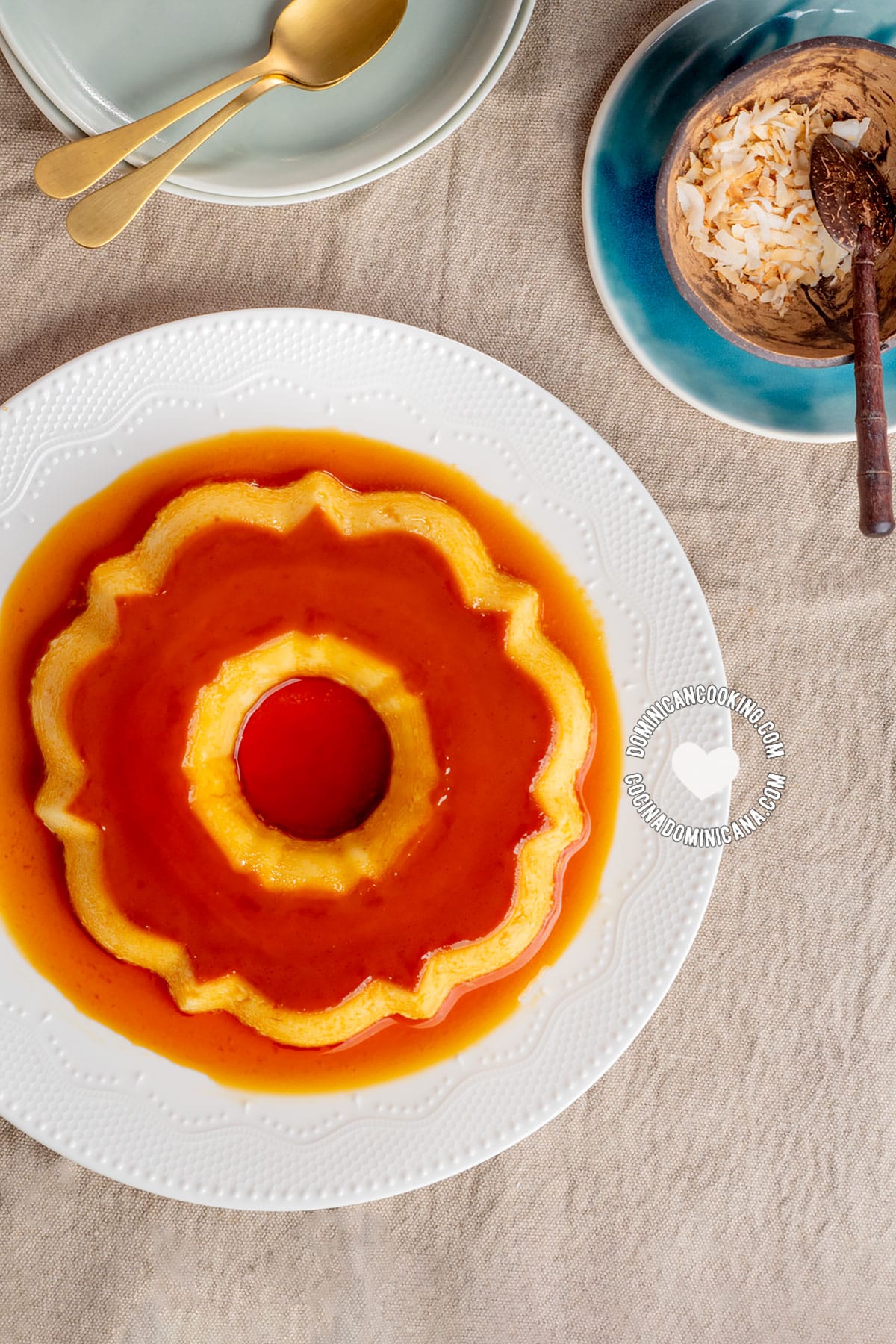
This quesillo (Dominican coconut flan) is one of the most popular ones, a dessert that combines the creaminess, and smooth texture of flan and the flavor of coconut. This coconut version has a lighter texture than our traditional flan, and the coconut milk adds a whole new layer of goodness to it.
Quesillo dominicano Vs Flan
The Dominican quesillo recipe and flan recipe - known in English by the French name Crème Caramel - may look the same to the naked eye... Well, they are almost the same: A sweet custard bathed in caramel sauce.
But while I have yet to find the exact explanation for why these are two different desserts, I wrote extensively about it in the flan recipe introduction. To summarize: We are not all in agreement, but many/a big percentage of Dominicans consider it a flan if it's made with egg yolks and flavored with vanilla extract, and quesillo if it's made with whole eggs. But it's complicated.
I speculate that since using whole eggs leaves little bubbles that show when you cut a slice, it looks a bit like cheese. Quesillo dominicano does not contain cheese -there are other Latin American desserts elsewhere also called quesillo that do contain cheese.
More flan recipes
If you feel like experimenting, try these other flan recipes:
- Flan de auyama (A pumpkin dairy-free, vegan flan-like dessert)
- Flan de pan (a flan-like bread pudding)
- Flan de café (flavored with coffee liqueur)
- Chocolate flan (flan with cocoa)
- Classic flan recipe (crème caramel)
- Dulce de leche panna cotta (an eggless flan-like dessert)
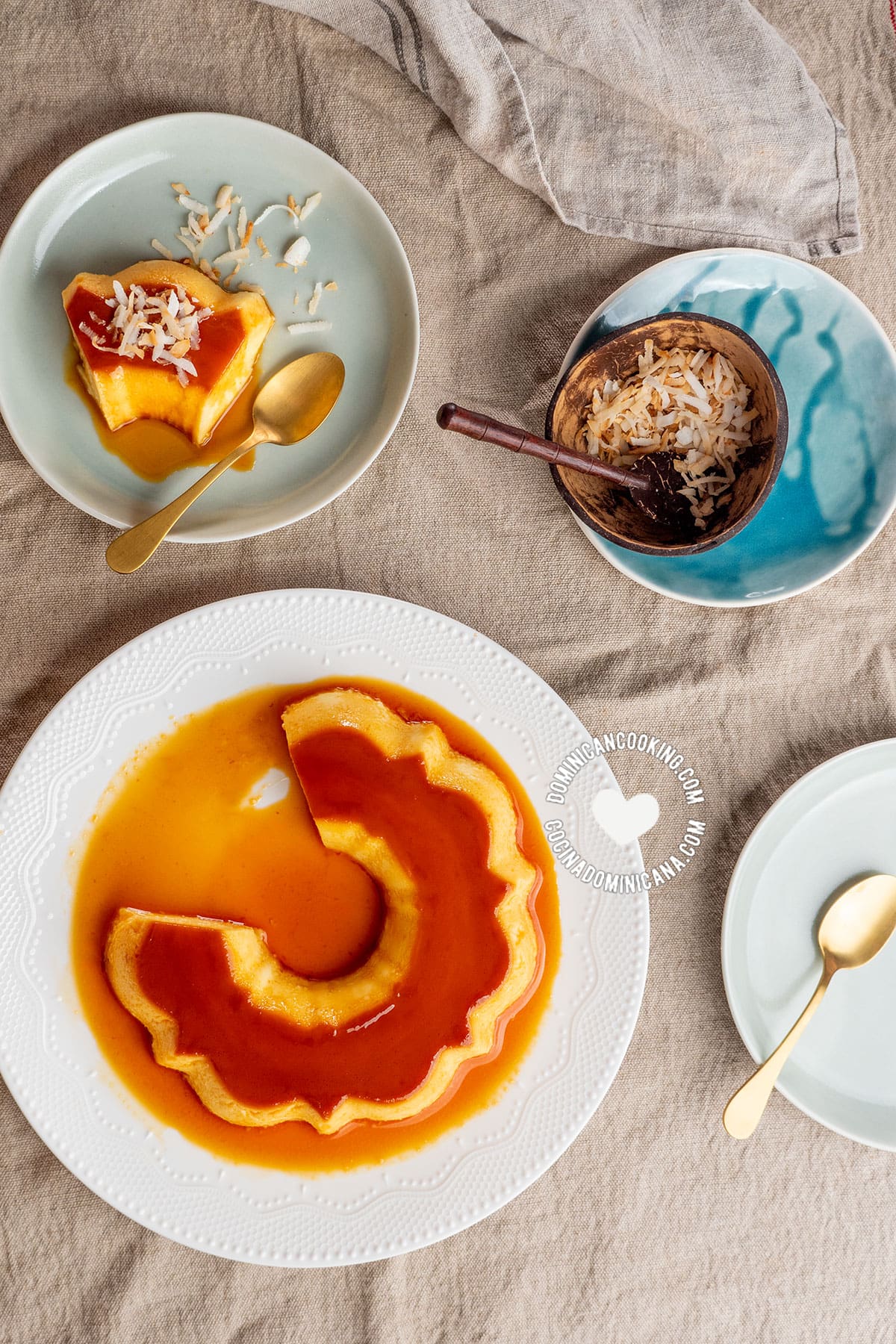
Coconut Flan
Top tips
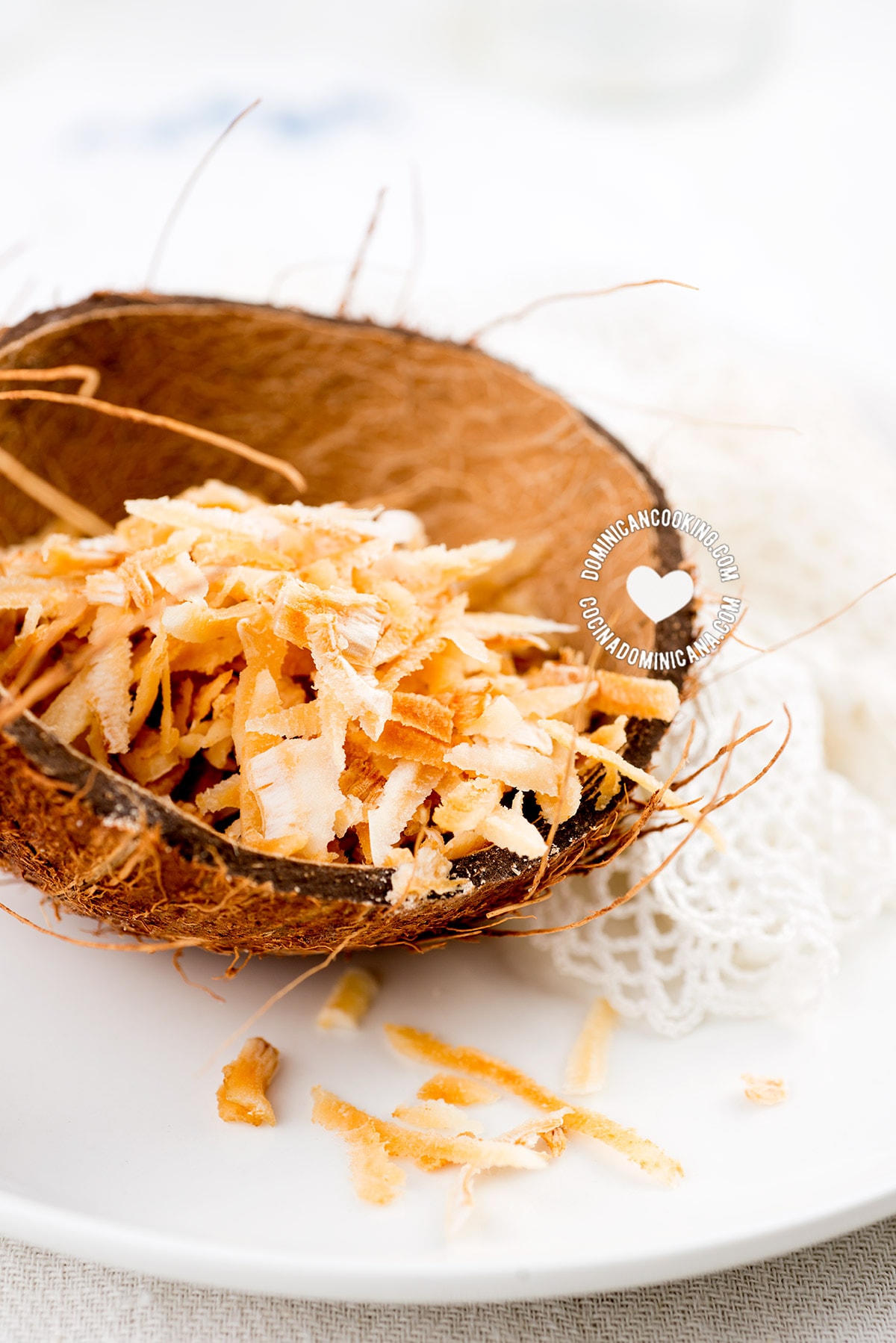
- The traditional recipe does not call for coconut flakes. You can do without them if you wish, I used to add a bit of visual interest, but it's not entirely necessary.
- If you have a cake pan (like uncoated aluminum) that can go directly on the stove, the easiest way to make the caramel cover is to place the sugar in the pan, add a tablespoon of water, enough just to get the sugar damp, and heat the pan until the sugar caramelizes, but before it burns. You may need to stir the sugar with a spatula because it tends to have some hot spots that can burn while the rest is still not fully caramelized.
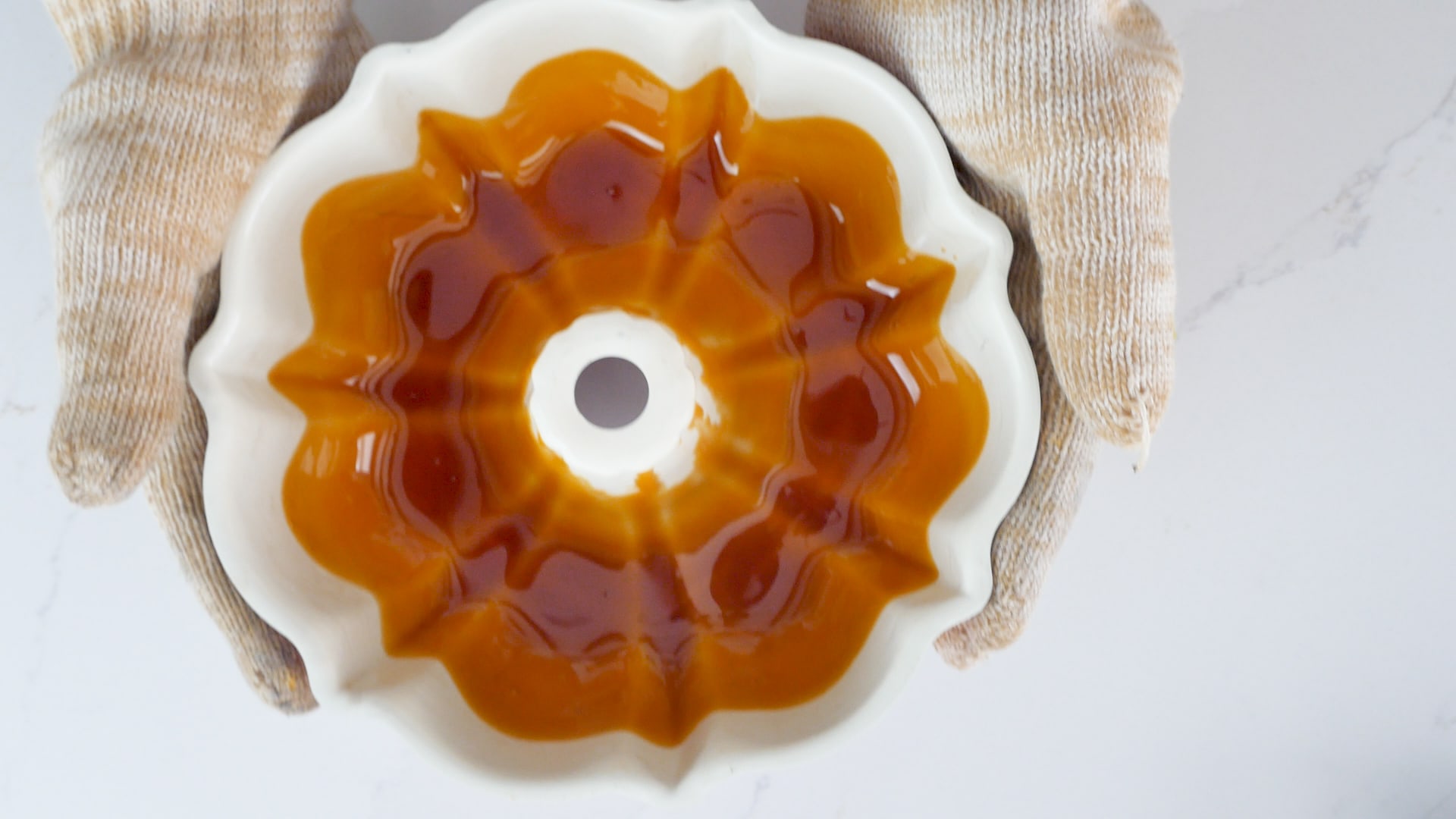
- If you melt the sugar in the mold, make sure you have proper heat-proof gloves to handle it when you move the pan to coat the bottom and sides with caramelized sugar. It gets very hot.
- Be careful handling hot caramel; it can produce some really nasty burns. Be also careful when removing the flan molds from the warm water after coming out of the oven.
- Unlike flan, where I prefer a slightly bitter-sweet caramel made by letting it come almost to a smoking point, this does not work well with flan de coco dominicano, so make sure to remove the caramel from the heat as soon as it starts getting a caramel color.
- You can also blend the milk and egg mixture in a blender if you wish to add some extra bubbles for the cheese look.
How to store flan
Flan needs to be made well in advance of the occasion it will be served at. It lasts up to 3 days if kept refrigerated. To store the flan, keep it in the baking pan, which you can cover with aluminum foil or plastic wrap, or flip it into an airtight container. If it's exposed to the air in the fridge, it starts to dry around the edges in the cold dry air of the refrigerator.
About this recipe
The original recipe upon which ours is based was given to us by Adriana, one of our readers, more than 15 years ago. We have since made a few changes to it.
This recipe yields 6 generous servings.

Video
Recipe
This awesome free recipe contains Amazon affiliate links, we receive a small commission from any purchase you make at no extra cost to you. Thanks for your support!
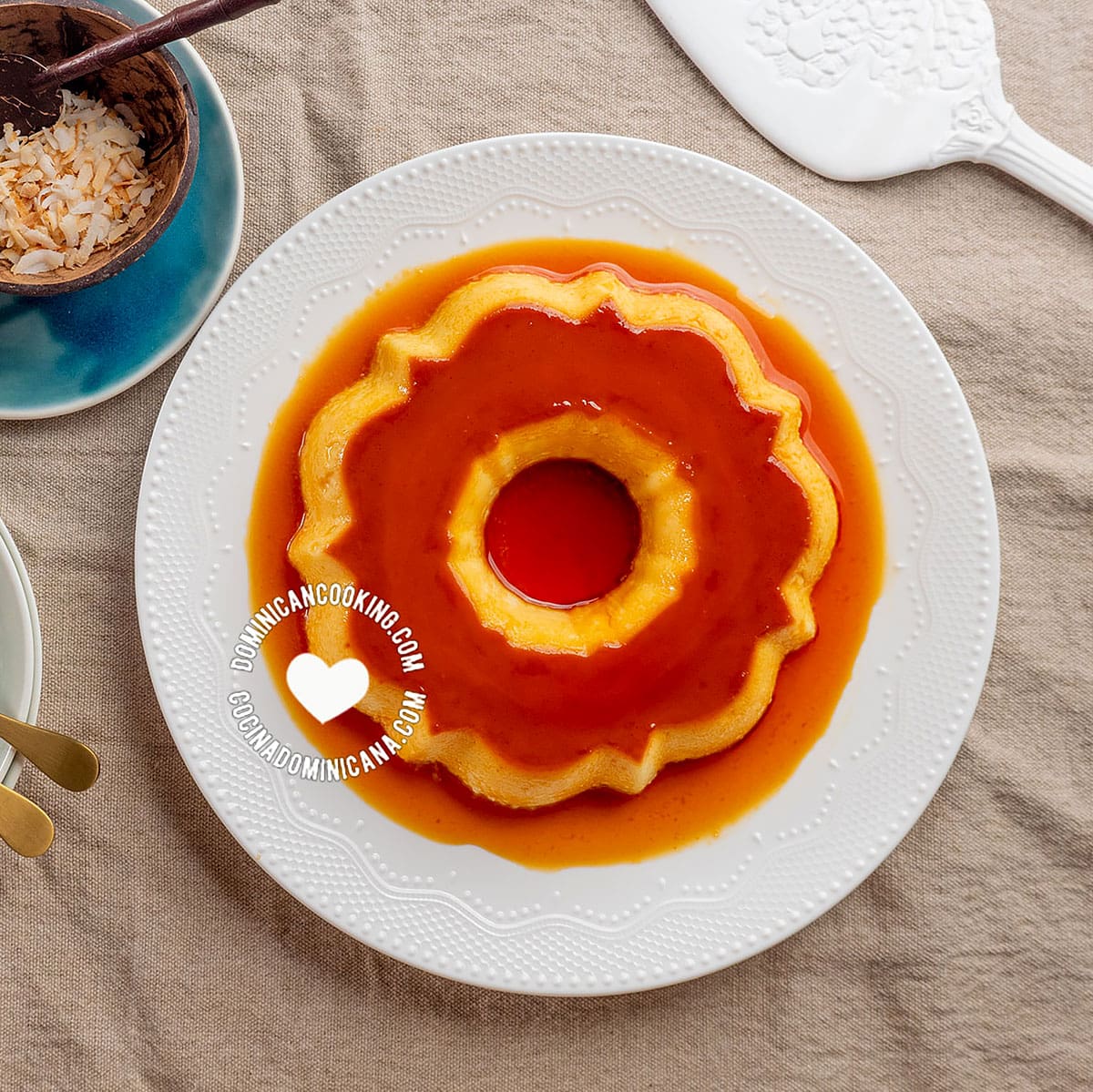
Easy Coconut Flan [Video+Recipe] Quesillo Dominicano
Equipment
- Bundt pan (12 cups) (or oven-safe mold of your choice)
Ingredients
For caramel
- 1 cup sugar (white, granulated)
- 1 tablespoon water
For custard
- 3 egg (large), (or 4 medium)
- 1½ cups condensed milk
- 1½ cups coconut milk
- 2 quarts boiling water , for bain Marie [2 l]
For decoration
- ½ toasted coconut flakes, (optional, see notes)
Instructions
1. Prepping mold
 In a small saucepan, combine sugar and water and cook over medium heat until a thick, light brown caramel syrup forms. You may need to stir it gently with a spatula if hot spots form and it starts caramelizing unevenly.Pour carefully into 6-cup [1.5 l] baking dish and move it around to cover the bottom and sides of the pan. Be careful, as hot caramel is indeed very hot, and the pan will get very hot too. Set aside to cool down until the caramel hardens.
2. Making quesillo mix
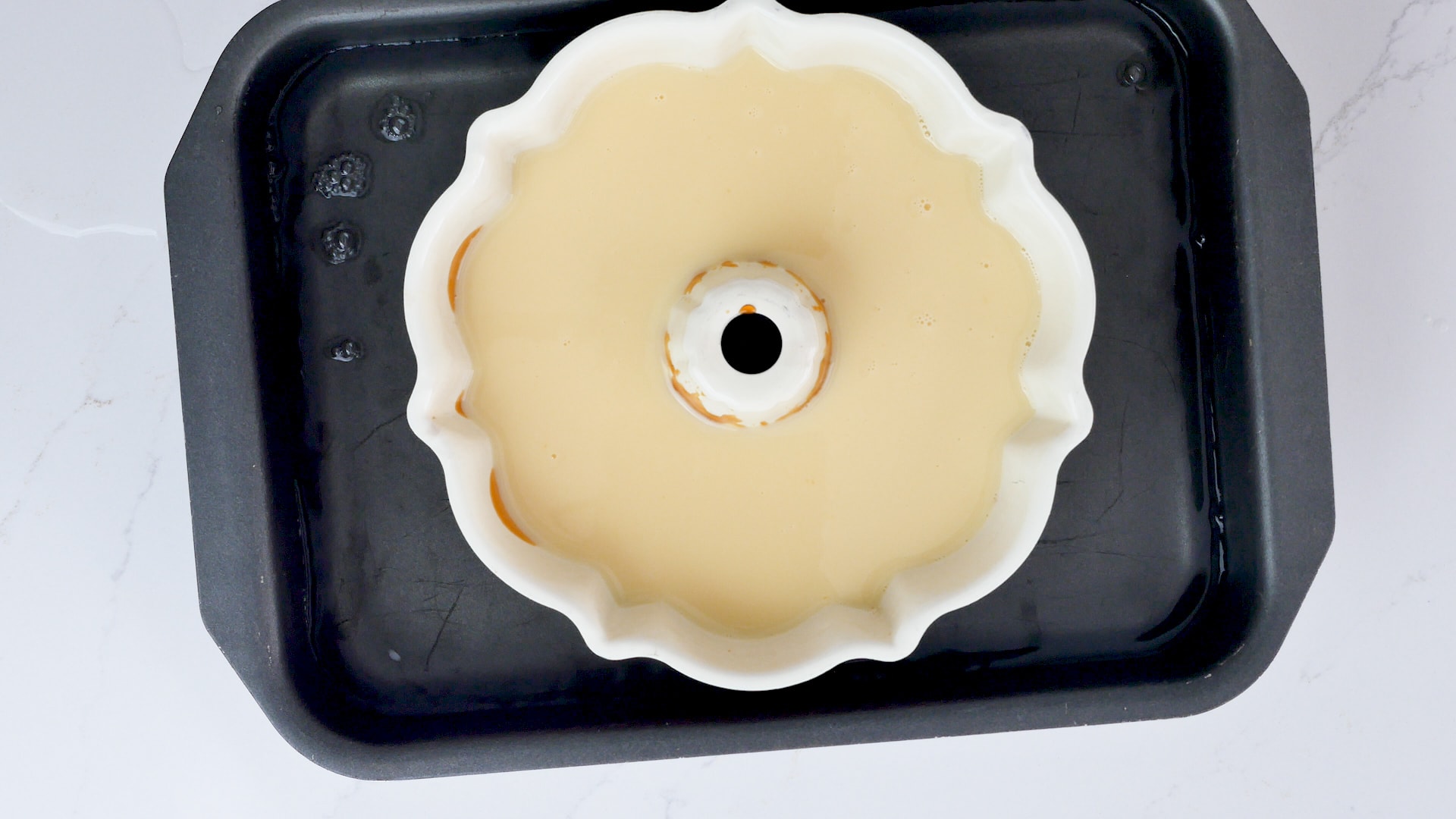
- In a large bowl, combine eggs, sweetened condensed milk, and coconut milk and whisk to mix. Sieve to get rid of undissolved egg parts. Pour carefully into the baking pan, trying not to disturb the caramel layer.
3. Cooking
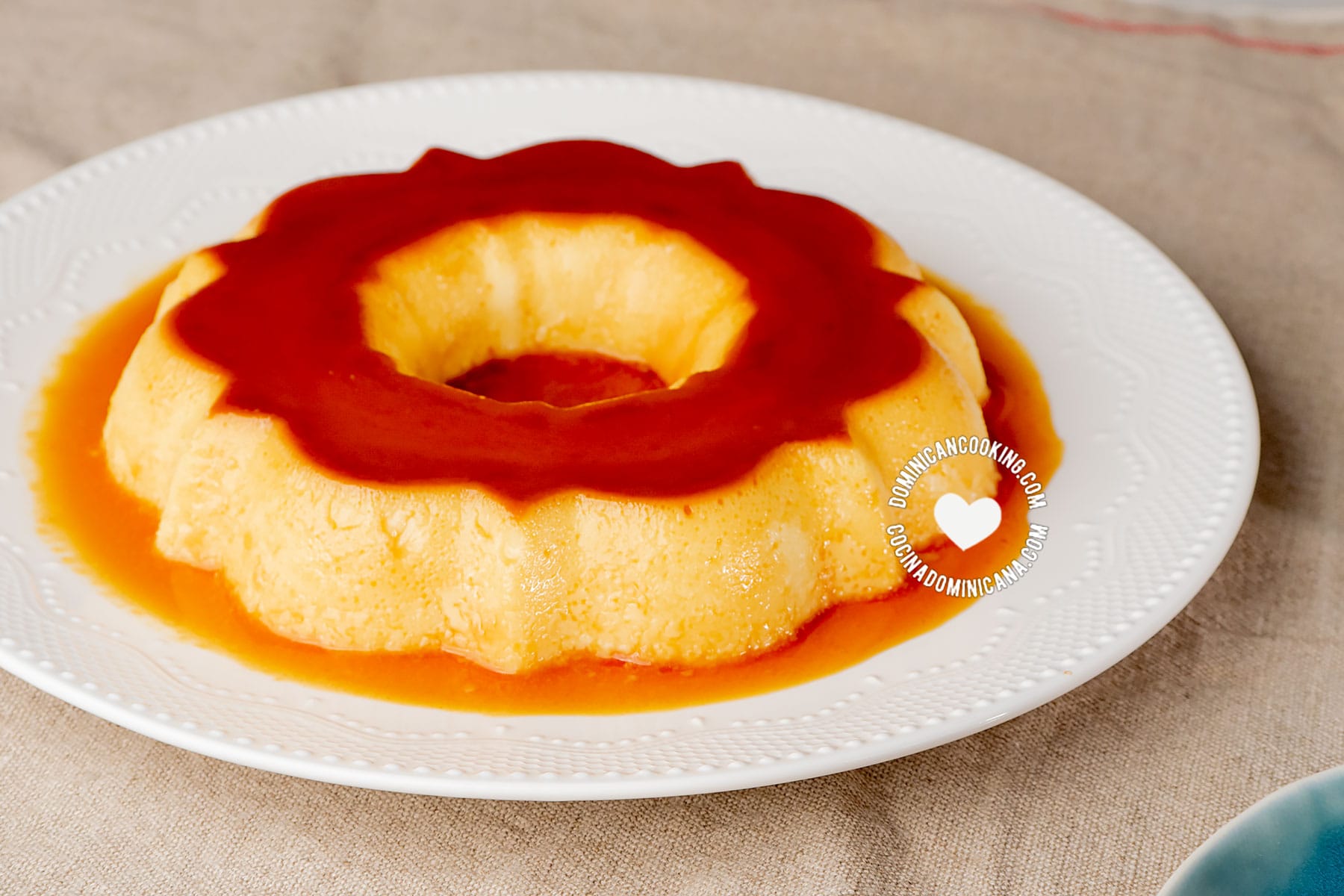
- Bake in a hot water bath (bain-marie) in an oven preheated to 320 ºF [160 ºC] for one hour or until a toothpick inserted in the center comes out clean. Remove from the oven and water bath. Cool to room temperature. Chill. Loosen edges of flan, place a serving plate on top of the mold (one which will retain the syrup), and invert.
4. Serving
 Chill before serving (about 2 hours in the fridge).Garnish with the coconut flakes (optional).
Cook's Notes
Nutrition
Nutritional information is calculated automatically based on ingredients listed. Please consult your doctor if you need precise nutrition information.
Want to save this recipe?
Enter your email & I'll send it to your inbox. ❤️ Plus, get great weekly recipes from me!
FAQs
Coconut flan is made of eggs, condensed milk, coconut milk, and sugar for the caramel sauce. Alternatively, you can use unsweetened coconut cream.
You can refrigerate the unflipped flan for up to 3 days in the refrigerator. Make sure it is covered tightly with aluminum foil or plastic wrap. When it's time to serve, loosen the edges with a toothpick or paring knife, and flip onto a serving platter that can hold the caramel sauce.
You can make a dairy-free flan-like dessert with a combination of sweetened coconut cream and coconut milk. The difference between dairy flan and non-dairy flan will be apparent, but it is quite tasty on its own. Alternatively, you can make it with a combination of sweetened coconut cream and evaporated milk. Make sure to try them combined (before adding eggs) to check the level of sweetness in case you need to add more sugar. The cooking time remains the same.

- Learn more about me and the humans behind this blog.
- Share your questions and comments about this post.
- Subscribe to receive our recipes and articles by email.
- Please stay in touch! Follow us on: